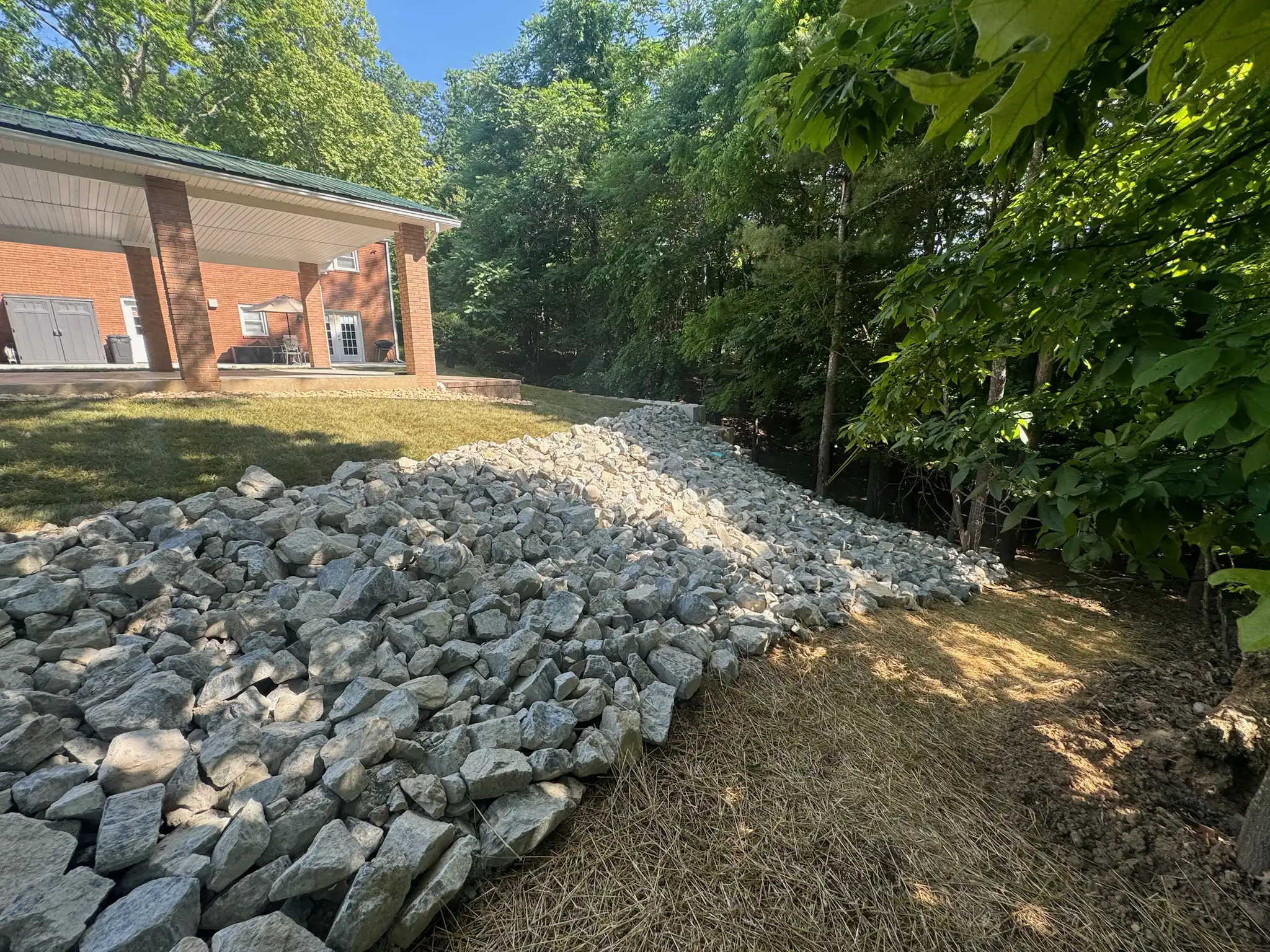
Riprap, rock armoring, silt fencing, slope stabilization, and planting prep — stopping soil loss before it becomes structural damage.
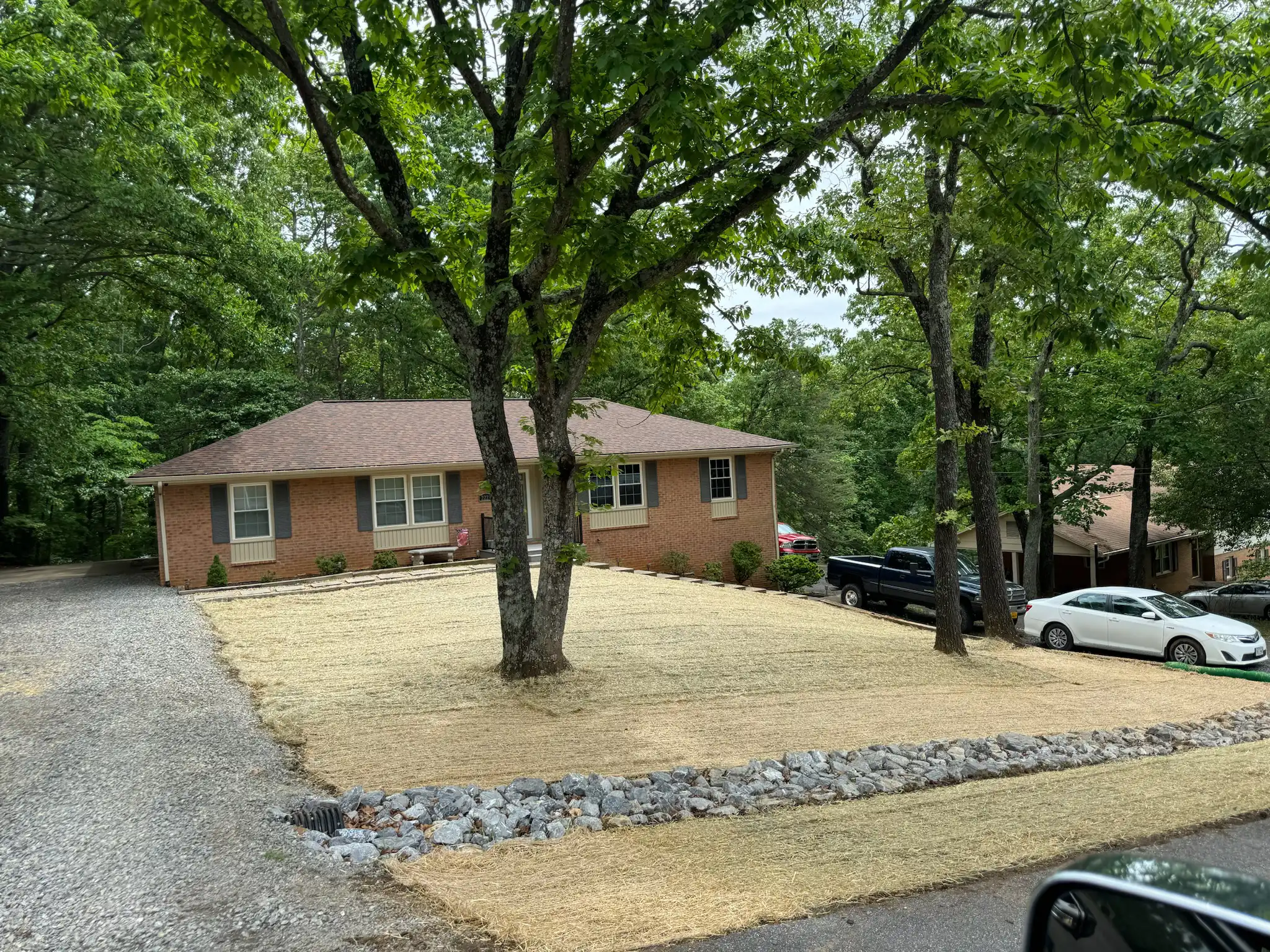
The Roanoke Valley's clay-heavy soils and hilly terrain make erosion a constant issue. Every rainstorm carries a little more dirt downhill, and once a channel forms, it deepens fast. What starts as a minor washout behind the house can turn into an exposed foundation, a failing retaining wall, or a driveway that's falling apart at the edges.
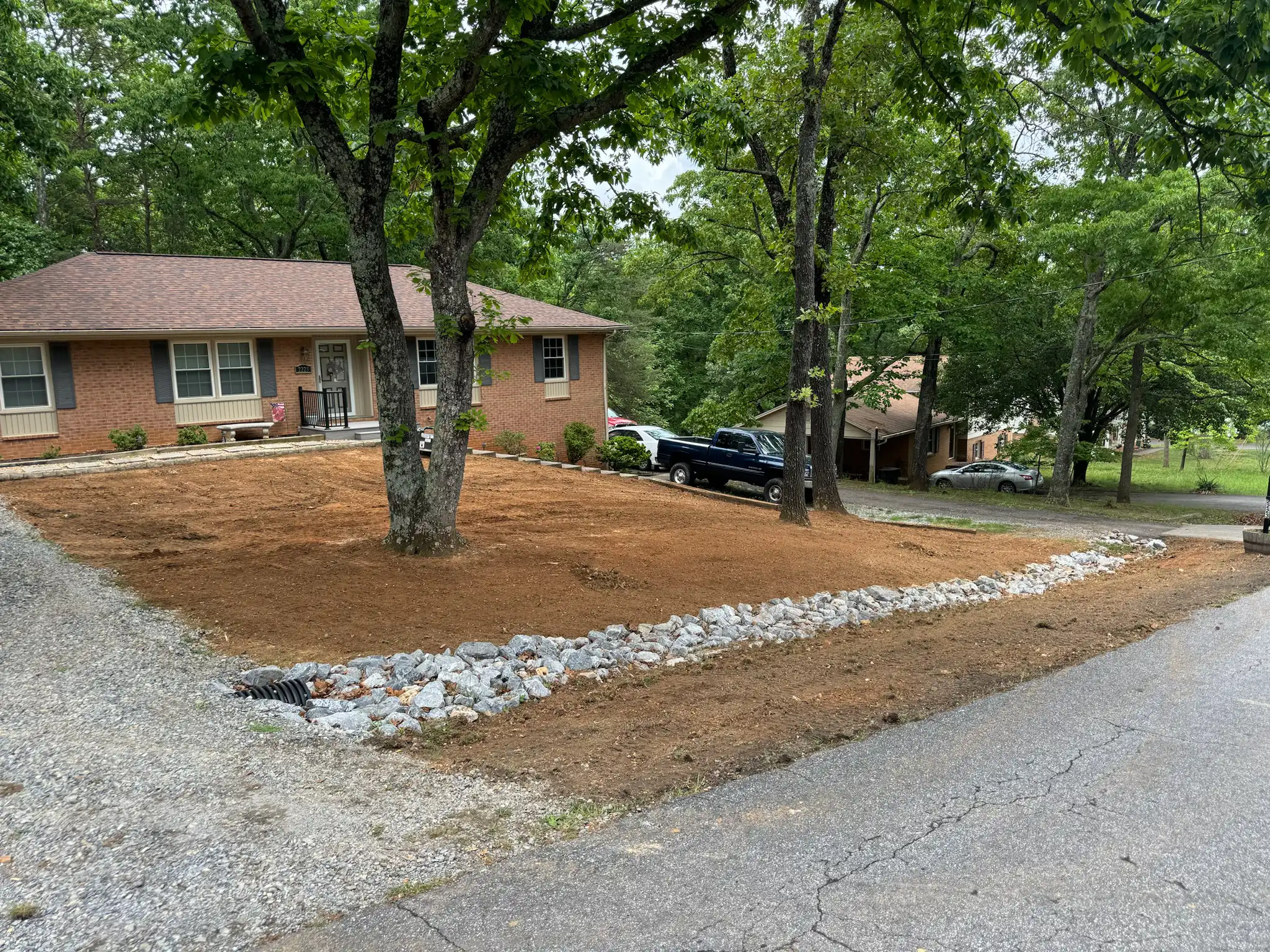
We install riprap and rock armoring on high-velocity areas, set up silt fencing for active construction sites, regrade and stabilize slopes that have already started to fail, and prepare erosion-prone areas for permanent vegetative cover. The goal is always the same: stop the soil from moving and keep the water under control so the problem doesn't come back.
Erosion control requires the right technique for the specific problem. Here's the scope of work we handle.
Heavy stone placed along slopes, channels, outfalls, and shorelines to absorb water energy and prevent soil washout. Sized and placed for the specific flow conditions on your property.
Temporary geotextile barriers that catch sediment during construction or stabilization. Installed to Virginia DEQ standards and maintained through the life of the project.
Regrading steep or failing slopes to a stable angle, adding terracing where needed, and reinforcing with stone, matting, or geogrid to prevent future movement.
Grading, soil amendment, and stabilization matting to prepare erosion-prone areas for permanent ground cover, native plantings, or seed establishment.
Every erosion problem has a water source. We trace it back, fix the cause, and armor the vulnerable areas so the repair holds.
We walk the property, trace the water flow path, assess the soil type and slope angle, and identify what's driving the erosion — concentrated runoff, sheet flow, or groundwater seepage.
Based on the assessment, we recommend the right combination of grading, armoring, drainage, and vegetation. The plan addresses both the immediate erosion and the upstream water source.
Riprap is placed, slopes are regraded, drainage is installed, and stabilization matting or silt fence is set up. Equipment is matched to the terrain — we work on steep and tight sites that other crews may avoid.
Disturbed areas are seeded, matted, or prepped for planting. Temporary controls remain in place until vegetation establishes. The site is left stable and ready to weather the next storm.
Erosion Control is one part of what we do. These related services often go hand-in-hand.
French drains, swales, catch basins, yard inlets, and regrading for surface runoff.
Footing drains, drain tile, sump pump discharge routing, and wet basement exterior solutions.
Downspout extensions, burial, pop-up emitters, and gutter-to-drain tie-ins.
Riprap is loose stone — typically 4 to 18 inches in diameter — placed along slopes, channels, or shorelines to absorb the energy of flowing water and prevent erosion. It's used wherever water velocity is high enough to wash away soil: stream banks, drainage outfalls, steep slopes, and culvert outlets. It's one of the most durable erosion-control methods available.
Slope erosion is usually addressed with a combination of techniques: regrading the slope to a more stable angle, installing riprap or rock armoring on the most vulnerable areas, adding terracing or retaining structures, and establishing vegetation to hold soil in place. The right approach depends on the slope angle, soil type, water volume, and what's at the top and bottom of the hill.
Yes. Any time soil is disturbed and left exposed, it's vulnerable to erosion from rain and runoff. Virginia requires erosion and sediment control measures on construction sites. Even on smaller residential projects, installing silt fence, seeding or sodding disturbed areas, and stabilizing slopes immediately after grading prevents problems before they start.
Silt fence is a temporary barrier made of geotextile fabric staked along the base of a slope or disturbed area. It catches sediment carried by runoff while allowing water to pass through. Silt fence is designed to last through a construction or stabilization period — typically 6 to 12 months. Once vegetation is established and the soil is stable, the fence is removed.
Absolutely. Erosion undermines whatever sits above it. Soil washing away from around a foundation exposes the footing and allows water infiltration. Erosion along a driveway edge can cause the gravel or pavement to break apart and collapse. Addressing erosion early is significantly cheaper than repairing structural damage later.
Tell us what's happening and we'll evaluate the site, identify the cause, and give you a plan to stop it for good.
Request an Estimate