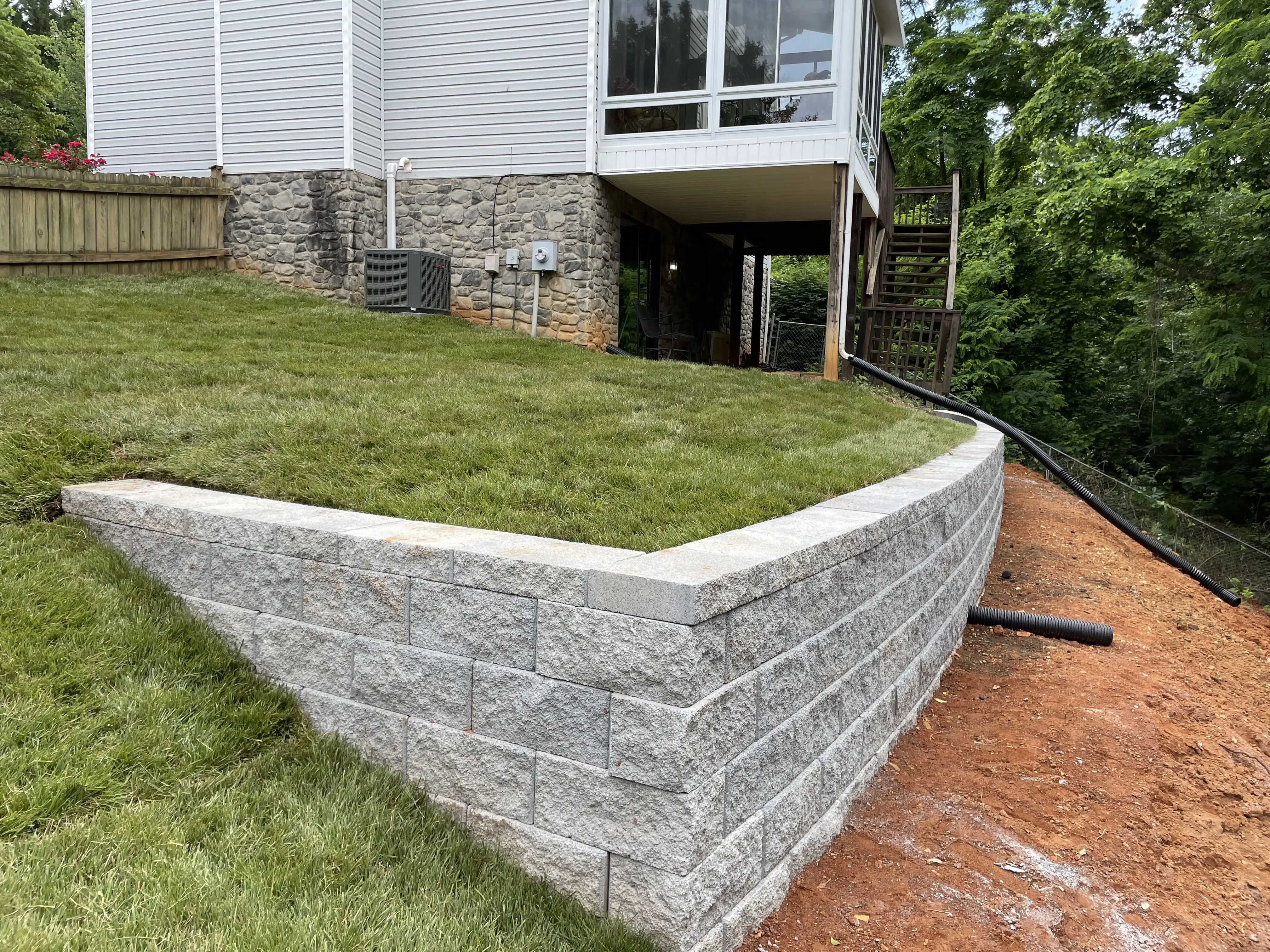
Structural and decorative retaining walls built to hold — with proper drainage, reinforcement, and materials that match your property.
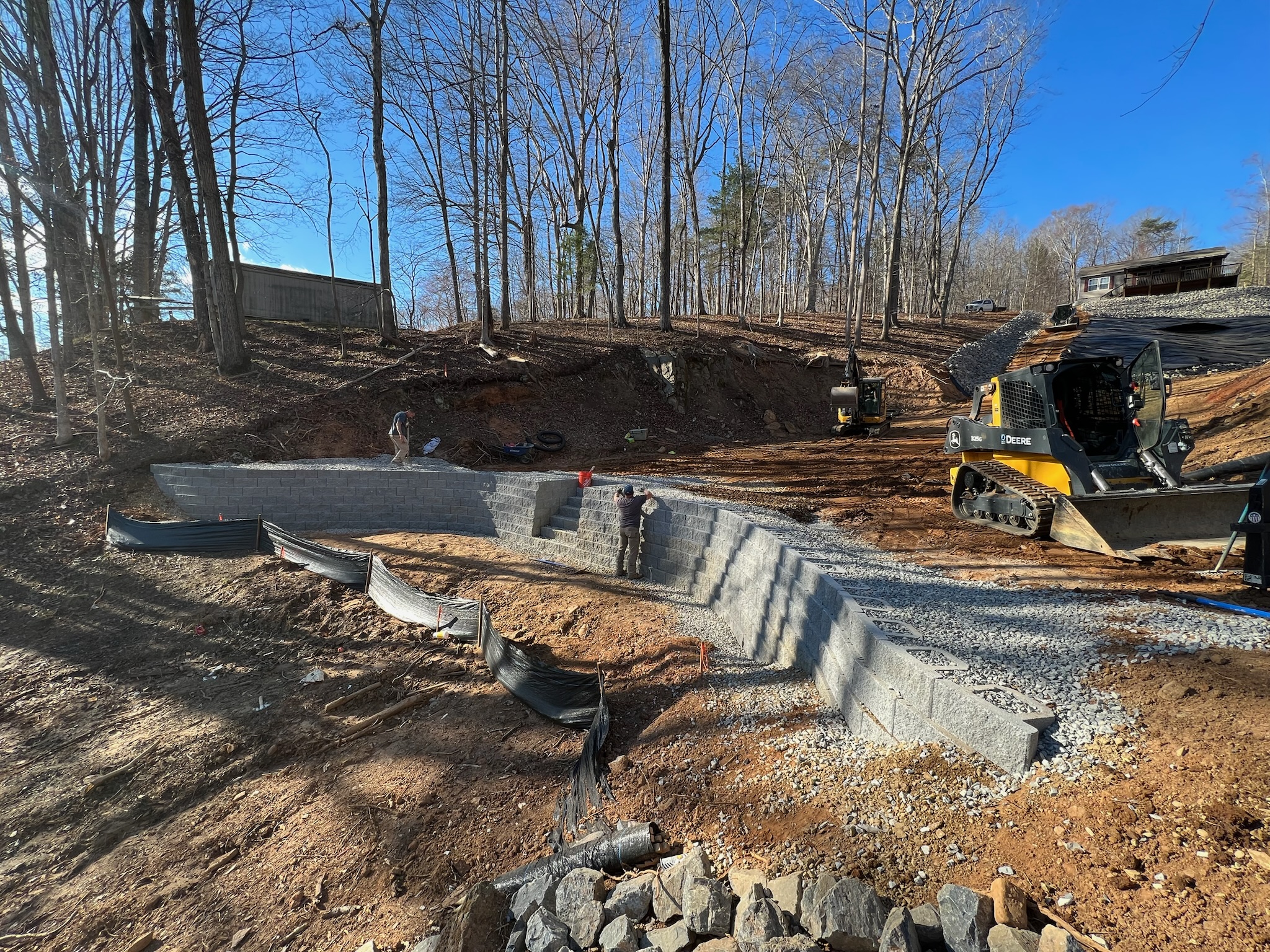
A retaining wall does more than hold back dirt. It reclaims sloped land for usable space, prevents erosion, protects foundations, and defines landscape areas. When done right, it also looks good doing it.
We build retaining walls using segmental block, natural stone, and boulders for properties throughout the Roanoke Valley. Every wall we install includes proper excavation to a solid bearing surface, a compacted aggregate base, drainage behind the wall, and the right backfill materials. On taller walls, we incorporate geogrid soil reinforcement engineered to handle the loads. This is the work that determines whether a wall stands straight for decades or starts leaning in a few years.
From small garden walls to engineered structural walls, here's the full range of retaining wall work we handle.
Interlocking concrete block walls — the industry standard for structural retaining. Available in a wide range of textures, colors, and profiles to complement any property.
Dry-stacked fieldstone, stacked natural stone, and large boulder walls for a more rustic or natural aesthetic. Suited for garden borders, landscape features, and moderate retaining needs.
Walls over 4 feet that require geogrid reinforcement, engineered plans, and permitting. Full drainage systems with perforated pipe, clean stone backfill, and filter fabric are standard.
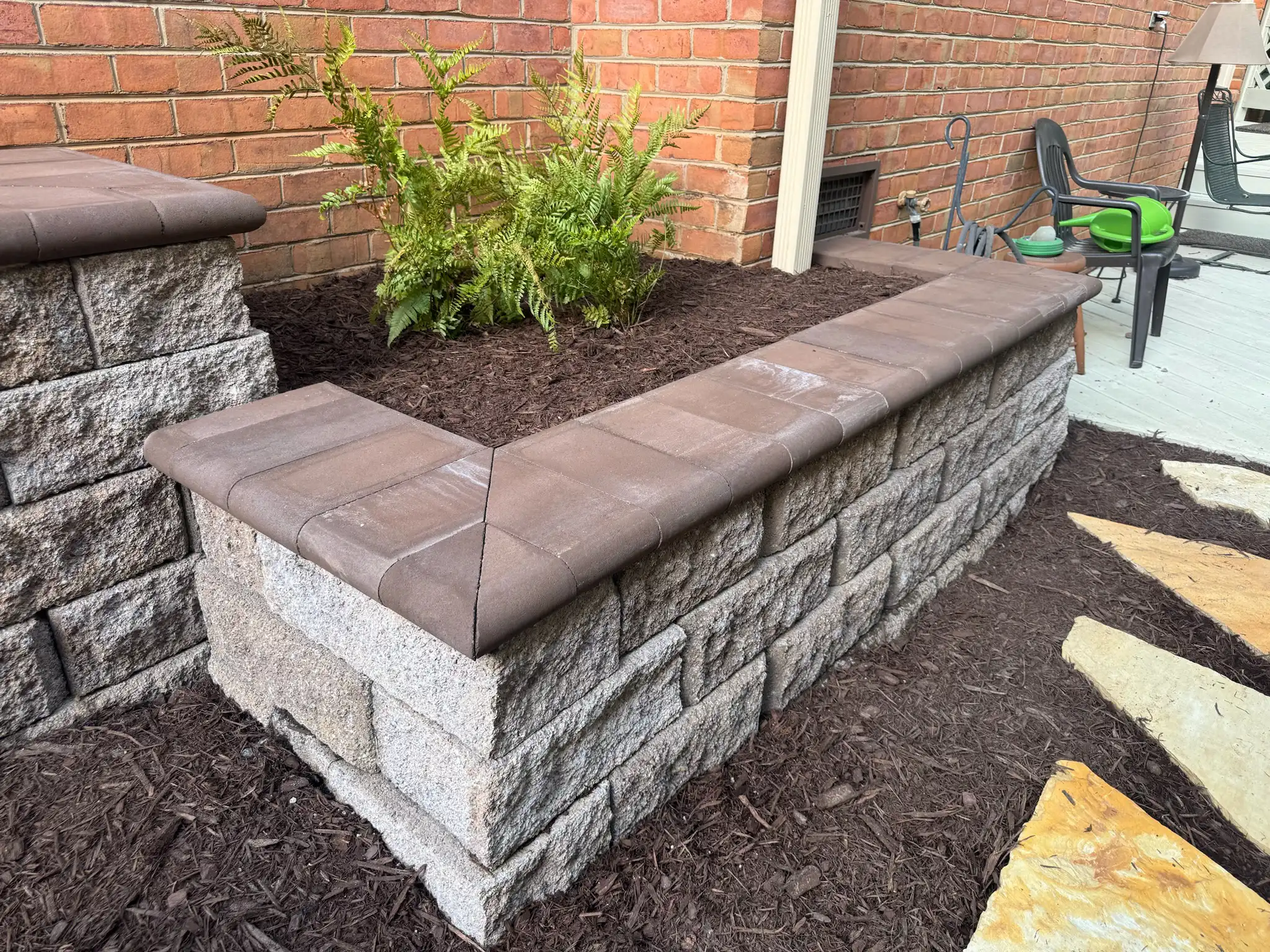
Shorter walls used to define patio borders, create raised planting beds, or provide built-in seating around outdoor living areas. Functional and finished with caps or coping.
Every retaining wall follows this sequence. No shortcuts on drainage, base, or reinforcement.
We assess the slope, soil conditions, and drainage patterns. For taller walls, we coordinate with a structural engineer and pull any required permits.
The wall trench is excavated below grade to a solid bearing surface. Compacted aggregate base is placed and leveled — this is the most critical step for long-term stability.
Block or stone is placed course by course with proper setback. Drain pipe and gravel backfill go in behind the wall as we build up. Geogrid is installed at engineered intervals on taller walls.
Wall caps or coping are installed and secured. Final backfill is placed, the area behind and in front of the wall is graded, and the site is cleaned up.
Retaining Walls is one part of our hardscape work. These related services often go hand-in-hand.
Custom paver patios, flagstone and natural stone patios, multi-level patios, and patio expansions and repairs.
Paver walkways, flagstone paths, stone and paver steps, stone veneer, and boulder placement.
Built-in fire pits, outdoor fireplaces, outdoor kitchen foundations, and pergola and pavilion footings.
In most jurisdictions around the Roanoke Valley, walls under 4 feet of exposed height can be built without a structural engineer's stamp. Walls over 4 feet typically require engineered plans, geogrid reinforcement, and sometimes a building permit. We handle both and will let you know which applies to your project.
The number one cause is water. Without proper drainage behind the wall — drain pipe, gravel backfill, and filter fabric — hydrostatic pressure builds up and pushes the wall outward. Other common causes include an inadequate base, lack of compaction, and skipping geogrid reinforcement on taller walls.
Small decorative walls and seat walls can be completed in 1–2 days. A standard structural wall in the 2–4 foot range typically takes 3–5 days including excavation and backfill. Larger engineered walls with geogrid reinforcement may take a week or more depending on length and height.
It depends on the purpose and look you want. Segmental block (like Versa-Lok or Belgard) is the most popular for structural walls — it's strong, consistent, and comes in many textures and colors. Natural stone and boulders look great in more rustic settings. We'll recommend the right material based on your wall height, soil conditions, and aesthetic goals.
Absolutely. Every retaining wall we build includes a perforated drain pipe at the base, clean gravel backfill, and filter fabric to keep soil from clogging the drainage. This is non-negotiable — it's the single most important factor in whether a wall lasts 5 years or 50.
Tell us about the slope, the space, and what you're trying to accomplish. We'll walk the site and give you a straight estimate.
Request an Estimate