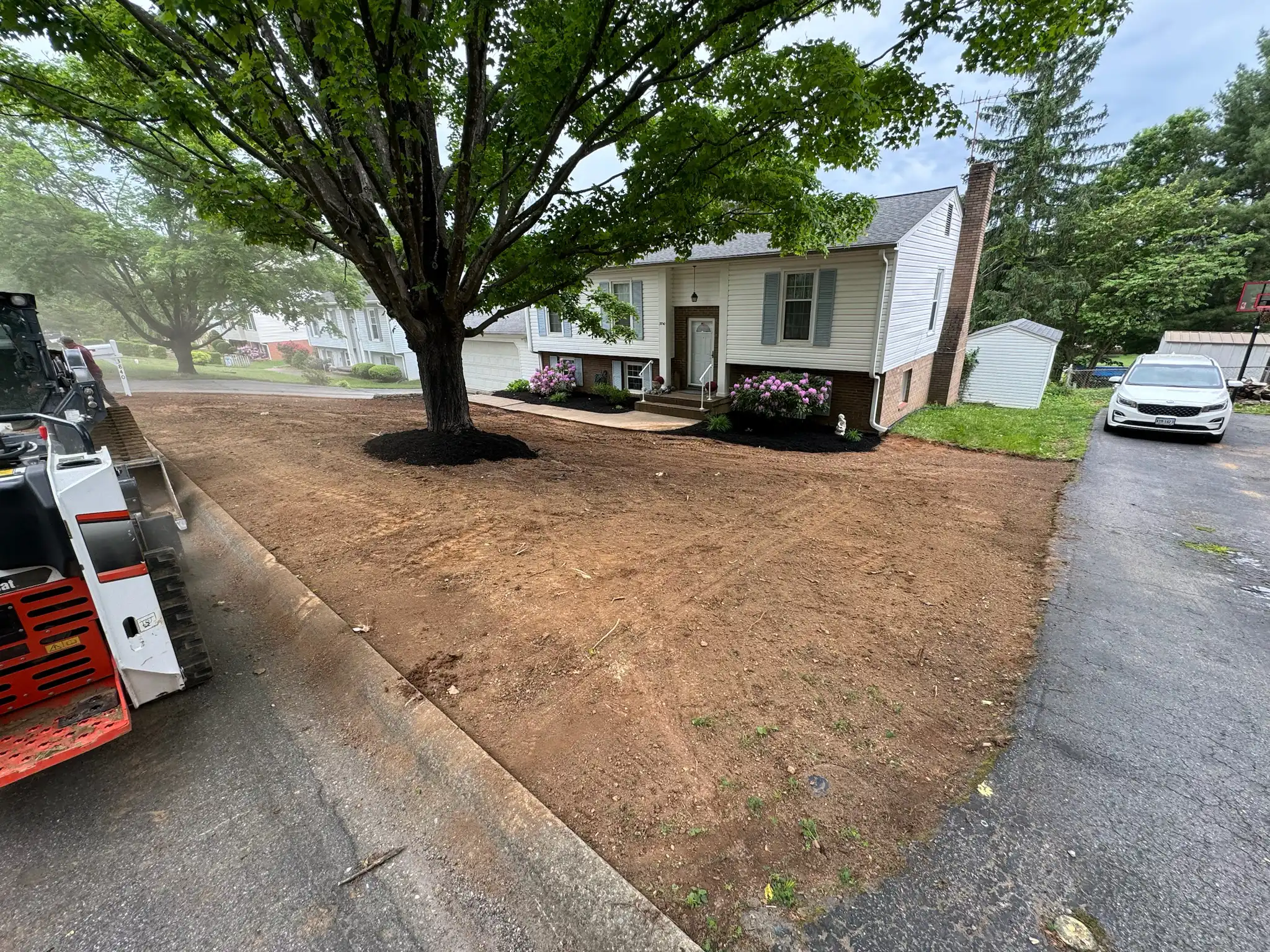
Gravel driveway installation, grading and repair, culvert work, and site access roads — reliable access to your property, built to handle the terrain.
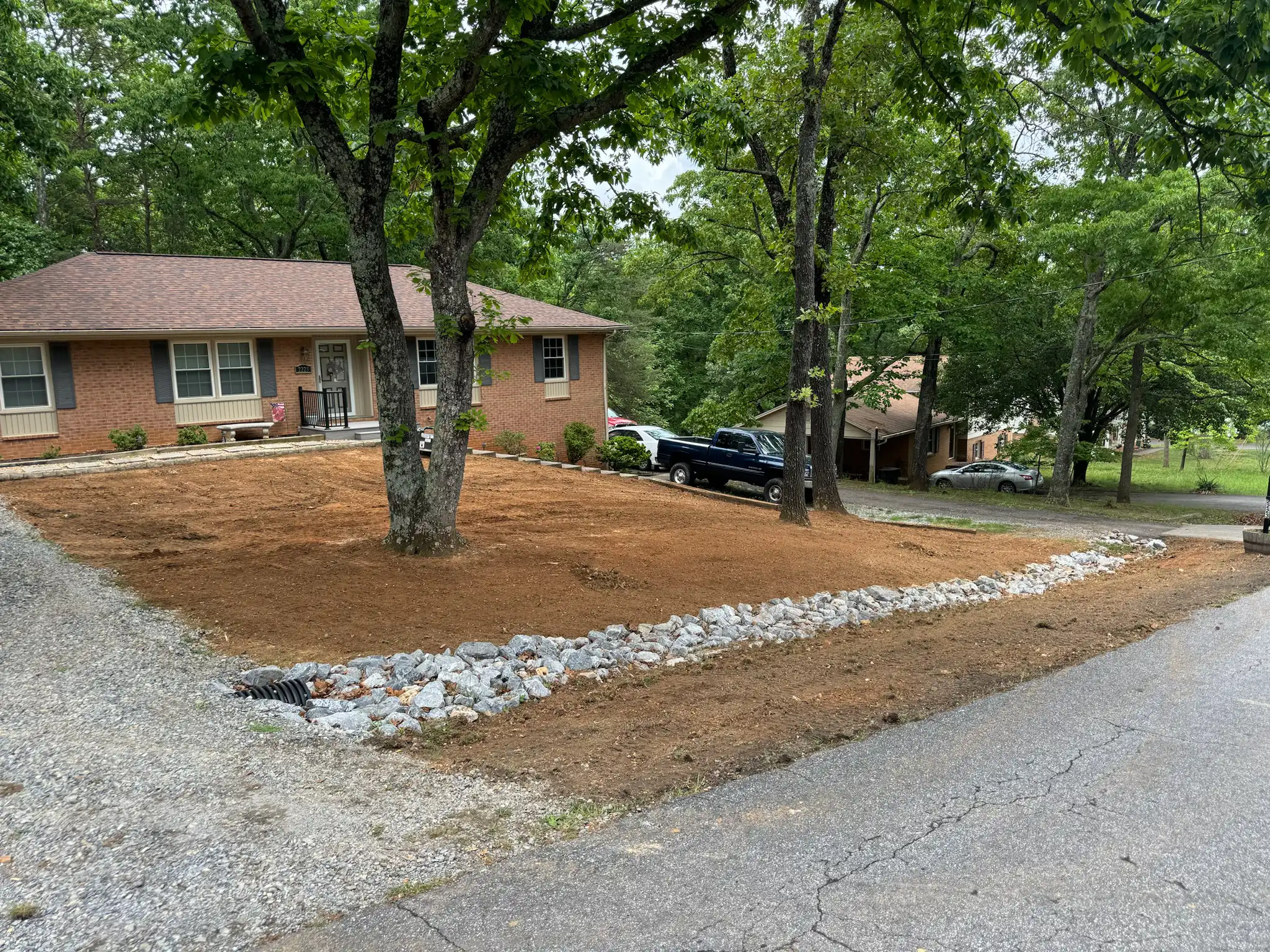
A driveway takes more abuse than almost any other part of a property. Rain, freeze-thaw cycles, heavy vehicles, and Virginia's clay soils can turn a poorly built driveway into a rutted, washed-out mess in a single season. The difference is in how it's built: proper base material, correct crown and drainage, and stone that locks together instead of migrating off the edges.
We install new gravel driveways, regrade and repair existing ones, install culverts, and build temporary or permanent access roads for construction sites, farms, and rural properties across the Roanoke Valley. Whether it's a 50-foot residential drive or a quarter-mile access road through hilly terrain, we build it to last and drain properly.
Driveway and access work varies by property, but these are the core services we provide.
Full driveway construction from subgrade prep through final surface stone. Includes excavation, geotextile fabric where needed, base stone, and finish layer — built with proper crown and drainage from the start.
Regrading rutted, potholed, or washed-out driveways. We reshape the surface, restore proper crown and cross-slope, add base or surface material as needed, and address the drainage issues that caused the damage.
Sizing and installing culvert pipes at driveway entrances, road crossings, and low spots where water needs to pass under the driving surface. Includes headwalls, riprap, and inlet/outlet protection.
Temporary and permanent access roads for construction sites, farms, and rural properties. Built to handle heavy equipment and truck traffic while managing water runoff on grades and through low areas.
Every driveway and access road follows the same process. It's the only way to get a surface that holds up through rain, traffic, and Virginia winters.
We assess soil type, terrain, drainage patterns, and traffic load. The driveway path is laid out to work with the land — not fight it — and we identify where culverts or ditching are needed.
Topsoil and soft material are stripped. The subgrade is shaped to establish proper crown and side drainage, then compacted to create a stable platform for the stone layers.
Crusher run base is placed and compacted in lifts. Surface stone is spread to the correct depth and profile. Edges are dressed and any turnaround or parking areas are finished.
Culverts, ditches, and swales are installed or cleaned out. The finished surface is checked for proper drainage, and the site is left clean and drivable.
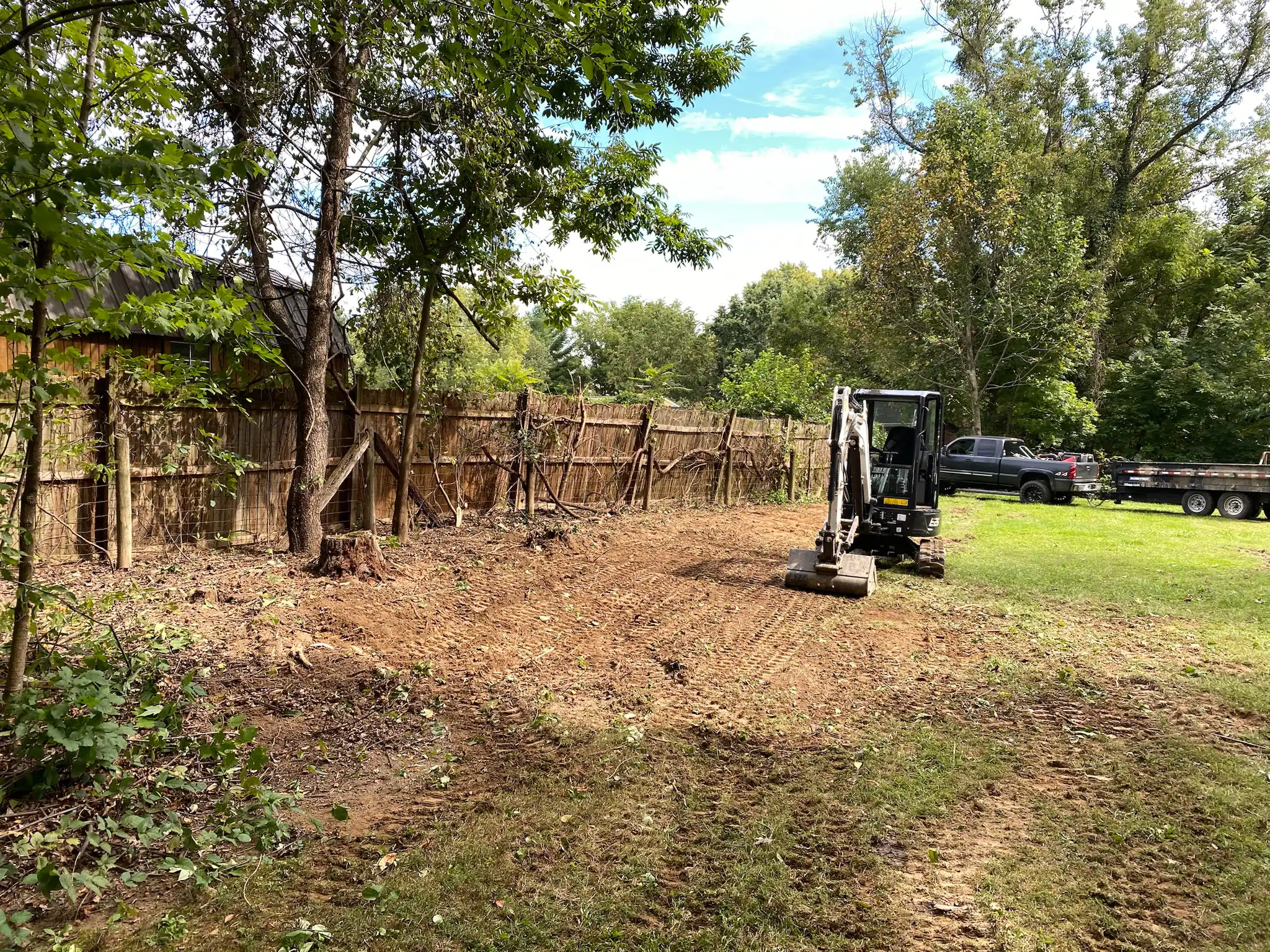
Driveways and access roads are often part of a larger site project. These related services frequently go together.
Foundation digs, building pad prep, bulk excavation, pool and pond excavation, and septic system work.
Rough and finish grading for new construction, lot leveling for outbuildings, and slope correction.
Tree and brush removal, stump grinding, lot clearing, and small structure demolition.
A properly installed gravel driveway with good base material and drainage can last 10–15 years or more with occasional maintenance. In the Roanoke area, periodic regrading and adding fresh stone every few years keeps it in solid shape.
We typically use a layered approach: larger crusher run stone (21A) for the base, topped with a finer surface stone for a smooth, drivable finish. The exact materials depend on soil conditions, traffic load, and your preference. We'll recommend the best option for your property.
Yes. Washout is usually caused by poor drainage, inadequate crown or cross-slope, or missing base material. We regrade the driveway to shed water properly, add or replace base material, and install culverts or ditching where needed to keep water off the surface.
If your driveway crosses a ditch, drainage swale, or any area where water flows, a culvert is essential. It lets water pass under the driveway instead of washing over or eroding around it. Most county road entrances require one. We size and install culverts to match the water volume on your property.
A single-lane residential driveway is typically 10–12 feet wide. If you need room for two vehicles to pass, 16–20 feet is standard. We also widen turnaround areas and parking pads as needed. During the site walk, we'll recommend dimensions based on your traffic and property layout.
Tell us about your property and we'll evaluate the terrain, recommend the right approach, and give you a clear quote.
Request an Estimate