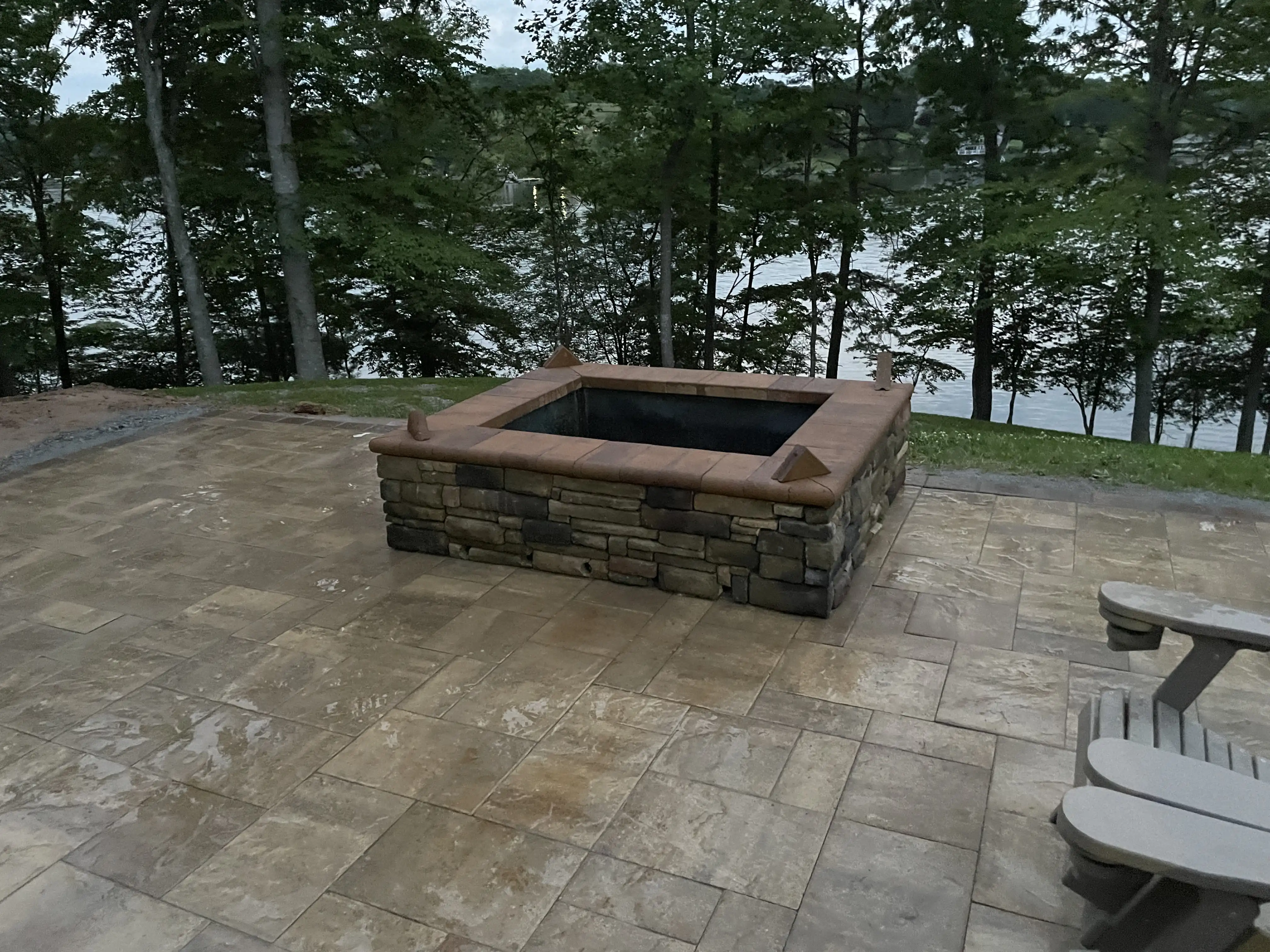
Fire pits, fireplaces, outdoor kitchen bases, and structure footings — the hardscape features that make your outdoor space a destination.
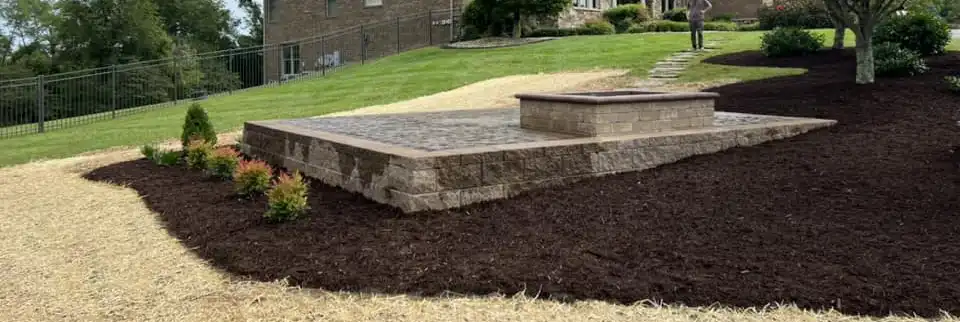
A fire pit turns a patio into a year-round gathering spot. An outdoor kitchen lets you cook and entertain without running back inside. A pergola creates shade and structure. These features transform your backyard from a nice yard into a space you actually use.
We build the hardscape foundations and structures for fire features and outdoor living additions throughout the Roanoke Valley. That means the block and stone construction, the footings and bases, the veneer and cap work, and the patio integration. We coordinate with gas and electrical trades when needed so the finished product is safe, permitted, and built to last.
From simple fire pits to full outdoor structure foundations, here's the range of fire feature and outdoor structure work we handle.
Built-in and custom fire pits constructed from block, stone, or brick. Wood-burning and gas-ready configurations with proper fire-rated liners and drainage.
Freestanding or wall-integrated outdoor fireplaces with firebox, chimney, and hearth. Built from block with stone or brick veneer for a finished look.
Block base structures for outdoor kitchens including grill islands, countertop supports, bar seating, and stone veneer finishing. We build the structure; licensed trades handle gas, water, and electrical.
Concrete footings and paver or stone pads for pergolas, pavilions, and shade structures. Properly sized and placed to support the structure above and resist frost heave.
These projects bring together multiple trades and materials. Here's how we keep everything organized.
We meet at your property to discuss the features you want, review placement and setback requirements, and determine what trades need to be involved. You get a clear scope before we start.
Concrete footings are poured where required. The patio area is excavated and base material is placed and compacted. This is the foundation everything else sits on.
Block cores are built up, fire-rated liners are installed, and the structure takes shape. Stone veneer, caps, and finishing details are applied. Utility rough-ins are coordinated with licensed trades.
The surrounding patio is completed, transitions are finished, and the entire area is cleaned up. You walk the finished space with us to make sure everything is right.
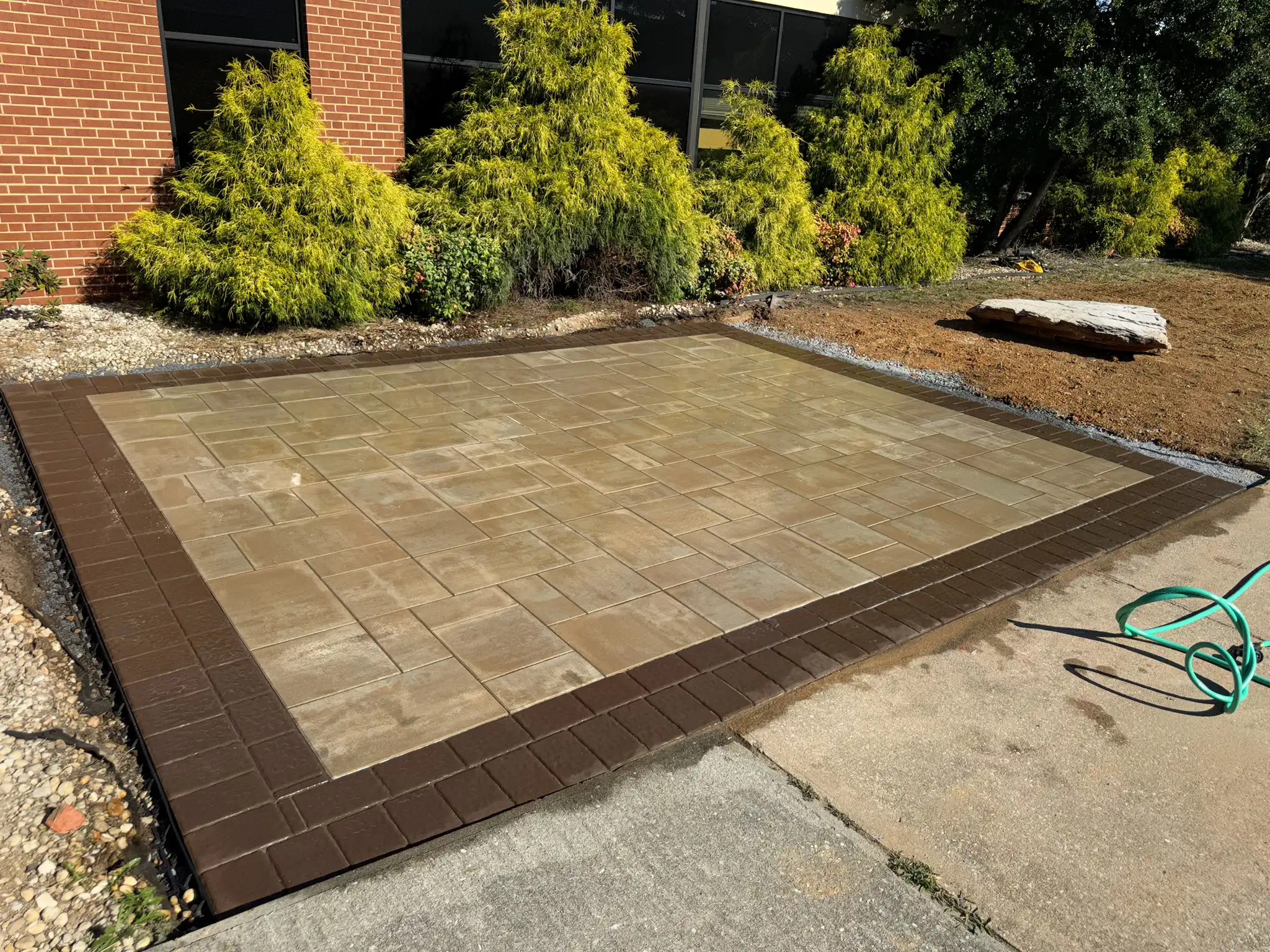
Fire Features & Outdoor Structures is one part of our hardscape work. These related services often go hand-in-hand.
Custom paver patios, flagstone and natural stone patios, multi-level patios, and patio expansions and repairs.
Segmental block walls, natural stone and boulder walls, engineered tall walls, and decorative garden and seat walls.
Paver walkways, flagstone paths, stone and paver steps, stone veneer, and boulder placement.
In Roanoke County and the City of Roanoke, permanent built-in fire pits generally don't require a building permit as long as they meet setback requirements — typically 10–25 feet from any structure depending on the jurisdiction. Gas-fueled fire features may require a plumbing or gas permit. We'll confirm the local requirements for your specific property before starting.
A fire pit is open on all sides with seating arranged around it — it's more casual and social. An outdoor fireplace has a firebox, chimney, and typically a focal wall, creating a more formal look and directing heat toward the seating area. Both can burn wood or gas. The right choice depends on your space, budget, and how you want the area to feel.
We build the hardscape portion — the block or stone base structure, countertop supports, stone veneer, and the patio it sits on. We coordinate with licensed plumbers and electricians for gas lines, water supply, and electrical connections. This way each trade handles what they're licensed for and the whole project comes together correctly.
Every fire pit and outdoor structure we build sits on a compacted aggregate base, and in many cases a concrete footing. The base prevents settling and cracking over time. The exact depth and specification depends on the size of the structure, soil conditions, and whether it's freestanding or integrated into a patio.
Most local codes require a minimum of 10 feet from any combustible structure, and we typically recommend 15–20 feet for comfort and safety. The exact setback depends on your jurisdiction, the type of fire feature, and whether it's wood-burning or gas. We factor this into the design during the site visit so there are no surprises.
Tell us what you're envisioning and we'll come see the space. We'll talk through options, placement, and give you a clear estimate.
Request an Estimate