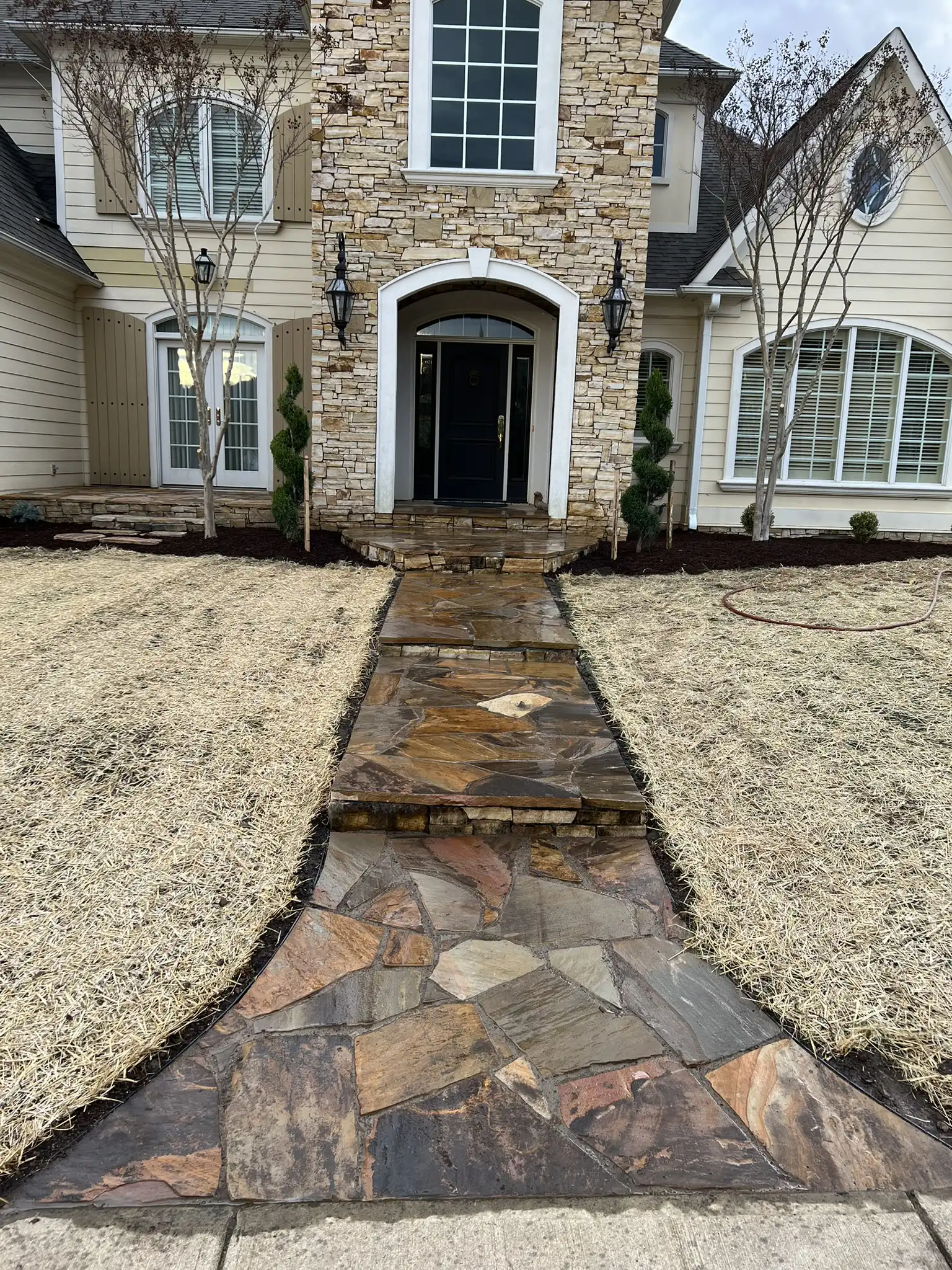
Paver walkways, flagstone paths, stone steps, and custom stonework for residential and commercial properties across Roanoke and Roanoke County / City of Roanoke.
Most properties in Roanoke sit on some kind of slope. The walk from the driveway to the front door, the path from the patio down to the yard, the route from the garage around to the back entrance — these are real daily-use surfaces, and on hilly lots they need to handle grade changes safely. In neighborhoods like South Roanoke, where homes perch above the street on steep lots, a well-built entry walkway with stone steps isn't cosmetic — it's how you get to your front door without slipping on wet clay.
Roanoke's Cecil clay creates a specific problem for walkways that most homeowners don't see until it's too late. The clay expands when it absorbs the valley's 42 inches of annual rainfall, then contracts through dry spells and winter freeze-thaw. That cycle — roughly 80 to 100 freeze-thaw events per year with an 18-inch frost line — will heave and shift any walkway that wasn't built on a proper aggregate base. Flagstone set on sand, pavers laid on a thin gravel bed, stepping stones placed directly on soil — all of these fail within a few seasons in this valley.
In Grandin Village and Old Southwest, we frequently match new walkways to the original brick and stone on homes built in the early 1900s. These neighborhoods have character that demands materials and craftsmanship that fit — not a generic concrete sidewalk bolted onto a historic property. We source Virginia fieldstone and bluestone from quarries within a few hours of Roanoke, so the stone looks like it belongs here because it came from here.
The full range of walkway, step, and stonework projects we handle across Roanoke and the surrounding area.
Interlocking concrete pavers in herringbone, running bond, or custom patterns. Compacted aggregate base rated for Roanoke's frost depth, polymeric sand joints, proper edge restraint.
Virginia bluestone, fieldstone, and irregular flagstone paths. Dry-set on compacted base or mortared for high-traffic areas. Locally sourced stone that matches the region's aesthetic.
Freestanding and built-in steps connecting different elevations. Consistent riser heights, non-slip treads, integrated landings on longer runs. Designed for Roanoke's hilly residential lots.
Natural stone veneer on walls and foundations, accent boulders, and stone edging. Ties walkway projects into the broader landscape and hardscape design.
Recent walkway and stonework builds from across the Roanoke area.
Grandin Village, VA
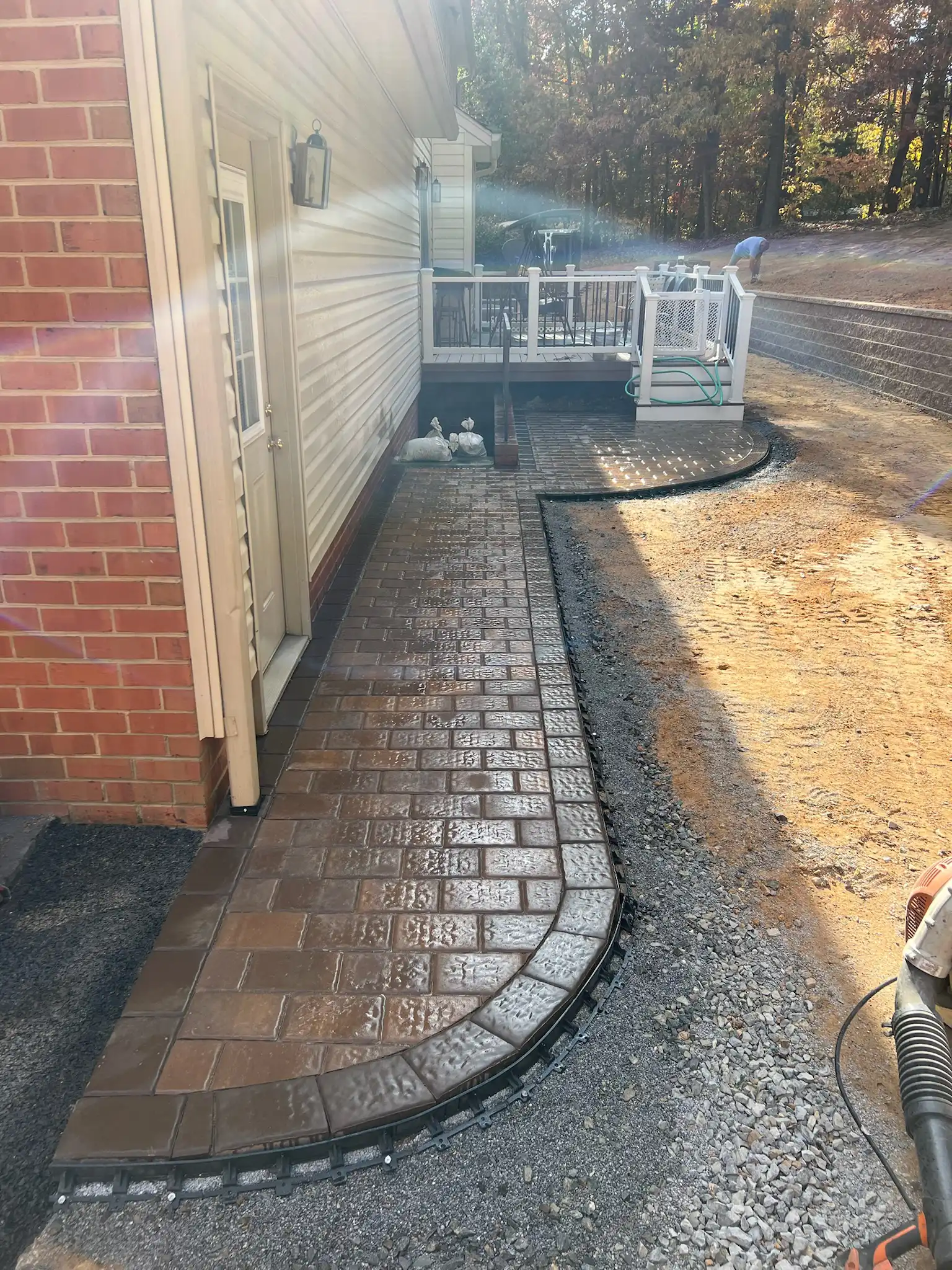
Old Southwest, VA
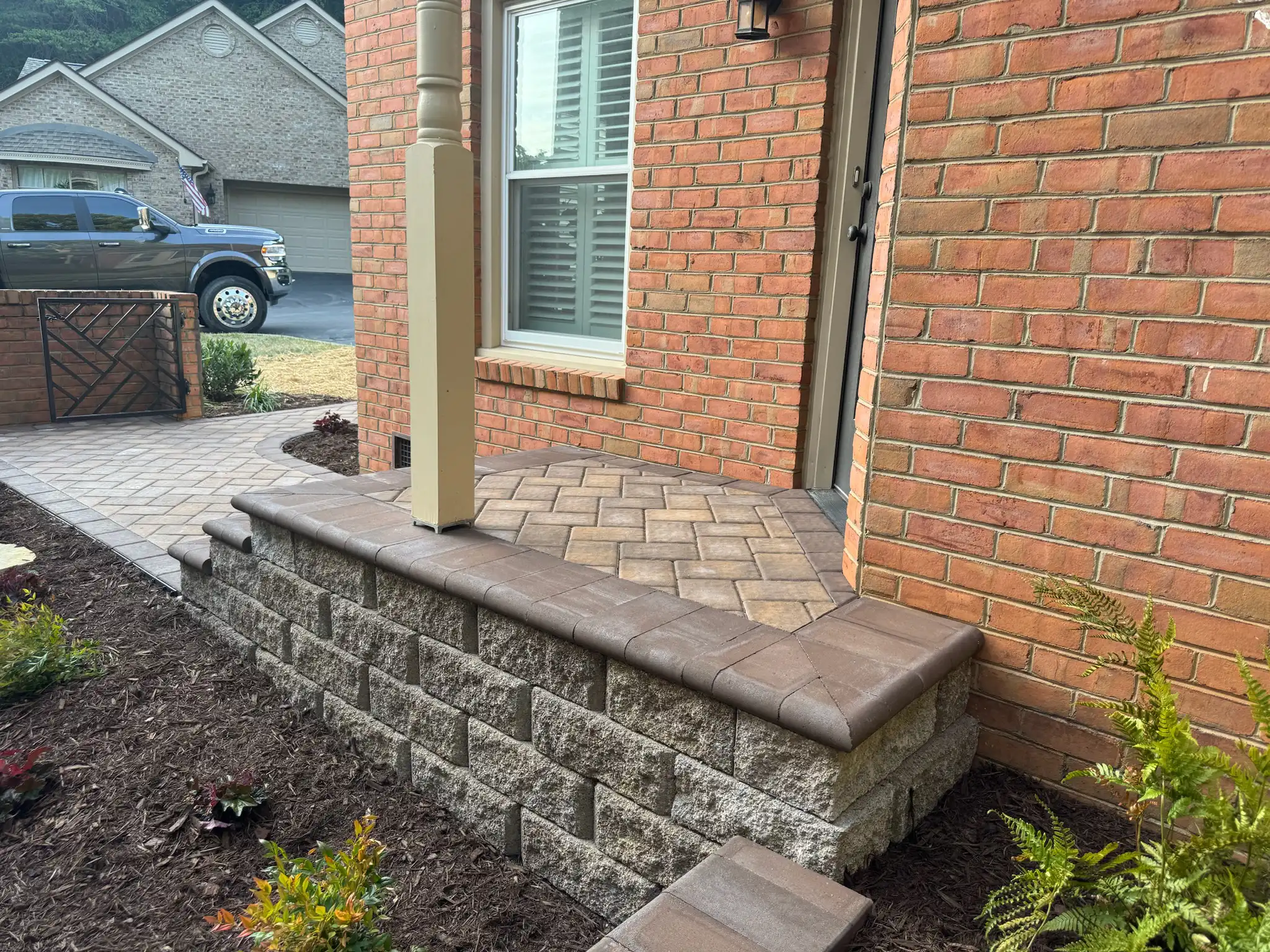
South Roanoke, VA
Tell us about the route, the grade change, and how the walkway needs to connect to existing surfaces. We'll walk the property, measure the slope, and come back with a fixed-price scope — no surprises mid-project.
Walkway projects often include or connect to these related services.
Custom paver patios and flagstone surfaces that walkways connect to and extend from.
Structural walls that create level areas alongside walkways and steps on sloped Roanoke lots.
Planting beds, sod, and landscape features that border and complement walkway projects.
Virginia bluestone and properly installed concrete pavers both handle Roanoke's 80–100 annual freeze-thaw cycles well. The material matters less than the base — with an 18-inch frost line in this valley, walkways need a minimum 6-inch compacted aggregate base to prevent frost heave. Flagstone dry-set on sand alone will shift within two winters here.
Yes. Many homes in South Roanoke and Grandin Village sit above the street on steep grades. We build walkways with ADA-compliant slopes (no steeper than 1:12) using switchback designs, intermediate landings, and integrated handrails where needed. Stone steps with consistent riser heights handle the steepest sections.
Cecil clay. Roanoke's clay soil holds moisture and becomes soft when saturated, especially during the March-through-May wet season when the valley gets 3.5–4 inches of rain per month. Stepping stones set directly on clay will sink unevenly within a year. Even simple stepping stone paths need excavated pads with a compacted gravel base underneath each stone.
It depends on the number of steps, material (natural stone vs. pavers vs. concrete), the grade change, and whether retaining walls are needed alongside the steps. A 4-step entry landing is a very different scope than a 30-step hillside staircase with landings. We quote after evaluating the site — grade, soil, and access all factor in.
We do. Old Southwest and Grandin Village have homes with original brick sidewalks and stone entry walls dating back a century. When we tie new walkways into existing masonry, we source stone and brick that matches the original in color, texture, and scale. If a seamless match isn't possible, we design a clean transition point between old and new.