Riprap rock armoring, slope stabilization, silt fencing, and erosion-control grading for residential and commercial properties across Roanoke and Roanoke County / City of Roanoke. Built for red clay terrain and Virginia DEQ compliance.
Roanoke's Cecil red clay erodes dramatically once the vegetation holding it in place is removed. Unlike sandy or loamy soils that erode grain by grain, clay fails in sheets and chunks — a single 3-inch rainstorm can carve new channels 6 inches deep through bare clay on a moderate slope. The soil's low permeability means nearly all rainfall becomes surface runoff, and on the hillsides that define much of Roanoke's topography, that runoff picks up speed and cutting power as it flows downhill.
The problem is worst near Mill Mountain, where steep slopes above residential properties shed enormous volumes of water during spring storms. In the Crystal Spring neighborhood, hillside runoff crosses multiple properties — what starts as sheet flow at the ridgeline concentrates into erosive channels by the time it reaches the lower lots. Along the Peters Creek corridor, creek-bank erosion undercuts yards and threatens structures during high-water events that come with every significant spring rain system.
Effective erosion control in Roanoke requires matching the method to the problem. Riprap armoring stops erosion where water velocity is high — stream banks, ditch outlets, slope toes. Erosion-control blankets and straw matting protect bare slopes while new vegetation takes hold. Diversion swales intercept concentrated runoff before it reaches the erosion zone. And silt fencing contains sediment during active construction, which is a Virginia DEQ requirement on any project disturbing more than 10,000 square feet within the City of Roanoke.
Slope stabilization and sediment control solutions we install across Roanoke and the surrounding area.
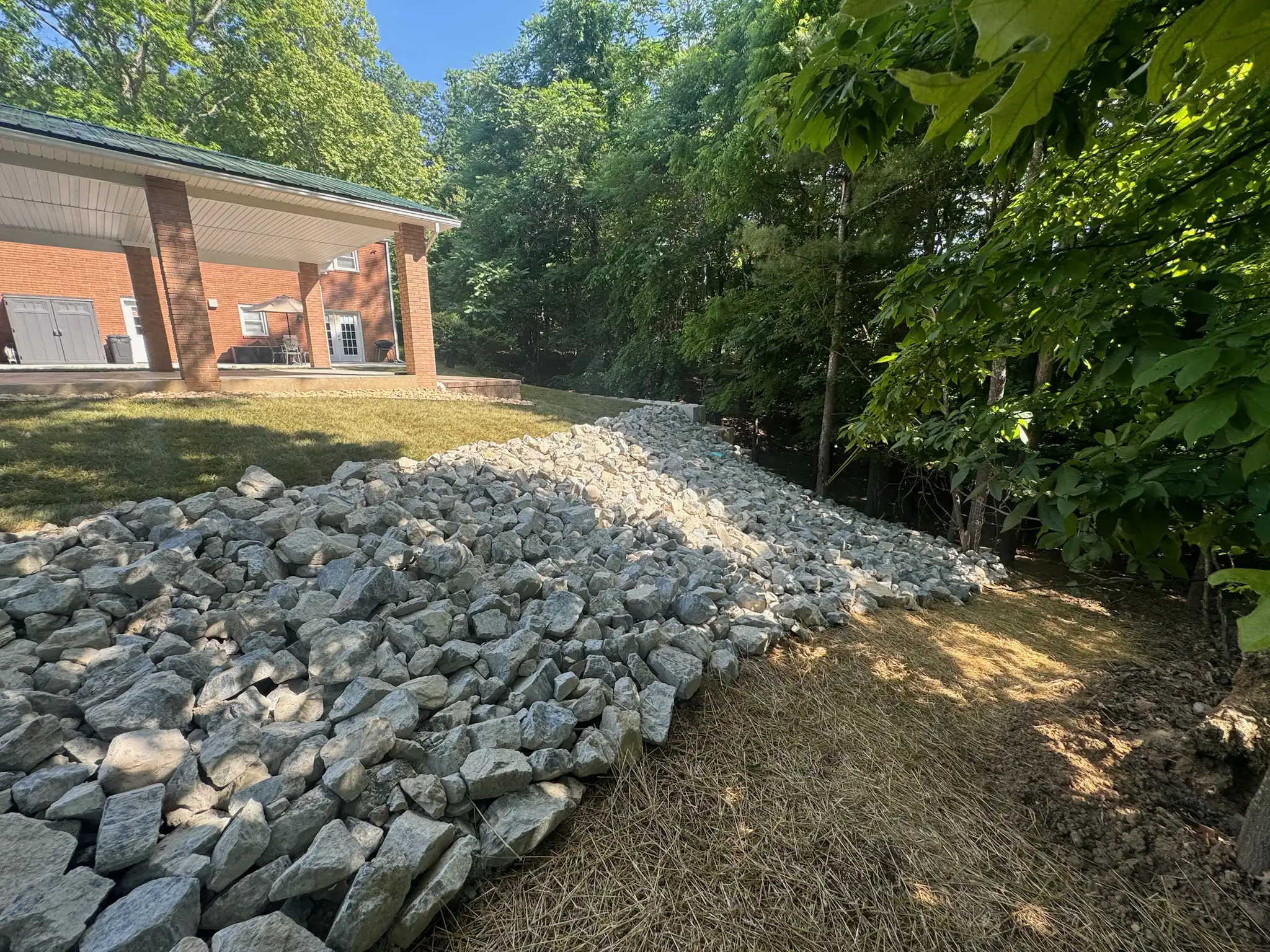
Placing sized stone along stream banks, ditch outlets, slope toes, and concentrated flow paths to absorb water energy and prevent soil displacement. Riprap class and stone size are selected based on slope angle and expected water velocity — steeper grades and higher-volume channels require heavier stone.
Regrading eroded slopes to stable angles, installing erosion-control blankets or straw matting, and establishing vegetation cover. On steep hillsides above homes near Mill Mountain and Crystal Spring, we combine grading with rock toe walls and blanket protection to hold soil during the critical establishment period.
Installing silt fence, sediment traps, and construction entrance stabilization for active job sites. Virginia DEQ stormwater regulations require erosion and sediment control on land disturbances over 10,000 square feet in the City of Roanoke — and best practice demands it on smaller residential sites in red clay.
Preparing eroded slopes for revegetation — grading to a plantable surface, amending compacted clay with topsoil where needed, and installing biodegradable erosion blankets that hold seed and soil in place while roots establish. The goal is permanent vegetative cover that prevents future erosion without ongoing maintenance.
Recent slope stabilization and erosion control work from the Roanoke area.
Mill Mountain area, VA
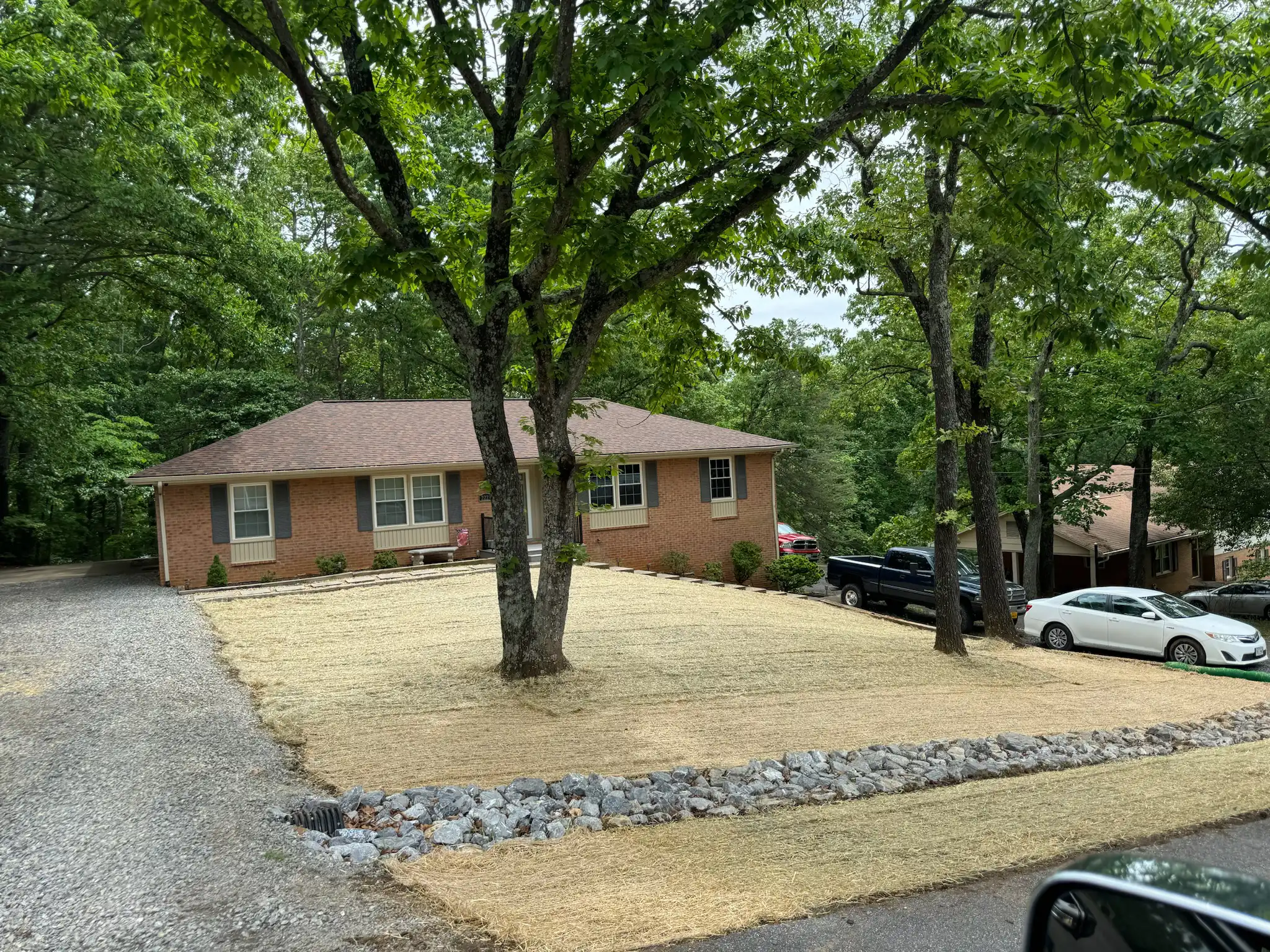
Crystal Spring, VA
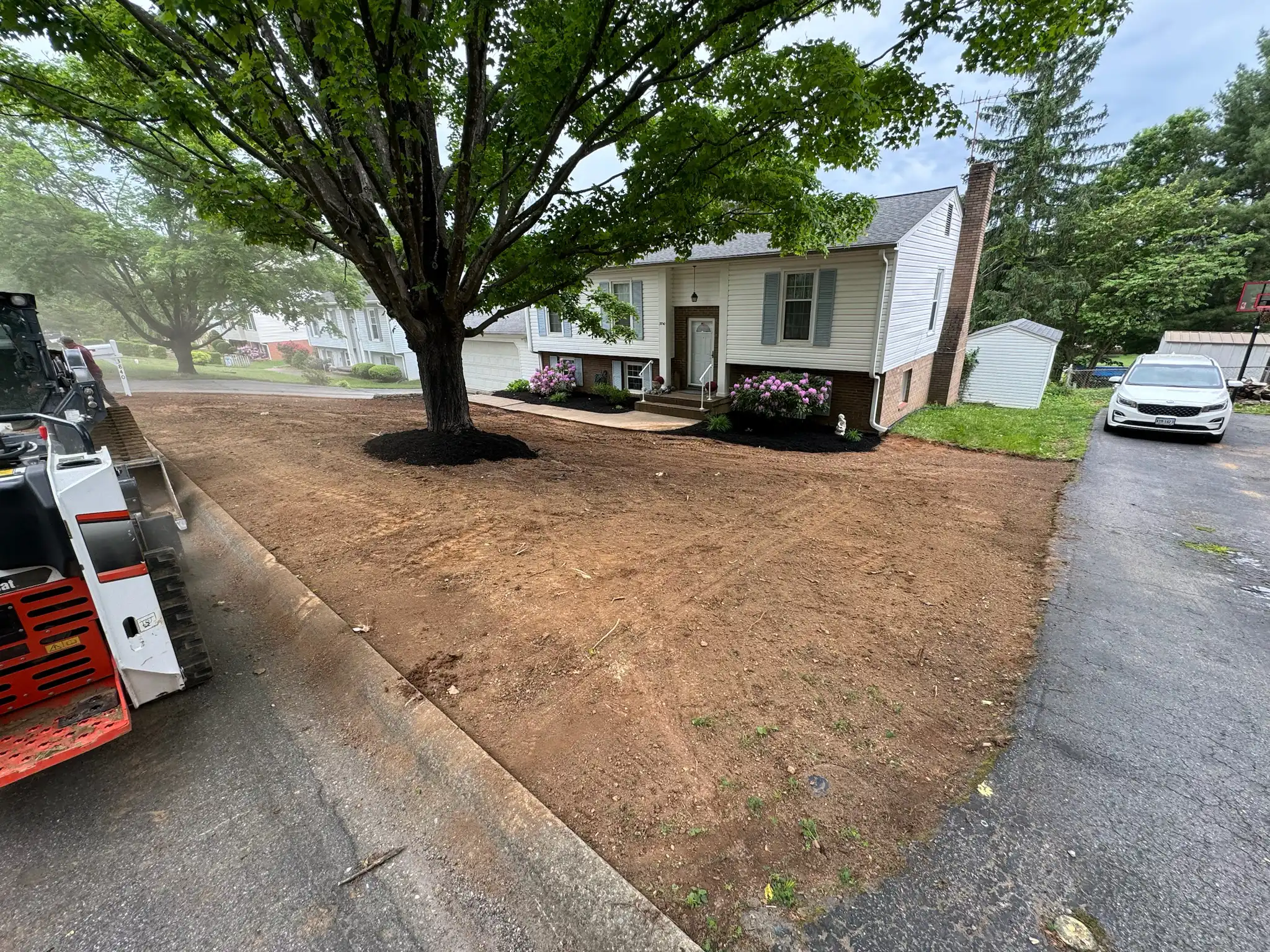
Peters Creek, VA
Describe the erosion you're seeing — where it's happening, how fast it's progressing, and whether there are structures or property lines involved. We'll walk the slope, assess the drainage patterns feeding the erosion, and put together a scope that stops it permanently.
Erosion control frequently connects to these site work and drainage services.
French drains, swales, and catch basins that manage the water volume causing erosion in the first place.
Regrading slopes to stable angles and establishing proper surface drainage patterns that reduce erosion pressure.
Structural walls that hold soil in place on steep slopes where erosion control alone isn't sufficient.
Cecil red clay has very low permeability — water runs across the surface instead of soaking in. Once vegetation is removed or disturbed, there's nothing binding the soil particles together against flowing water. The clay is also fine-grained and cohesive when wet, meaning it slides in sheets rather than eroding grain by grain. A single heavy rainstorm can cut 6-inch-deep rills through bare clay on a moderate slope. Multiply that by Roanoke's 42 inches of annual rainfall and a disturbed hillside can lose several inches of topsoil in one season.
Riprap sizing depends on slope angle, water velocity, and drainage volume. For gentle slopes under 3:1 (horizontal to vertical), Class I riprap — 6 to 12 inch stone — is usually sufficient. Steeper slopes or concentrated flow channels need Class II (12–24 inch) or larger. Around Peters Creek and other waterway corridors, we often use Class II or Class III riprap because the water volume and velocity during storms demand heavier stone to stay in place. We size based on site conditions, not guesswork.
It depends on the scale. Virginia DEQ requires a stormwater pollution prevention plan (SWPPP) for any land disturbance over 1 acre, and the City of Roanoke requires erosion and sediment control plans for disturbances over 10,000 square feet. Smaller residential projects — riprap on a backyard slope, silt fencing during construction — typically don't need permits but still must follow Virginia Erosion and Sediment Control Law requirements. We handle the compliance side during planning.
It depends on the slope angle and what's causing the erosion. For slopes above homes near Mill Mountain or Crystal Spring, we typically combine methods: riprap or rock armoring at the toe of the slope where water velocity is highest, erosion-control blankets or straw matting on the slope face to hold soil while vegetation establishes, and sometimes a diversion swale or berm at the top of the slope to redirect concentrated runoff before it reaches the erosion zone. Severe cases may need a retaining wall at the base.
March and April are the peak erosion months. Snowmelt from higher elevations combines with Roanoke's wettest rainfall period (3.5–4 inches per month) to produce the highest sustained water volume of the year. The ground is still partially frozen or saturated from winter, so absorption is minimal. Any bare or disturbed soil — construction sites, new grading, areas where vegetation died over winter — takes the worst damage during this window. If you're planning grading or clearing work, stabilization measures need to be in place before spring arrives.