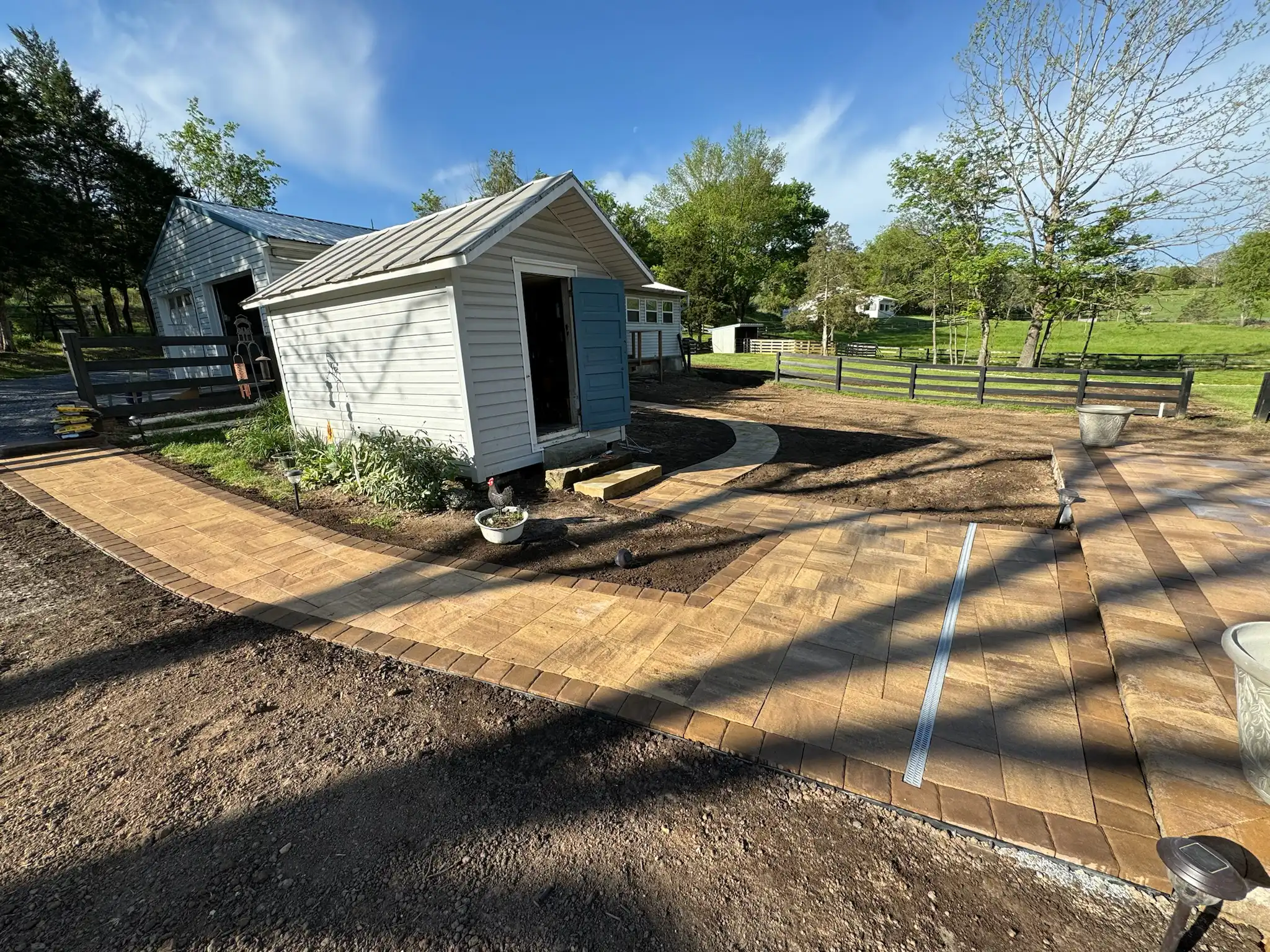
French drains, catch basins, swales, and regrading for residential and commercial properties across Roanoke and Roanoke County / City of Roanoke. Engineered for 42 inches of annual rainfall on heavy clay soil.
Most yard drainage failures in the Roanoke Valley trace back to one material: Cecil red clay. This soil dominates the region from the valley floor up through the surrounding ridges, and it behaves more like a bathtub than a sponge. Percolation rates in undisturbed Cecil clay run under 0.2 inches per hour — meaning a typical 1-inch Roanoke rainstorm takes five or more hours to absorb, if it absorbs at all. On compacted lots where homes have sat for 30, 50, or 70 years, that rate drops even further.
The problem compounds in neighborhoods like Raleigh Court, where flat lot grading and decades of soil settlement have eliminated the subtle slopes that once moved water toward the street. In Wasena, proximity to the Roanoke River means the water table sits close to the surface — some yards stay saturated even between rain events. Garden City sits at one of the lowest elevations in the valley, and chronic wet-yard conditions there are a function of geography more than poor grading.
We design yard drainage systems that account for Roanoke's specific soil behavior. That means oversized gravel envelopes on French drains (because clay clogs standard filter fabric within a few years), catch basins at every low point and grade transition, and positive slope on every pipe run verified with a laser level. The goal is to intercept surface water before it pools and move it off the property through solid pipe — not perforated pipe sitting in clay that can't absorb anything.
Surface water solutions we install across Roanoke neighborhoods and the surrounding area.
Trenched perforated pipe in an oversized gravel jacket, designed for Roanoke's clay soil. We use a minimum 12-inch aggregate envelope — double the standard spec — because Cecil clay migrates through filter fabric and clogs undersized systems within 3–5 years.
Surface-level collection points at driveway-lawn transitions, patio edges, and yard low spots. Connected by solid pipe to a daylight outlet or storm drain tie-in. Critical on flat Raleigh Court lots where water has no natural path off the property.
Graded surface channels that redirect sheet flow away from structures and toward a discharge point. Effective on larger lots in Garden City and Wasena where a full pipe system isn't needed — just a reshaped landscape that gives water a defined path.
Reshaping compacted soil to restore positive drainage away from foundations and toward collection points. Many Roanoke lots have settled over decades — soil that once sloped away from the house now tilts inward, funneling every rainstorm toward the foundation.
Recent yard drainage work from across the Roanoke Valley.
Raleigh Court, VA
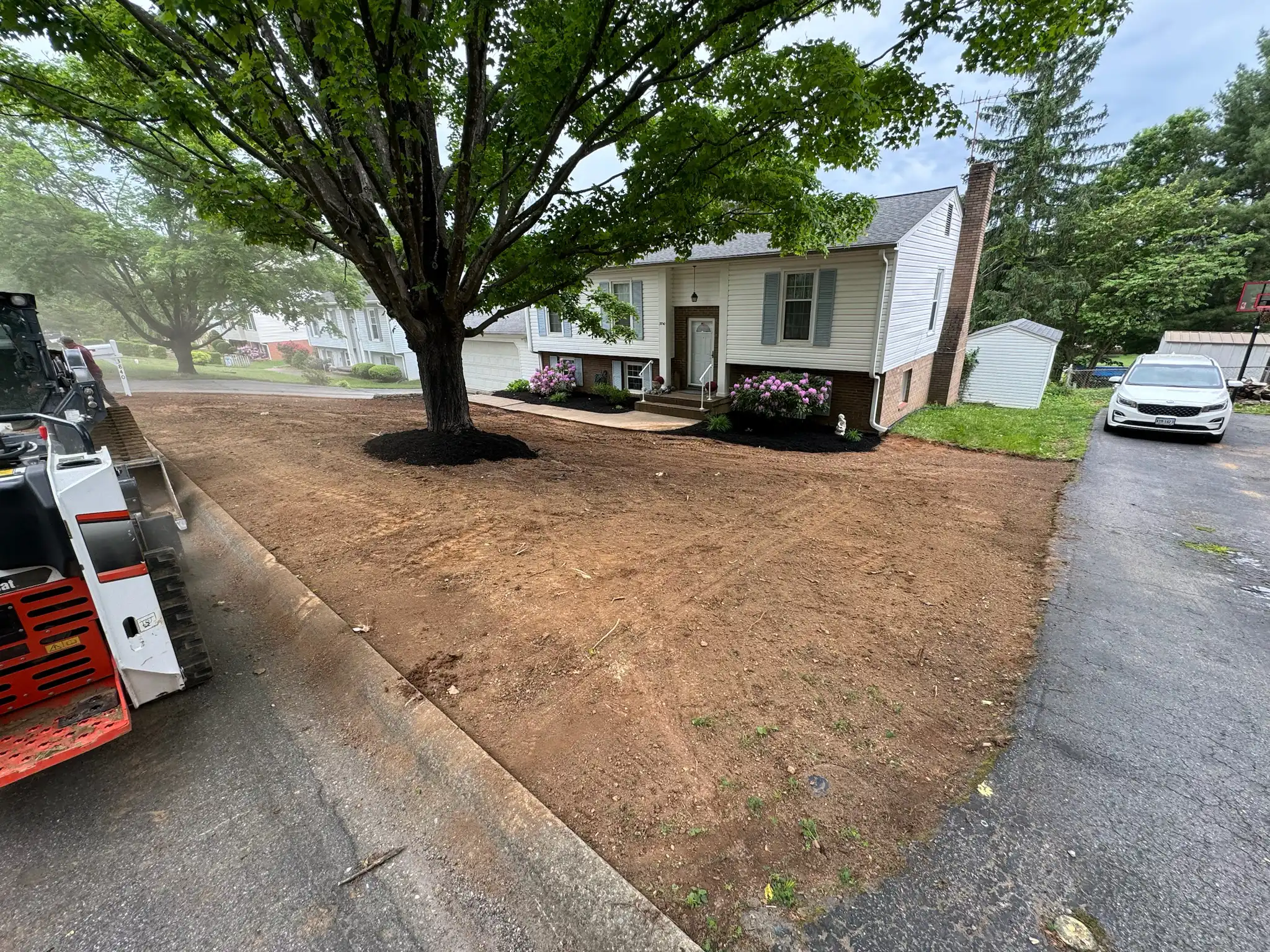
Wasena, VA
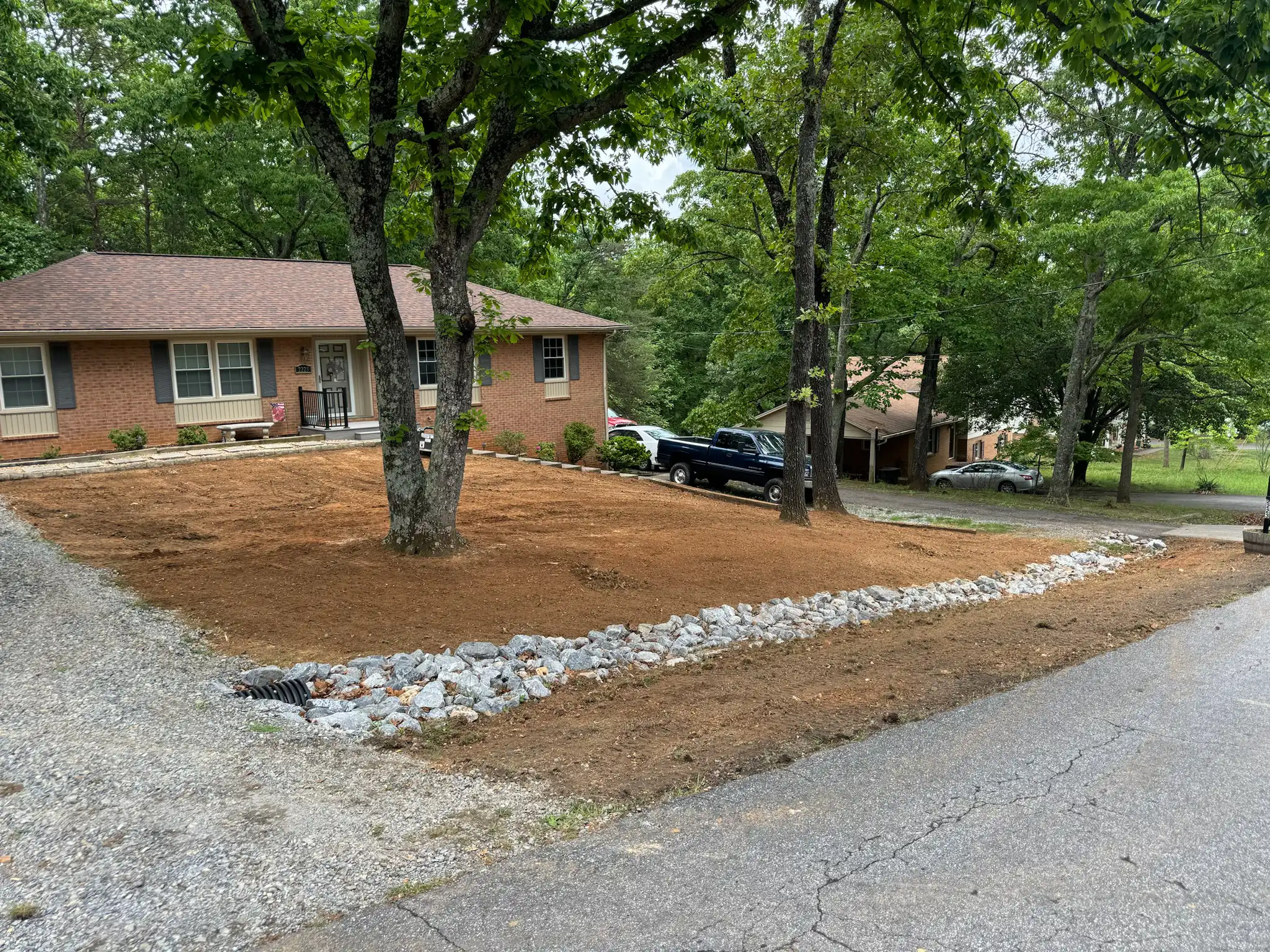
Garden City, VA
Tell us where water collects, how long it sits, and what you've already tried. We'll walk the property with a laser level, identify the low points, and put together a fixed-price scope to solve the problem permanently.
Yard drainage projects frequently overlap with these services.
Reshaping lot contours to establish positive drainage — the foundation of any surface water management plan.
Riprap, slope stabilization, and sediment control for properties where moving water is cutting channels through Roanoke's red clay.
When surface water problems extend to basement moisture and foundation pressure, the solution goes deeper than yard drains.
Roanoke sits on Cecil red clay, which has extremely low permeability. Water sits on the surface instead of draining through the soil profile. When you combine that with the valley's 42 inches of annual rainfall — concentrated heavily in March through May — surface water has nowhere to go. The fix is mechanical: French drains, catch basins, or regrading to move water off your lot before it pools.
We typically trench French drains 18–24 inches deep in Roanoke, which gets the pipe below the root zone and frost line. But depth isn't the only factor — in clay soil, the gravel jacket around the pipe matters more than in sandy ground. We use an oversized aggregate envelope because clay particles migrate through filter fabric faster than most installers account for. A standard 2-inch gravel jacket that works in loam will clog within 3–5 years in Cecil clay.
Most residential yard drainage installations — French drains, catch basins, dry wells — don't require a permit in the City of Roanoke or Roanoke County. However, if the project involves regrading that changes how water flows onto a neighbor's property, or if you're within a floodplain overlay district near the Roanoke River, you may need a land disturbance permit. We verify jurisdiction requirements during the site evaluation.
Raleigh Court lots are relatively flat with minimal natural grade, and decades of soil compaction have eliminated what little slope existed. Water collects at the driveway-lawn transition because there's no grade break directing it elsewhere. The standard fix is a linear catch basin or channel drain at that transition point, tied into a solid pipe that carries water to the street or a lower discharge point on the lot.
A single French drain run with a catch basin typically takes 1–2 days. A full-yard drainage system — multiple runs, regrading, and tie-ins — takes 3–5 days depending on lot size and access. Spring is our busiest season because that's when Roanoke gets 3.5–4 inches of rain per month and drainage problems become impossible to ignore.