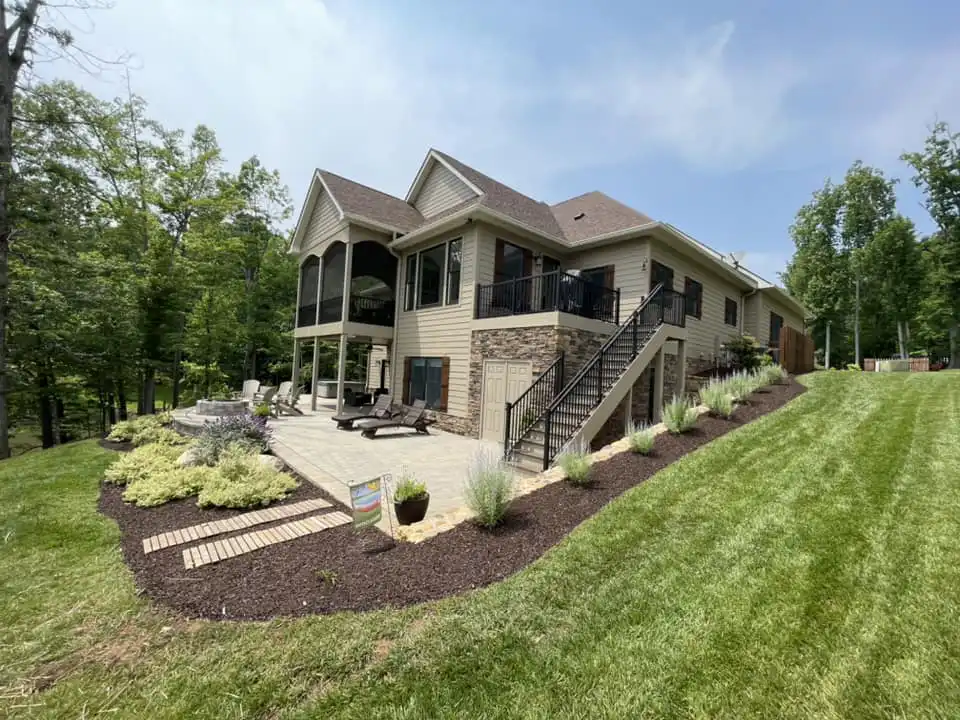
Mulch installation, decorative rock beds, river rock accents, and professional edging for residential properties across Roanoke and Roanoke County / City of Roanoke.
Roanoke's humid summers break down organic mulch faster than most homeowners expect. Standard hardwood bark that looks fresh in April is visibly thinned and faded by January — and by the second spring, it's functionally gone. That's not a product defect; it's what happens when you combine 42 inches of annual rainfall, summer heat, and the biological activity in Roanoke Valley's soil. Annual mulch refresh isn't a luxury here — it's standard maintenance.
Neighborhoods like Raleigh Court and Garden City, where homes sit on heavy clay with small to medium beds, benefit most from a straightforward annual mulch program. The mulch serves double duty: it suppresses the weeds that clay soil is notorious for producing and retains moisture during the July–August drought window when the clay cracks and pulls away from plant roots. Without that insulating layer, summer watering costs go up and plant stress goes up with them.
For homeowners in Bonsack and other areas looking for lower maintenance, decorative rock beds are an option — but only when installed correctly. Roanoke's clay is persistent. Without commercial-grade landscape fabric and defined metal edging, clay particles work their way up through gravel within two years, turning a clean rock bed into a muddy, weedy mess. We install rock beds with the fabric, edging, and stone depth needed to stay clean for years rather than months.
What we handle for mulch and decorative groundcover across Roanoke and the surrounding area.
Hardwood bark, double-shredded hardwood, and cedar mulch at the correct 2–3 inch depth. Includes bed edge cleanup, weed removal, and even distribution. Annual refresh programs for Raleigh Court and Garden City homeowners who want it handled every spring.
River rock, pea gravel, and decorative stone beds with commercial-grade landscape fabric and steel or aluminum edging. Built to stay clean on Roanoke's clay — not the kind that turns into a mud pit within two seasons.
River rock in drainage swales and low areas where organic mulch would rot. Boulder placement as natural focal points or bed borders. Effective in spots where standing water after rain makes traditional mulch impractical.
Professional edging — steel, aluminum, or composite — that defines bed lines and keeps mulch or rock contained. Fabric installation under rock beds to prevent clay migration. Bed border re-cutting for properties where edges have disappeared into the lawn.
Recent mulch and decorative groundcover work from across the Roanoke area.
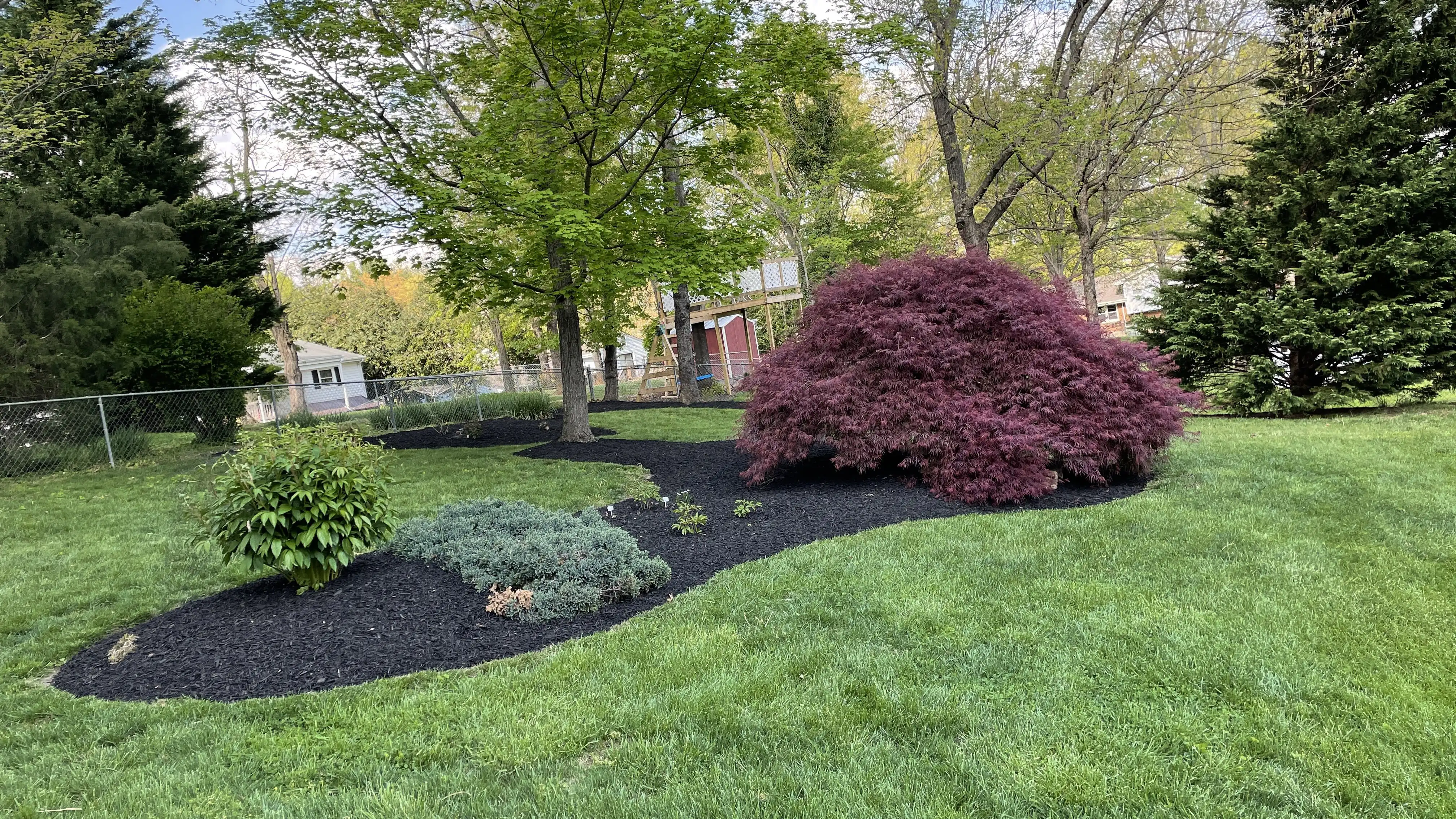
Raleigh Court, VA
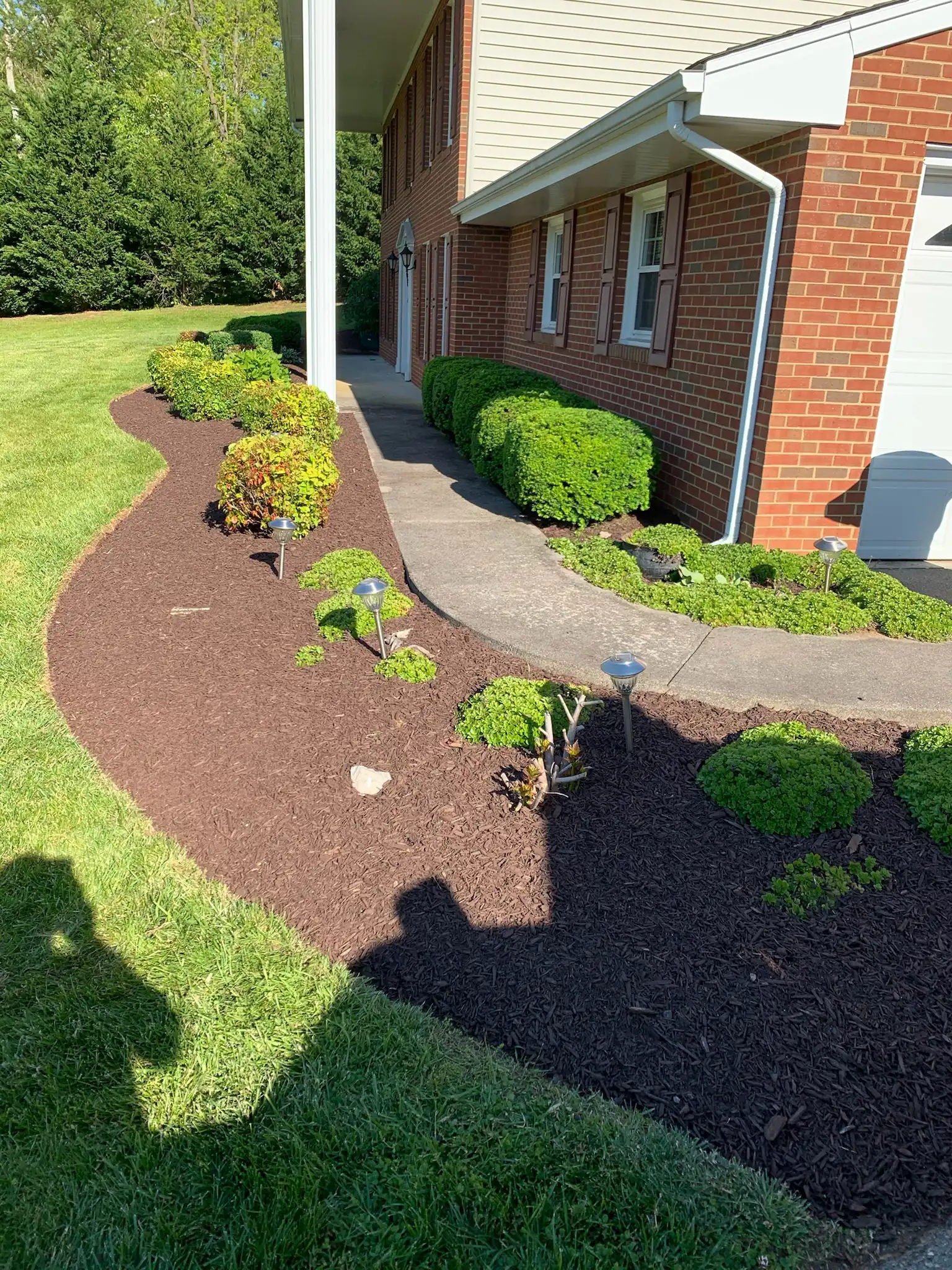
Garden City, VA
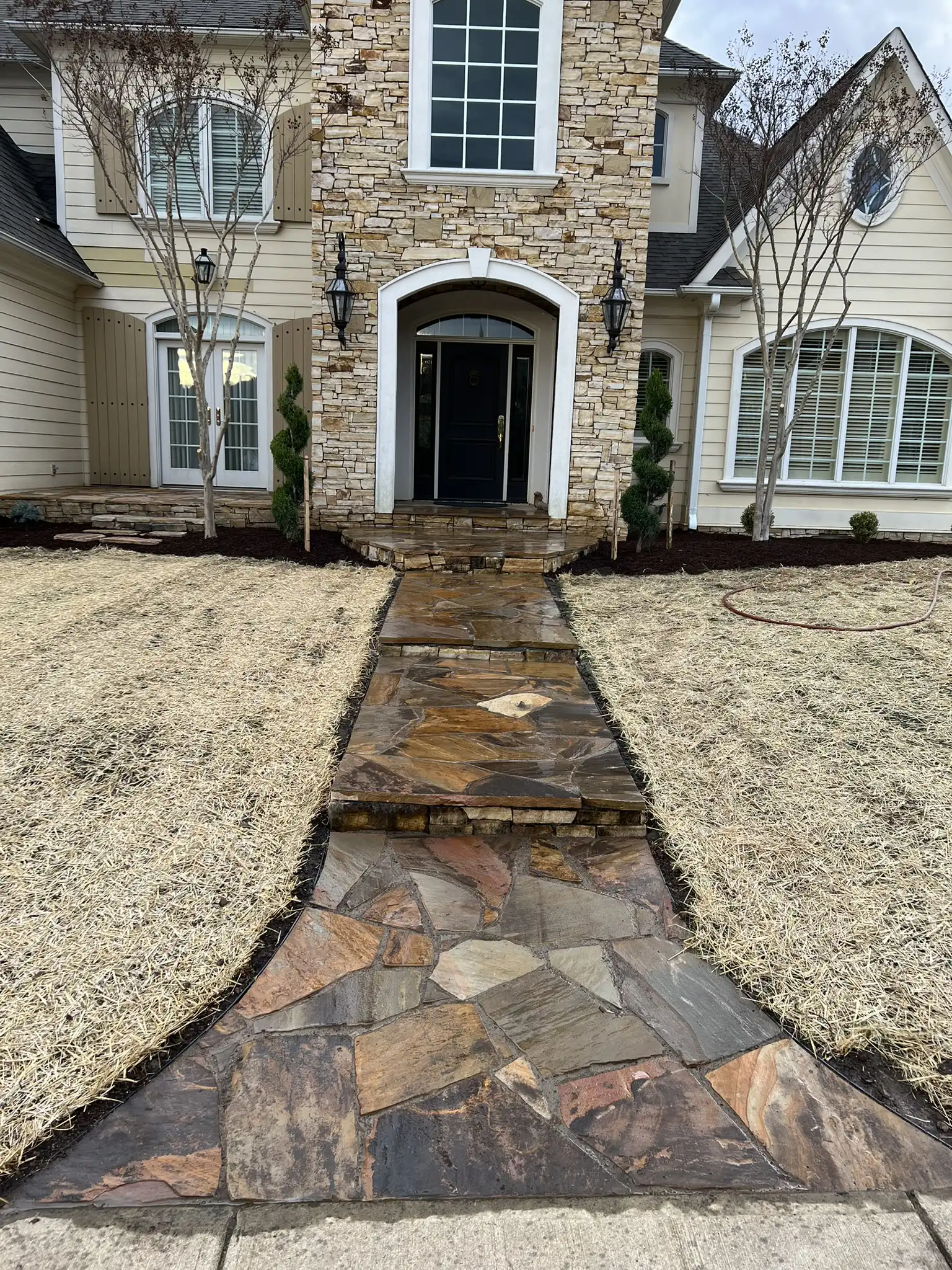
Bonsack, VA
Whether it's an annual mulch refresh, a new decorative rock bed, or edging that needs to be redefined, tell us what you're working with. We'll measure the beds, recommend the right material for your soil and drainage conditions, and quote a fixed price.
Mulch and groundcover work often connects to these related services.
Full landscape overhauls that include bed creation, soil amendment, and grading before mulch or rock goes down.
Tree, shrub, and perennial installation that pairs with mulch to protect new plantings and retain soil moisture.
French drains, catch basins, and grading solutions for beds where standing water makes organic mulch impractical.
Annually. Hardwood bark mulch — the most common type in the Roanoke area — breaks down in 8 to 10 months in our humid climate. By the following spring, it's thinned out, faded, and no longer suppressing weeds effectively. Most Roanoke homeowners schedule a spring refresh in April or early May to get beds looking sharp before summer and to lock in moisture ahead of the July–August dry spell.
It depends on your goals. Cedar lasts 12 to 18 months in Roanoke's climate compared to 8–10 months for standard hardwood bark, and it has natural insect-repellent properties. For beds where you want to extend the time between refreshes or reduce pest pressure near the house, cedar makes sense. For large beds where cost per cubic yard matters more, standard hardwood bark with an annual refresh is the better value.
Two reasons: inadequate fabric and missing edging. Roanoke's clay soil works its way up through gravel within one to two years if there's no commercial-grade landscape fabric underneath. And without proper steel or aluminum edging, gravel migrates into the lawn or washes downhill during heavy rain events — which happen regularly March through May. A correctly installed rock bed has fabric, defined edging, and at least 2 inches of clean stone depth.
Hardwood bark or double-shredded hardwood for most beds — it holds in place on slopes, breaks down into organic matter that improves the clay over time, and retains moisture during Roanoke's dry summers. Avoid dyed mulch if soil health matters to you; the coloring agents don't harm plants, but they don't break down into useful organic material either. For drainage-challenged areas where mulch stays too wet and rots, river rock is the better choice.
Standard depth is 2 to 3 inches. Going thicker than 3 inches can actually suffocate plant roots and trap too much moisture against stems — a problem that leads to rot in Roanoke's humid summers. We measure bed area during the site walk and calculate cubic yards needed. A typical Raleigh Court home with front and side beds usually needs 3 to 5 cubic yards for a full refresh.