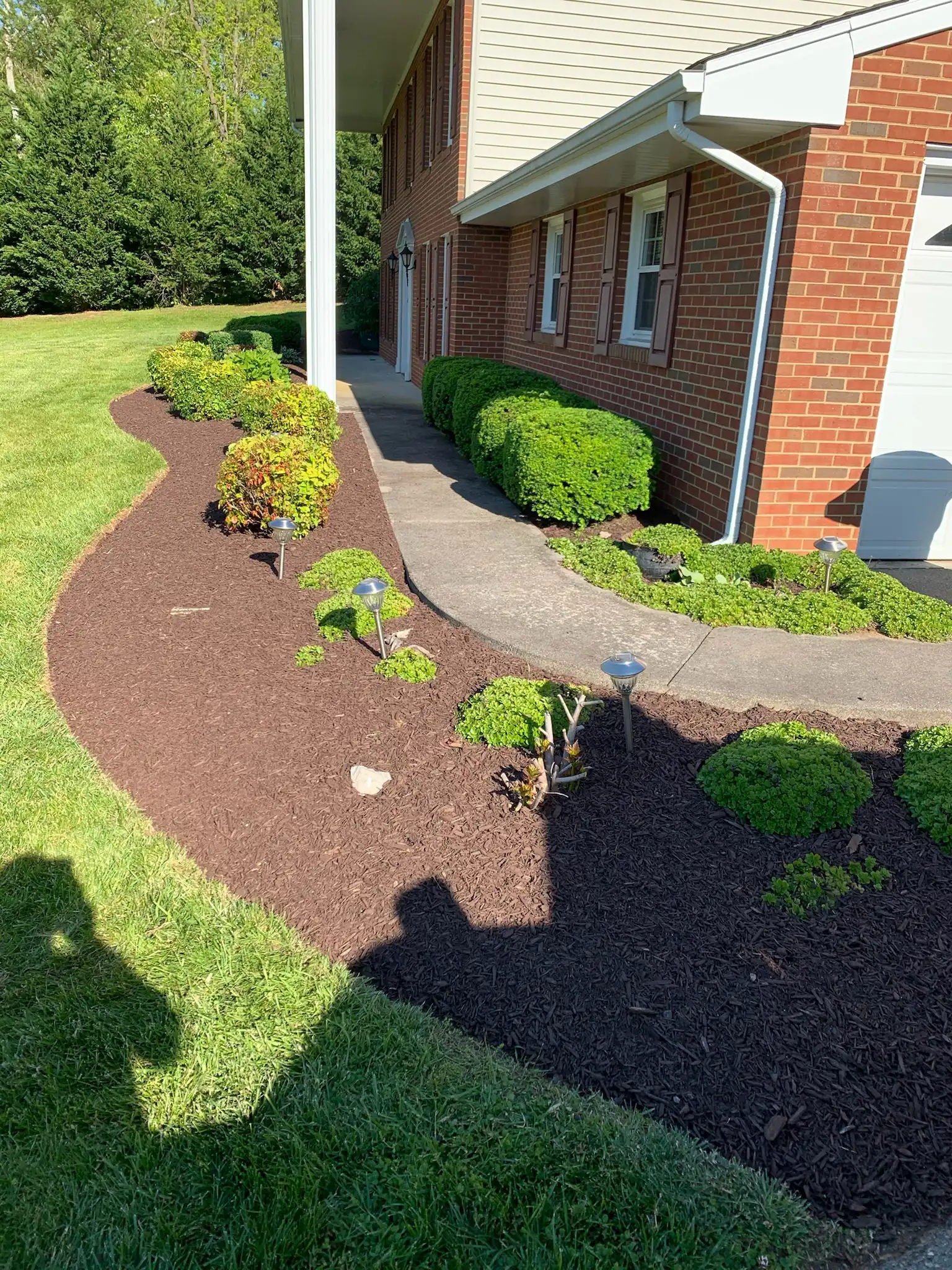
Tree installation, shrub and hedge planting, perennial beds, and foundation plantings selected for Roanoke's Zone 7a climate and acidic clay soil.
Roanoke sits in USDA Hardiness Zone 7a, with higher-elevation properties along the ridges occasionally dipping into Zone 6b. That range matters when selecting trees and shrubs — a plant rated for Zone 7 might fail on a north-facing slope at 1,800 feet while thriving on the valley floor at 900 feet. We select species based on your property's actual microclimate, not just the regional zone designation.
The valley's naturally acidic soil (pH 5.5–6.5) is an advantage for many of the best ornamental plants. Rhododendrons, Mountain Laurel, Azaleas, Blueberries, and Dogwoods all evolved in this kind of acid soil — they don't need amendments to thrive here, they just need proper planting technique in the clay. The roughly 190-day growing season gives plants adequate time to establish, but the July–August drought window is the critical survival period for anything installed in spring.
Deer pressure varies dramatically by neighborhood. Properties in Cave Spring bordering wooded areas, lots along the Hollins corridor, and anything adjacent to the Blue Ridge Parkway face constant browse. In those areas, plant selection isn't just about aesthetics — it's about choosing species that deer consistently pass over, or the investment is wasted within the first winter.
The range of planting work we handle across Roanoke and the surrounding area.
Canopy and ornamental tree installation with oversized planting holes to overcome clay resistance. Native species like Redbud, Dogwood, and Red Maple, plus ornamentals like Japanese Maple and Crape Myrtle. Staking and root ball protection included.
Foundation shrubs, privacy hedges, and border plantings. Spacing calculated for mature size — not the nursery pot size. Includes Hollies, Boxwoods, Viburnums, and evergreen screens for year-round coverage in Roanoke's climate.
Season-extending perennial beds designed for Roanoke's growing season — spring bulbs through fall asters. Shade beds under mature canopy in Crystal Spring, sun-drenched borders in Cave Spring, and low-water selections for south-facing slopes.
Curated plant palettes for properties with heavy deer browse — Inkberry Holly, Catmint, Russian Sage, Hellebores, and native Rhododendrons and Mountain Laurel that deer consistently avoid. Essential for Hollins and properties near the Blue Ridge Parkway.
Recent planting and bed work from across the Roanoke area.
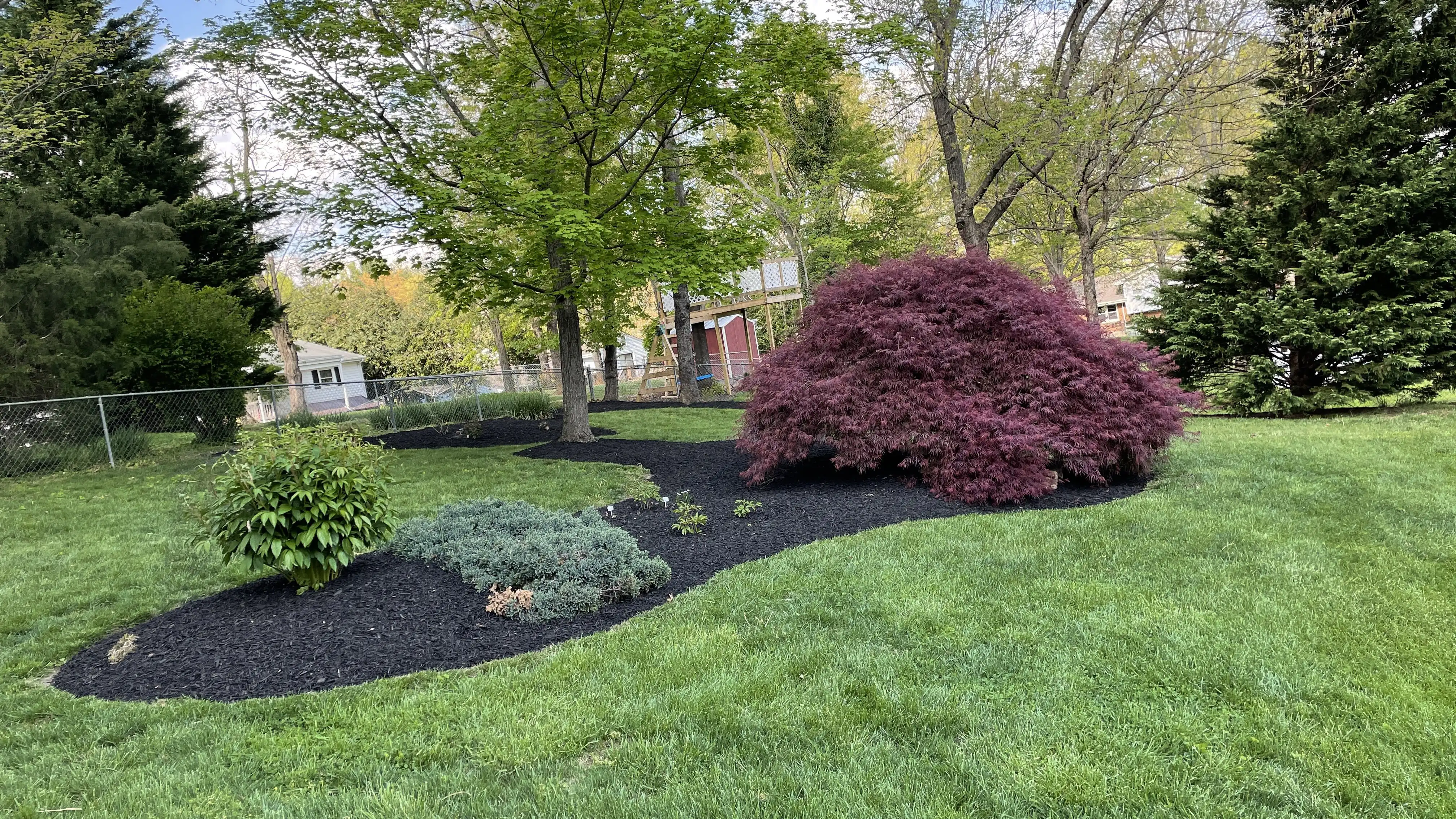
Cave Spring, VA
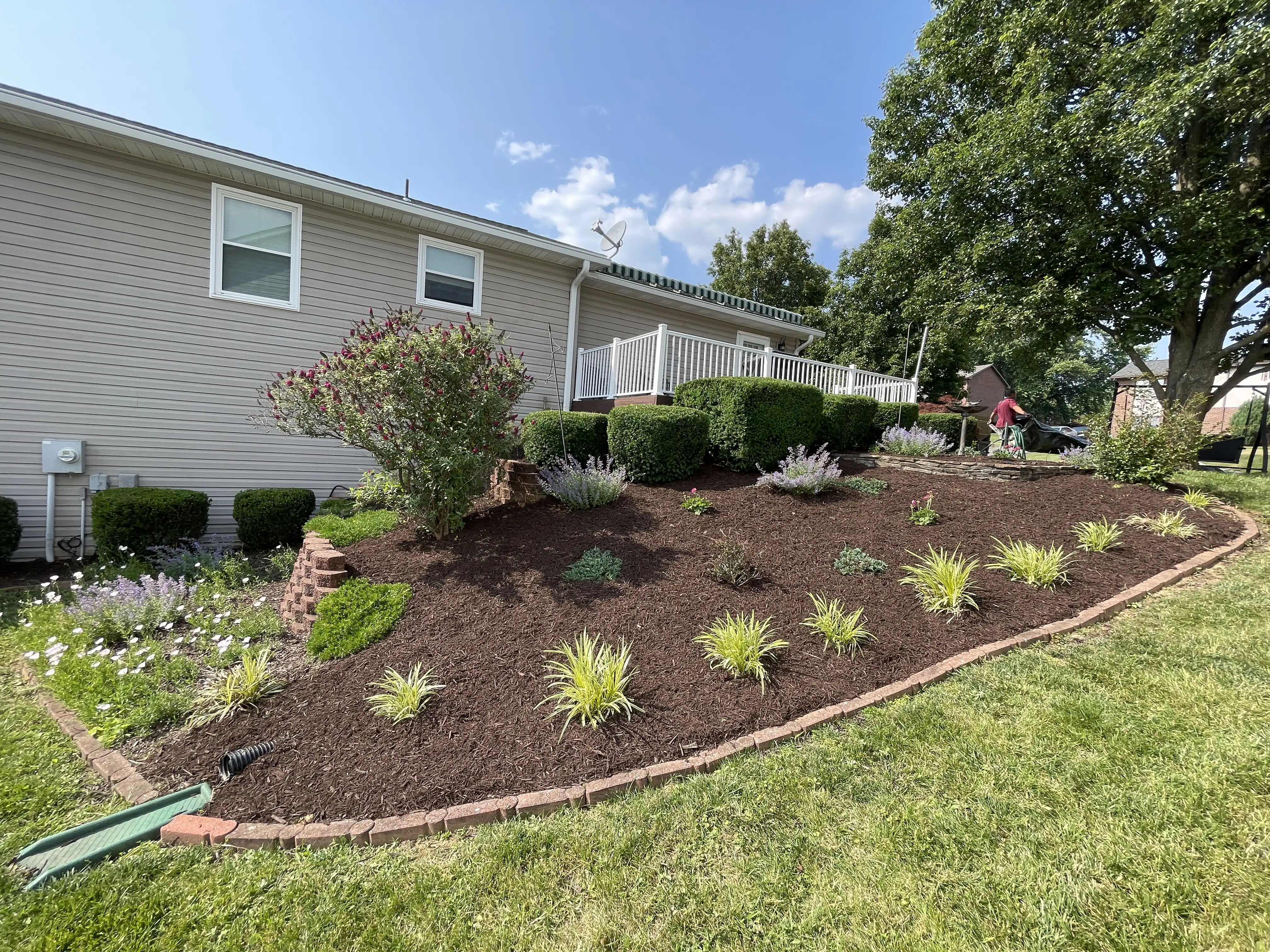
Hollins, VA
Crystal Spring, VA
Tell us what you're looking for — shade trees, foundation shrubs, a perennial border, or a deer-resistant design for the whole property. We'll evaluate your site conditions, soil, sun exposure, and deer pressure, then recommend specific plants and placement.
Planting work often connects to these related services in the Roanoke area.
Full landscape overhauls that include bed creation, grading, and sod — the groundwork that planting builds on.
Mulch installation that protects new plantings, retains moisture in Roanoke's summer drought, and suppresses weeds in fresh beds.
Uplighting and accent lighting that showcases specimen trees and planting beds after dark.
Eastern Redbuds and Dogwoods are native to the Roanoke Valley and thrive as understory trees in partial shade. For larger canopy trees, Red Maples, Willow Oaks, and Tulip Poplars do well. Japanese Maples work in sheltered spots but need protection from late spring frosts that the valley funnels in. We select species based on your specific site — sun exposure, soil drainage, and how close you are to wooded areas with deer pressure.
Clay is the defining challenge. We dig planting holes at least 3 times the width of the root ball — not because the textbook says so, but because Roanoke's Cecil clay is dense enough that roots physically cannot push through it without loosened soil to grow into. The hole stays shallow (same depth as the root ball) to prevent settling. We score the sides of the hole to break the glazing that forms when you dig in clay, then backfill with a mix of native soil and compost.
Properties near the Blue Ridge Parkway, Hollins, and the less developed edges of Cave Spring see heavy deer browse. We use Boxwood, Inkberry Holly, Russian Sage, Catmint, Liriope, and Hellebores in high-pressure areas. Rhododendrons and Mountain Laurel — both native to the Blue Ridge — are naturally deer-resistant and love Roanoke's acidic soil. No plant is truly deer-proof, but the right selection dramatically reduces damage.
Fall planting (September through early November) is often better than spring for trees and shrubs in Roanoke. The roots keep growing in warm soil through November while the top of the plant goes dormant, giving it a head start before the following summer's heat. Spring planting works too — mid-April after the last frost through early June — but you'll need to water more aggressively through July and August when drought stress hits and the clay cracks.
Yes — and Crystal Spring is one of the best neighborhoods for it. The mature hardwood canopy there creates ideal conditions for shade-loving plants like Hostas, Ferns, Astilbe, Heuchera, and native Rhododendrons. The key is working with the existing tree roots rather than against them — we plant in pockets between root systems and build up soil where needed rather than excavating and damaging feeder roots.