Buried downspout extensions, pop-up emitters, and gutter-to-drain tie-ins for homes across Roanoke and Roanoke County / City of Roanoke. Sized for Roanoke's actual rainfall intensity — not code minimums.
During a 3-inch rainstorm — which Roanoke gets multiple times every spring — a 2,000-square-foot roof funnels roughly 3,750 gallons of water through the gutter system. On most homes, that volume exits through four to six downspouts and dumps directly against the foundation via splash blocks or short flex extensions that curl across the mulch bed. Within two feet of the house, thousands of gallons saturate the backfill zone — the one area where soil is loosest and most likely to channel water straight to the footing.
The issue is compounded in suburban Roanoke County neighborhoods like Cave Spring and Hollins, where homes built in the 1990s and 2000s have large roof footprints but builder-grade gutter systems. Standard 2x3-inch downspouts handle about 600 square feet of roof area in moderate rain. At Roanoke's peak rainfall intensity, those same downspouts overflow, sending water cascading over the gutter edge and pooling directly against the foundation wall. The gutters themselves might be fine — the downspouts just can't drain them fast enough.
We bury downspout discharge lines in solid 4-inch PVC, routed 10 to 15 feet from the foundation to a pop-up emitter or daylight outlet at the property's low point. Every run is pitched with a laser, buried below frost line depth, and connected with proper adapters — not the corrugated flex pipe that crushes, sags, and clogs within two seasons. This is a permanent system that handles Roanoke's heaviest rain events without maintenance.
Roof water routing solutions we install across Roanoke and the surrounding area.
Replacing splash blocks and corrugated flex hose with buried 4-inch solid PVC pipe. Each line runs from a downspout adapter at the house to a discharge point 10–15 feet away. Buried 12–18 inches deep to clear Roanoke's frost line and prevent lawn-maintenance damage.
Spring-loaded discharge caps that open under water pressure and close when flow stops, keeping debris out of the line. Placed at the property's natural low point or slope break, positioned so discharged water flows away from the house and neighboring structures.
Connecting gutter downspouts to underground drainage networks — either dedicated downspout lines or yard drainage systems with separate capacity for roof water. Includes proper adapters, cleanout access, and pitch verification on every run.
Replacing undersized 2x3-inch downspouts with 3x4-inch units on homes where existing downspouts overflow during heavy rain. Common on Hollins and Cave Spring homes with large roof areas that exceed the capacity of builder-installed gutter systems.
Recent roof water management work from the Roanoke area.
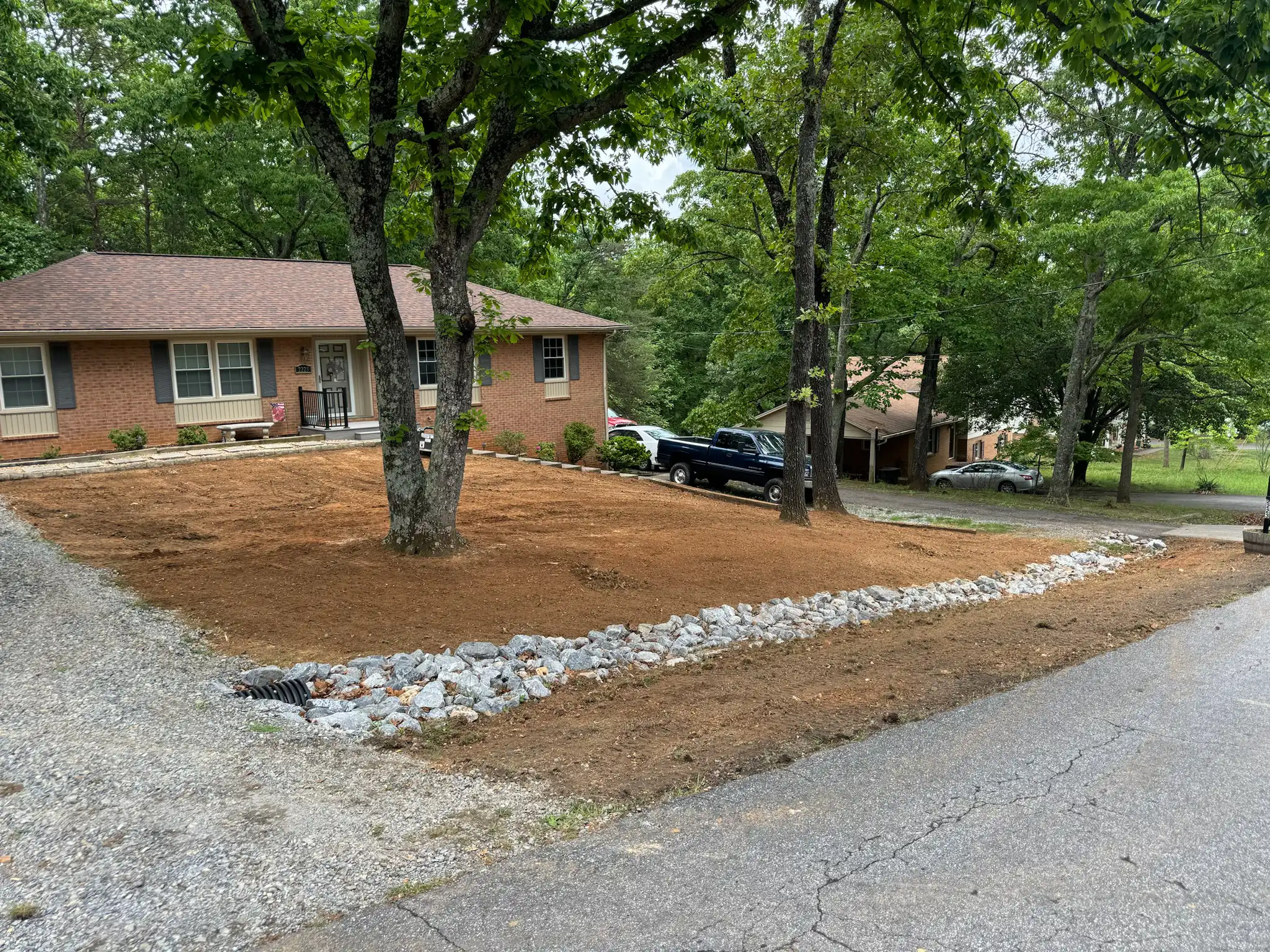
Cave Spring, VA
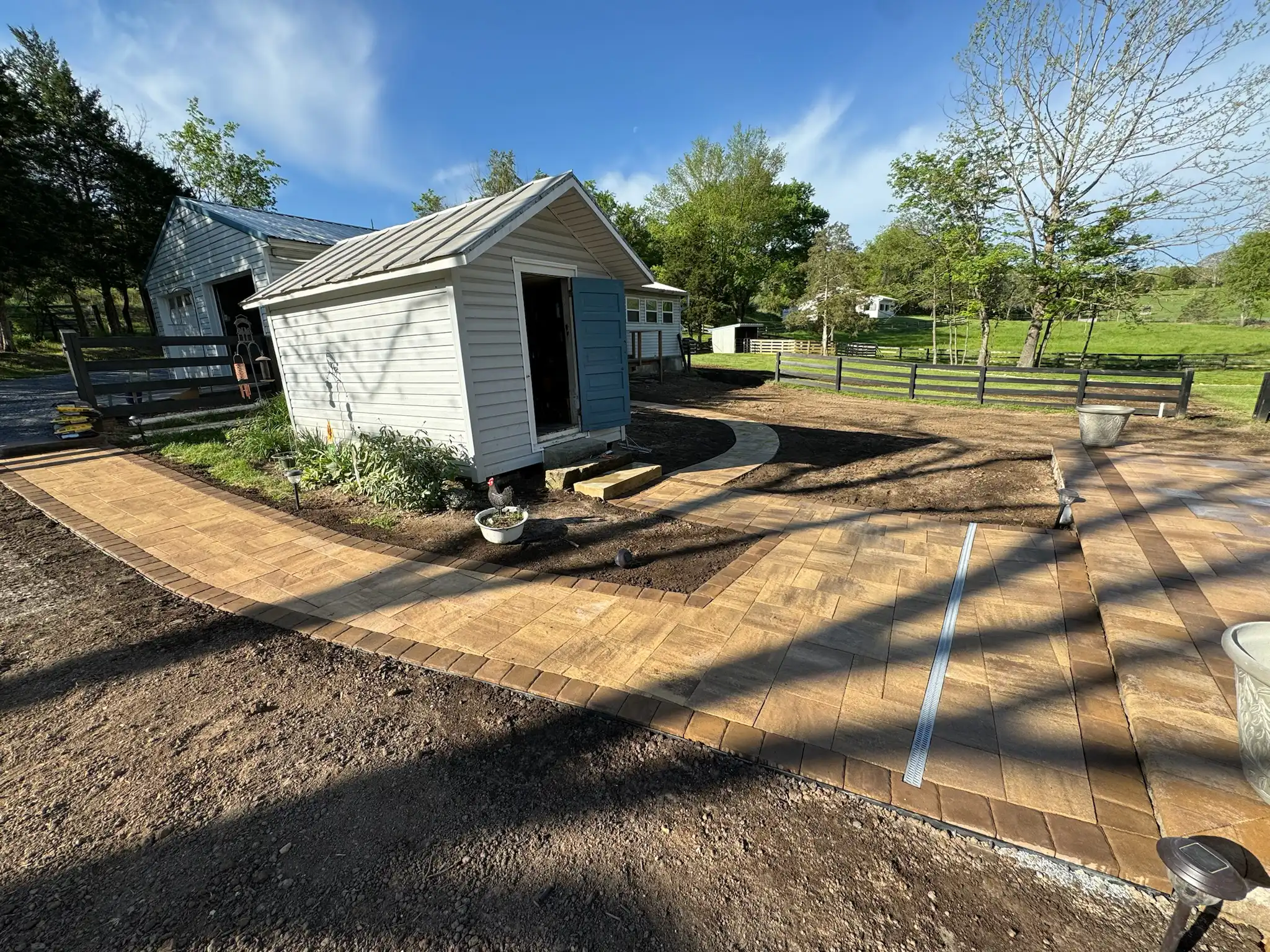
Hollins, VA
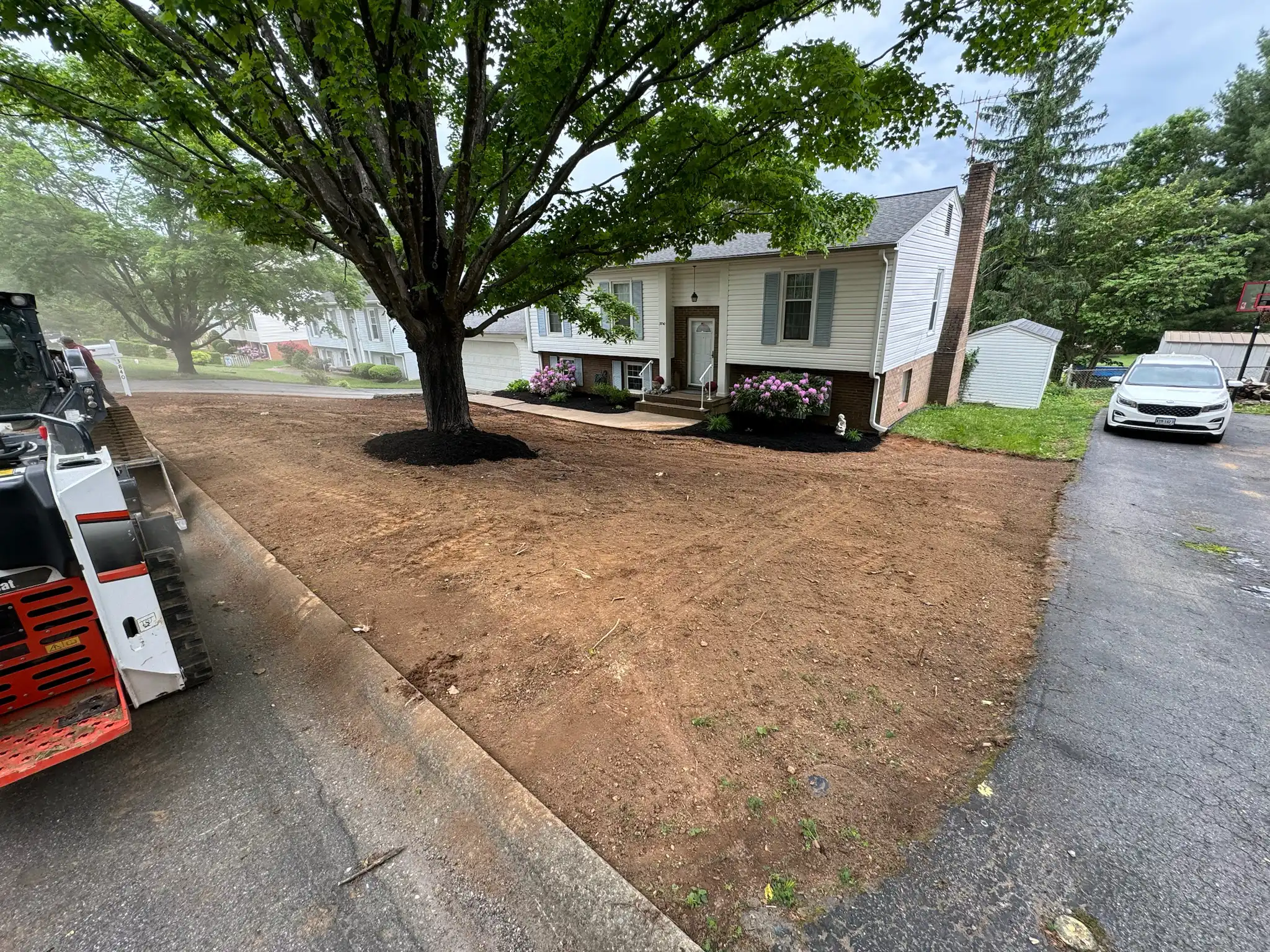
Roanoke County, VA
Tell us how many downspouts you have, where water currently discharges, and what problems you're seeing. We'll check your gutter capacity, map the discharge routes, and put together a fixed-price scope for buried lines and emitters.
Downspout routing often pairs with these drainage and site work services.
French drains, catch basins, and swales that handle the surface water your roof discharge creates once it reaches the yard.
When improperly routed downspouts have already caused foundation moisture issues, the fix goes deeper than burying the discharge line.
Regrading around the house so surface water and downspout discharge both flow away from the foundation naturally.
A 2,000-square-foot roof collects roughly 1,250 gallons per inch of rain. Roanoke regularly gets 3–4 inch rain events, especially March through May — that's 3,750 to 5,000 gallons per storm funneled through your gutters and downspouts. When that volume discharges 6 inches from your foundation through a standard splash block, it saturates the soil directly against the foundation wall. Burying the downspout discharge and routing it 10–15 feet from the house eliminates the single biggest source of foundation moisture for most homes.
Standard 2x3-inch downspouts are sized for moderate rainfall — roughly 1–2 inches per hour. Roanoke regularly exceeds that during spring and summer storms. When a downspout can't handle the volume, water backs up into the gutter and overflows directly against the house. Homes in Cave Spring, Hollins, and suburban Roanoke County built in the 1990s–2000s commonly have undersized systems that were adequate for code minimums but not for actual local rainfall intensity.
We bury downspout discharge lines 12–18 inches deep in the Roanoke area. That gets the pipe below the frost line (roughly 18 inches here) on the deeper runs and below typical lawn maintenance disturbance. Shallower burial risks frost heave cracking PVC fittings and aerator damage. The pipe needs consistent slope — minimum 1% grade — from the downspout adapter to the pop-up emitter or daylight outlet.
Pop-up emitters need to discharge at a point that's lower than the downspout connection and far enough from the house that water won't flow back. On most Roanoke lots, that means 10–15 feet from the foundation at a natural low point or slope break. The emitter cap stays closed until water pressure opens it, then closes again to prevent debris from entering the line. On flat lots, we sometimes use a dry well instead of a pop-up if there's no natural discharge point with enough slope.
We generally don't recommend it. French drains are designed to collect groundwater through perforated pipe — adding roof volume overwhelms their capacity during heavy rain events. In Roanoke's clay soil, a French drain already handles minimal percolation. Dumping 1,000+ gallons of roof water into it during a storm backs up the system and defeats the purpose. Downspout lines should run as separate solid pipe to their own discharge point.