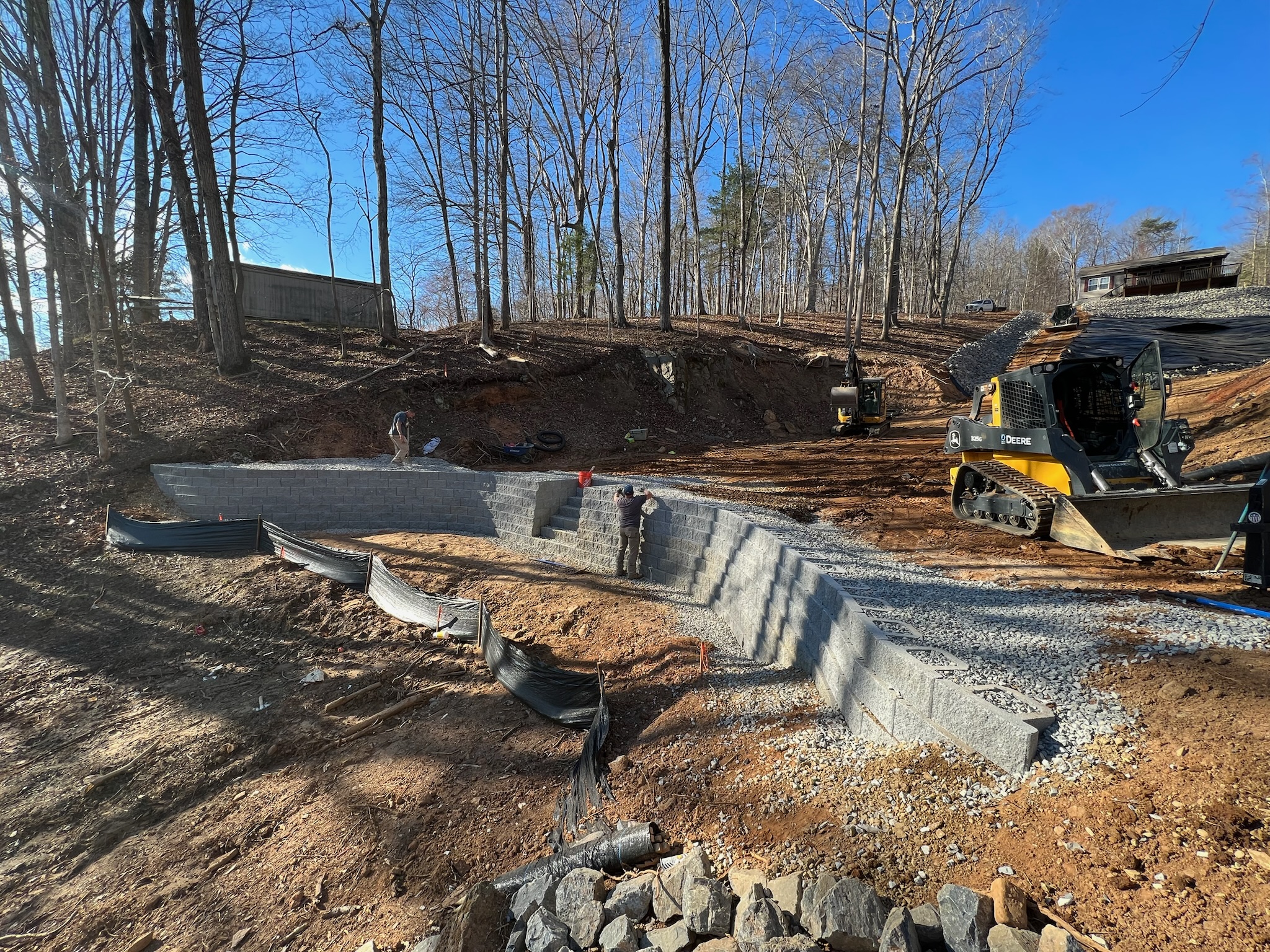
Footing drain retrofits, exterior waterproofing excavation, and structural drainage solutions for homes built before modern building codes across Roanoke and Roanoke County / City of Roanoke.
Thousands of homes across the Roanoke Valley were built before the mid-1970s, when footing drains became standard construction practice. In neighborhoods like Old Southwest — where homes date back to the 1890s and 1930s — stone and rubble-block foundations sit directly against Cecil red clay with nothing between the wall and the soil but a coat of parging that deteriorated decades ago. These homes have no drain tile, no waterproofing membrane, and no gravel backfill. When spring rains saturate the surrounding clay, water has a direct path into the basement.
The problem is worse on Roanoke's hillside properties. In South Roanoke, homes built into slopes have one foundation wall buried 6 to 8 feet below grade on the uphill side. Saturated clay at that depth generates serious hydrostatic pressure — enough to push water through poured concrete, let alone 80-year-old block walls with deteriorated mortar joints. Homeowners see the symptoms as seeping walls, standing water on the basement floor, or chronic humidity that no dehumidifier can keep up with.
Interior drainage systems and sump pumps manage symptoms. Exterior footing drain installation solves the problem at its source — intercepting groundwater before it reaches the foundation wall. We excavate to the footing, apply waterproofing membrane, install drain tile in a gravel bed, and backfill with aggregate instead of the clay we removed. It's the only permanent fix for Roanoke's clay-soil foundation moisture issues.
Structural drainage and waterproofing work we perform on homes across Roanoke and the surrounding area.
Full-depth excavation to the foundation footing, cleaning and inspecting the wall, applying waterproofing membrane, and backfilling with drainage aggregate. On hillside South Roanoke homes, the uphill trench can reach 8 feet deep — this is heavy excavation that requires proper shoring and equipment.
Installing perforated drain tile at the base of the footing where none existed — the standard fix for pre-1970 Roanoke homes. Pipe is set in washed stone, wrapped in filter fabric, and pitched to a sump pit or gravity daylight outlet. Replaces the function that modern homes get from builder-installed drain tile.
Connecting sump pump output to buried solid pipe that carries water well away from the foundation. Most existing sump discharge in Roanoke homes runs a few feet from the house and dumps onto clay soil that sends it right back. We route discharge lines to the street, a swale, or a daylight emitter at the property's low point.
Removing failed original clay tile footing drains — common in 1940s–1950s Grandin-area homes — and replacing with modern perforated PVC in a clean aggregate bed. Clay tile separates at joints, fills with sediment, and gets crushed by root intrusion after 70+ years in the ground.
Recent foundation and structural drainage work from the Roanoke area.
Old Southwest, VA
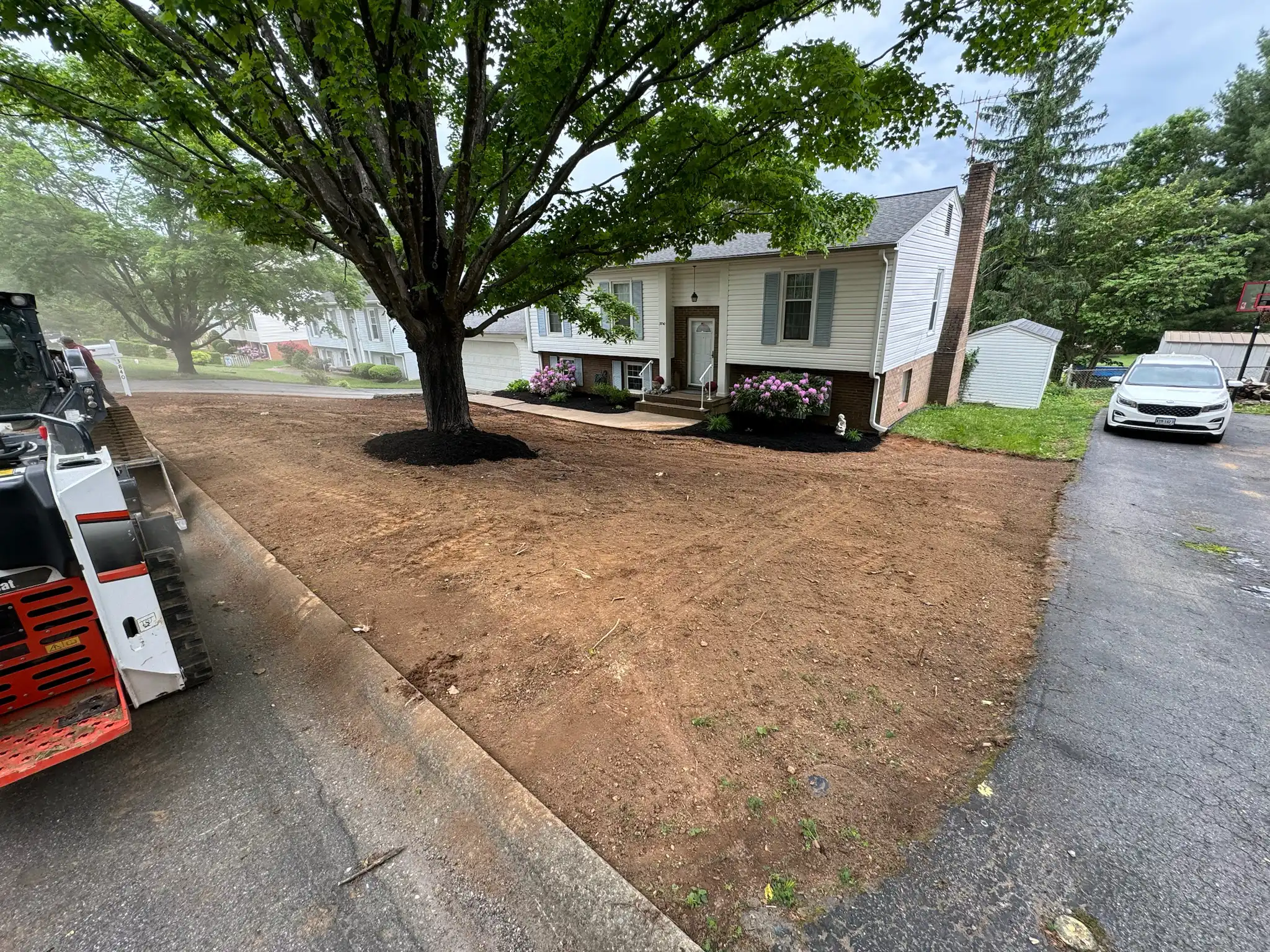
South Roanoke, VA
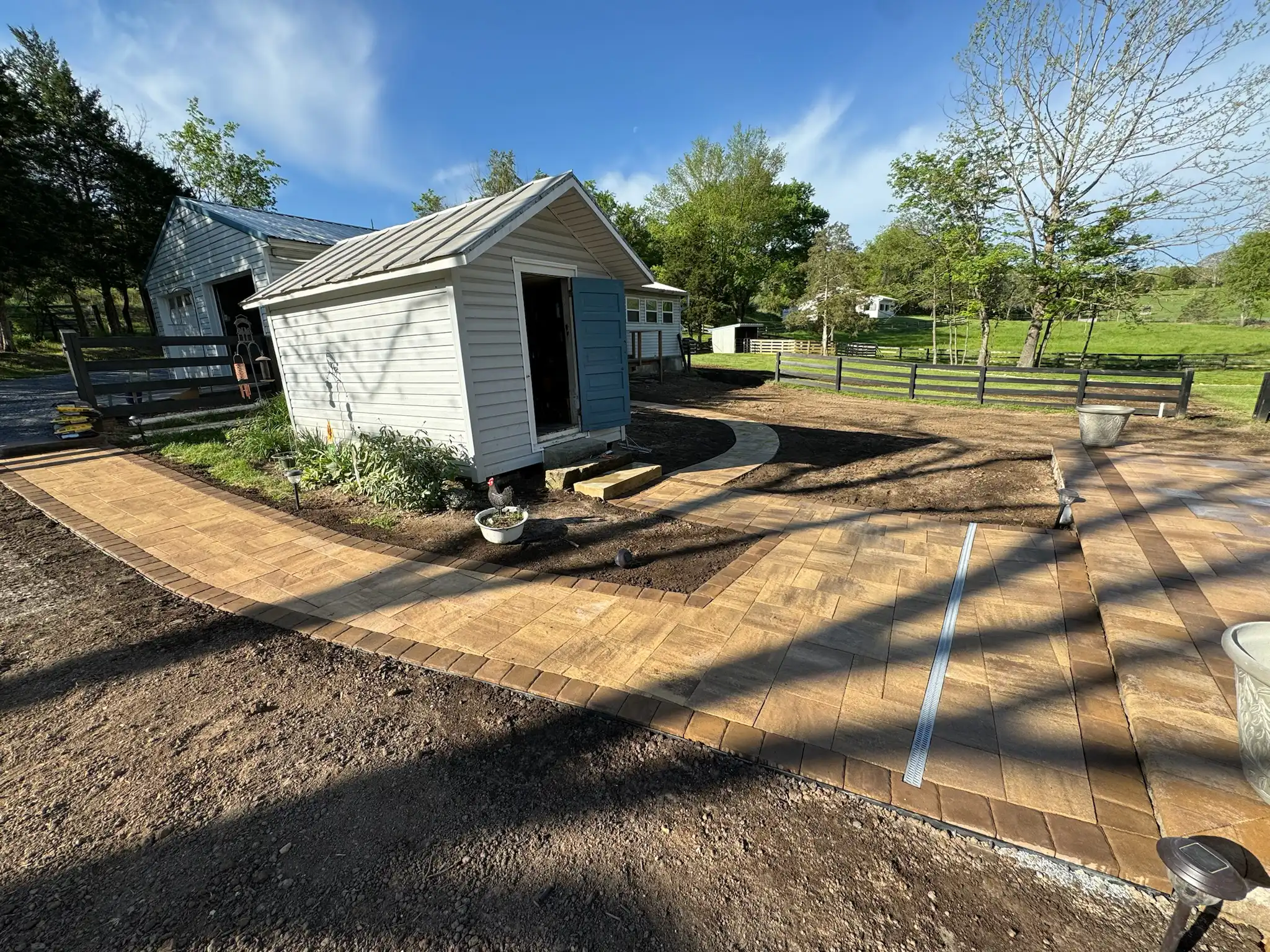
Grandin, VA
Describe the moisture symptoms, the age of the home, and what you can see from the inside. We'll inspect the foundation exterior, check the grading, and determine whether the solution is an exterior footing drain, waterproofing, discharge rerouting, or a combination.
Foundation drainage work often connects to these related services.
French drains, catch basins, and regrading that handle surface water before it reaches the foundation.
Heavy excavation for foundation access, deep trenching, and structural site work that supports drainage projects.
Burying downspout discharge lines so roof water is carried away from the foundation instead of dumped against it.
Most Roanoke homes built before 1970 have no footing drains at all — builders didn't install drain tile as standard practice until the mid-1970s. In Old Southwest, where homes date to the 1890s–1930s, the stone and block foundations were built directly against clay soil with no waterproofing membrane and no drainage layer. When Roanoke's Cecil clay saturates during spring rains, hydrostatic pressure pushes water through every joint, crack, and porous block in the foundation wall.
Cecil red clay expands significantly when it absorbs water. Around a foundation, saturated clay creates lateral hydrostatic pressure against basement walls — essentially pushing inward. This is especially severe on hillside homes in South Roanoke where one side of the foundation may be 6–8 feet below grade. The clay holds moisture for weeks after rain stops, maintaining constant pressure that cracks block walls, displaces mortar joints, and forces water through any gap it can find.
We excavate down to the foundation footing — which on hillside Roanoke homes can mean an 8-foot-deep trench on the uphill side. The foundation wall is cleaned, any cracks are sealed, and a waterproofing membrane is applied. Then we install perforated drain tile at the footing level, wrapped in aggregate and filter fabric, connected to a sump pit or daylight outlet. The trench is backfilled with drainage stone, not the clay we removed. It's major excavation work, but it's the only permanent exterior solution.
Many do. Homes in the Grandin area were mostly built in the 1940s–1950s, and those that have footing drains typically have the original clay tile systems. After 70–80 years, clay drain tiles crack, separate at joints, and fill with sediment and root intrusion. They stop functioning long before homeowners notice — because the failure is gradual and the symptoms (damp basement smell, efflorescence on walls, mildew) build slowly. Replacing collapsed clay tile with modern perforated PVC is one of our most common Grandin-area jobs.
Cost depends on how deep we need to dig, how much linear footage of wall is involved, and site access. A single-wall footing drain on a walkout basement is a different scope than a full-perimeter excavation on an 1890s Old Southwest home with stone foundation walls. We quote after inspecting the foundation and property — not from photos or phone descriptions.