Gravel driveway installation, driveway grading and repair, culvert installation, steep access grading, and site access roads for residential and rural properties across Roanoke and Roanoke County / City of Roanoke.
Gravel driveways are the default for most rural and semi-rural properties in the Roanoke area — and they're also the most commonly neglected piece of a property's infrastructure. A driveway that's just gravel dumped on dirt will wash out, rut, and turn to mud within a year on Roanoke's clay soil. The clay is nearly impermeable, which means every drop of the valley's 42 inches of annual rainfall that lands on or above the driveway runs across it. Without proper grading, crown, ditch lines, and culverts, that water takes the gravel with it.
Along the Hardy Road corridor and toward the Botetourt County line, long gravel driveways serving rural properties are the norm — some running a quarter mile or more from the road to the house. These drives cross terrain, span ditches, and climb grades that concentrate water in ways a short suburban driveway never has to deal with. Culvert sizing is critical: a 15-inch pipe might meet VDOT minimums, but on a property with five or ten acres of hillside draining to a single crossing point, that pipe gets overwhelmed in any serious rain event. We size culverts based on actual watershed, not minimum code.
On Bent Mountain and in the steeper parts of Roanoke County, the challenge shifts from water management to grade management. Driveways that climb 15-20% grades need a different approach than flat-land drives: heavier stone, water bars at regular intervals to divert runoff before it gains velocity, and sometimes geogrid reinforcement on the steepest pitches. We also deal with seasonal freeze-thaw — temperatures cycle across 32 degrees roughly 80 to 100 times per year in the Roanoke Valley, and each cycle loosens gravel on steep slopes.
The full range of driveway and access work we handle across Roanoke and the surrounding area.
New driveway construction from subgrade up — geotextile fabric on clay, layered base stone, driving surface stone, proper crown grading, and ditch lines. Built to handle Roanoke's rainfall without annual washout and regrading.
Reshaping existing driveways that have lost their crown, developed ruts, or settled into the underlying clay. Includes regrading, adding stone where needed, re-establishing drainage, and fixing washout damage from heavy rain events.
Properly sized culverts for driveway crossings, ditch lines, and property drainage. We calculate pipe diameter based on actual watershed area and Roanoke's rainfall intensity — not minimum code — to prevent the overtopping and washouts that undersized pipes cause.
Access road construction for steep mountain properties, agricultural operations, and rural building sites. Includes water bar installation, heavy base construction, wider profiles for equipment turning, and geogrid reinforcement on grades exceeding 12%.
Recent driveway and access work from across the Roanoke area.
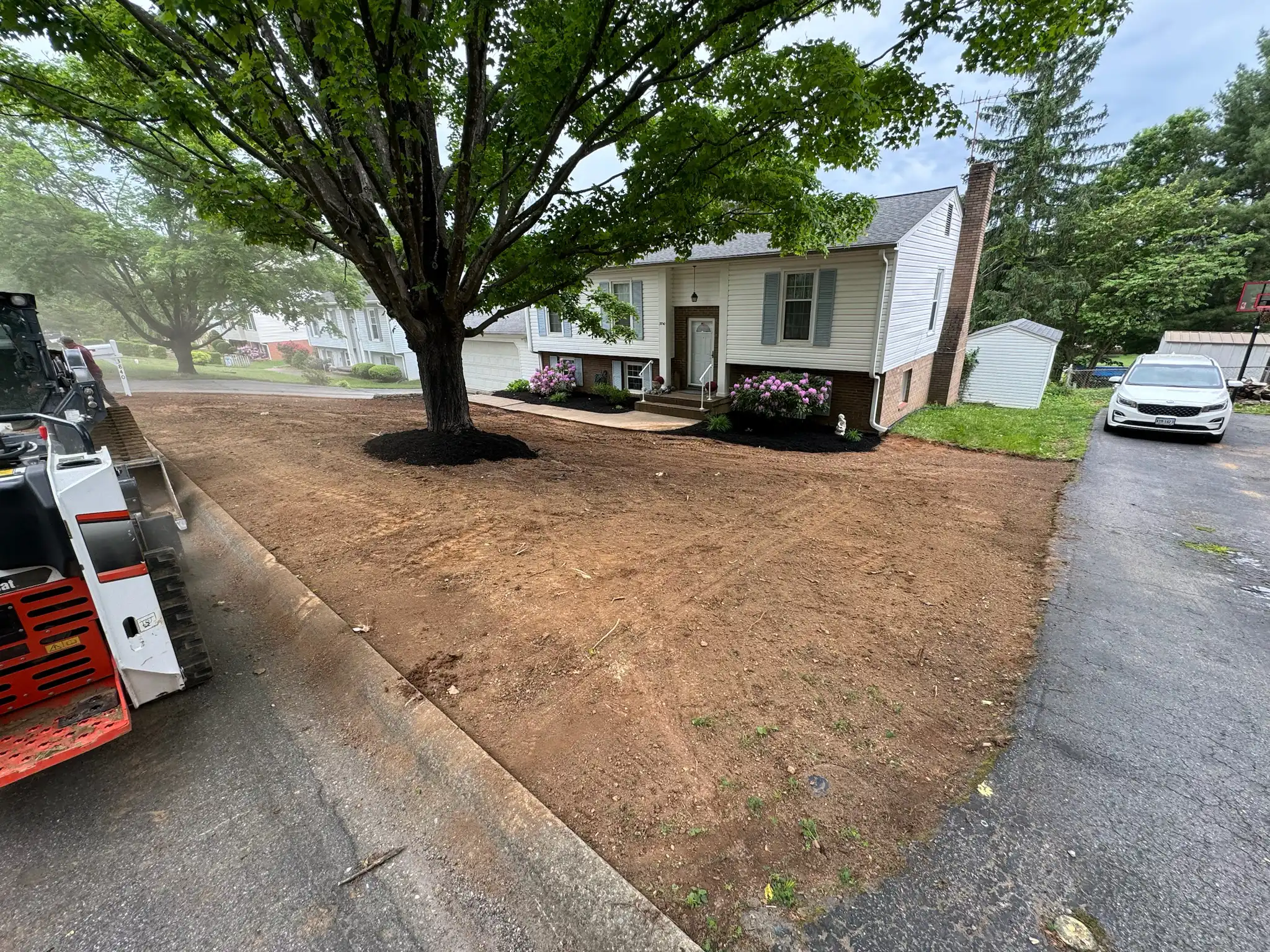
Hardy, VA
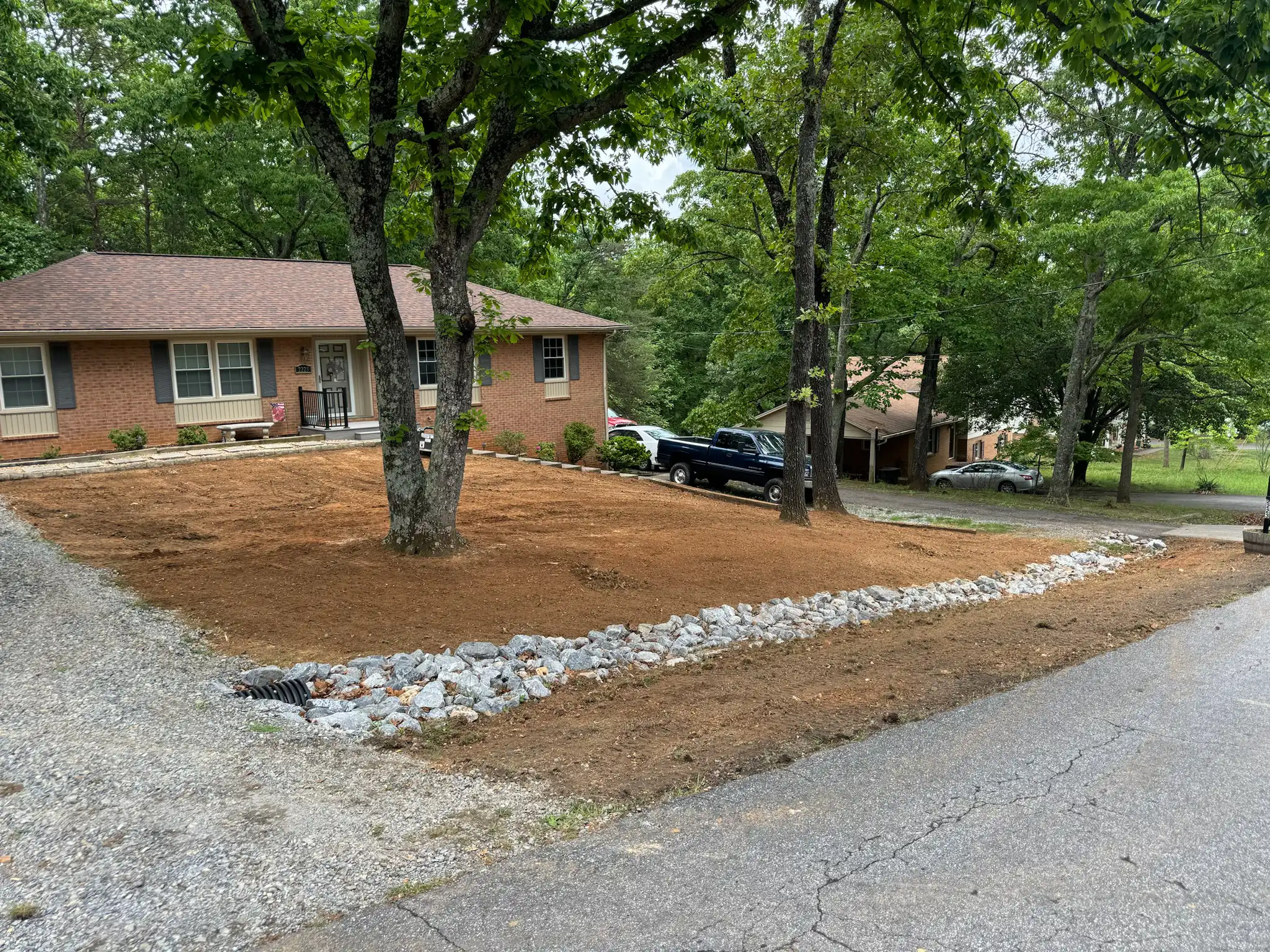
Bent Mountain, VA
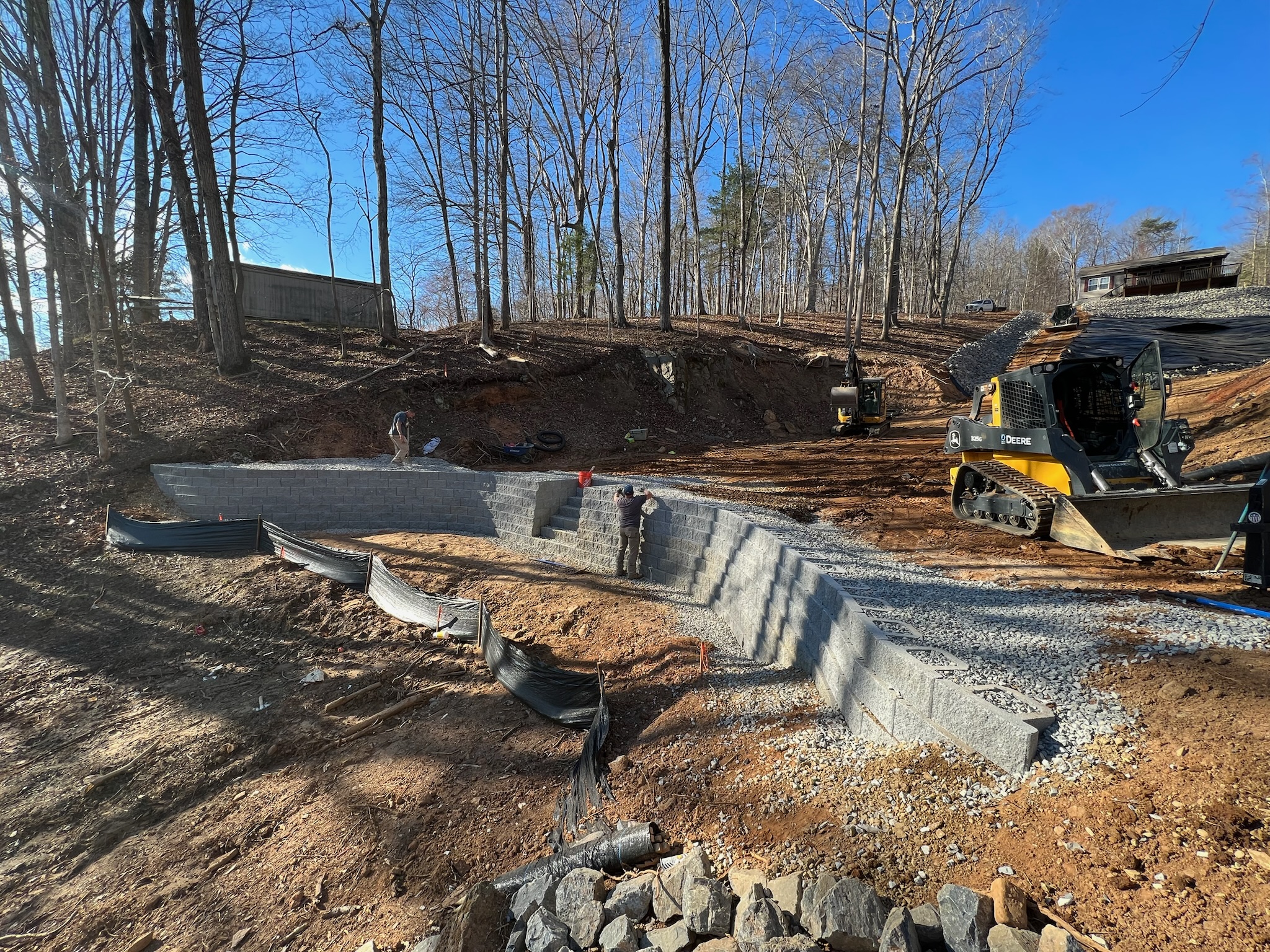
Rural Roanoke County, VA
Tell us about the driveway — length, current condition, grade, and what's not working. If it's a new drive, describe the property access and where the building site is relative to the road. We'll walk the site, assess the terrain and drainage, and come back with a fixed-price scope.
Driveway projects often include or lead into these related services.
Site grading that ties into driveway grades and establishes the overall drainage plan for the property.
French drains, swales, and catch basins that manage runoff from driveways and prevent water from reaching structures.
Tree and brush clearing to establish driveway corridors and access routes on wooded rural properties.
Roanoke's Cecil red clay is the root cause. The clay is nearly impermeable — when it rains, water runs across the surface rather than soaking in. On a gravel driveway, that surface runoff picks up speed and carries gravel with it, creating ruts and bare spots. With 42 inches of annual rainfall and the heaviest months from March through May, poorly graded driveways can lose inches of gravel in a single spring season. The fix is proper crown or cross-slope grading so water sheds off the driving surface before it gains velocity, combined with adequate ditch lines and culverts to handle the volume.
We generally recommend keeping gravel driveways under 12% grade for year-round usability. Steeper than that and the gravel migrates downhill with every rain and every vehicle pass. On Bent Mountain and in the steeper parts of rural Roanoke County, some driveways need to climb more than that to reach the building site. In those cases, we use techniques like reverse-grade dips (water bars) every 50-75 feet to divert runoff off the surface, heavier base stone that resists migration, and sometimes geogrid reinforcement in the steepest sections.
Culvert sizing depends on the watershed draining to that point — how many acres of land are funneling water toward the driveway crossing. In Roanoke County, VDOT requires a minimum 15-inch diameter for residential driveway culverts, but that minimum is often undersized for properties with any significant uphill drainage area. With 42 inches of annual rainfall and clay soil that produces fast runoff, we typically install 18-inch or 24-inch culverts for properties along the Hardy/Botetourt corridor and in rural Roanoke County. An undersized culvert doesn't just back up water — it washes out the driveway around it.
On a properly built driveway with correct grading and drainage, you're looking at a blade pass once or twice a year to redistribute gravel and maintain the crown. A light top-dressing of new stone every 2-3 years keeps the surface in good shape. On driveways that were built without proper grading — which is most of the existing gravel driveways in rural Roanoke County — you'll be adding stone and regrading annually just to keep it passable. Rebuilding the drive correctly once costs less than a decade of annual band-aids.
Yes. Farm roads and equipment access driveways need a heavier base than standard residential drives — larger base stone, thicker lifts, and wider turning radii. In rural Roanoke County, we build access roads for agricultural operations, timber harvesting, and properties that need to accommodate delivery trucks, tractors, or construction equipment. The subgrade prep is critical: Roanoke's clay can't support heavy loads when saturated unless you build a proper stone base over geotextile fabric to keep the stone from sinking into the mud.