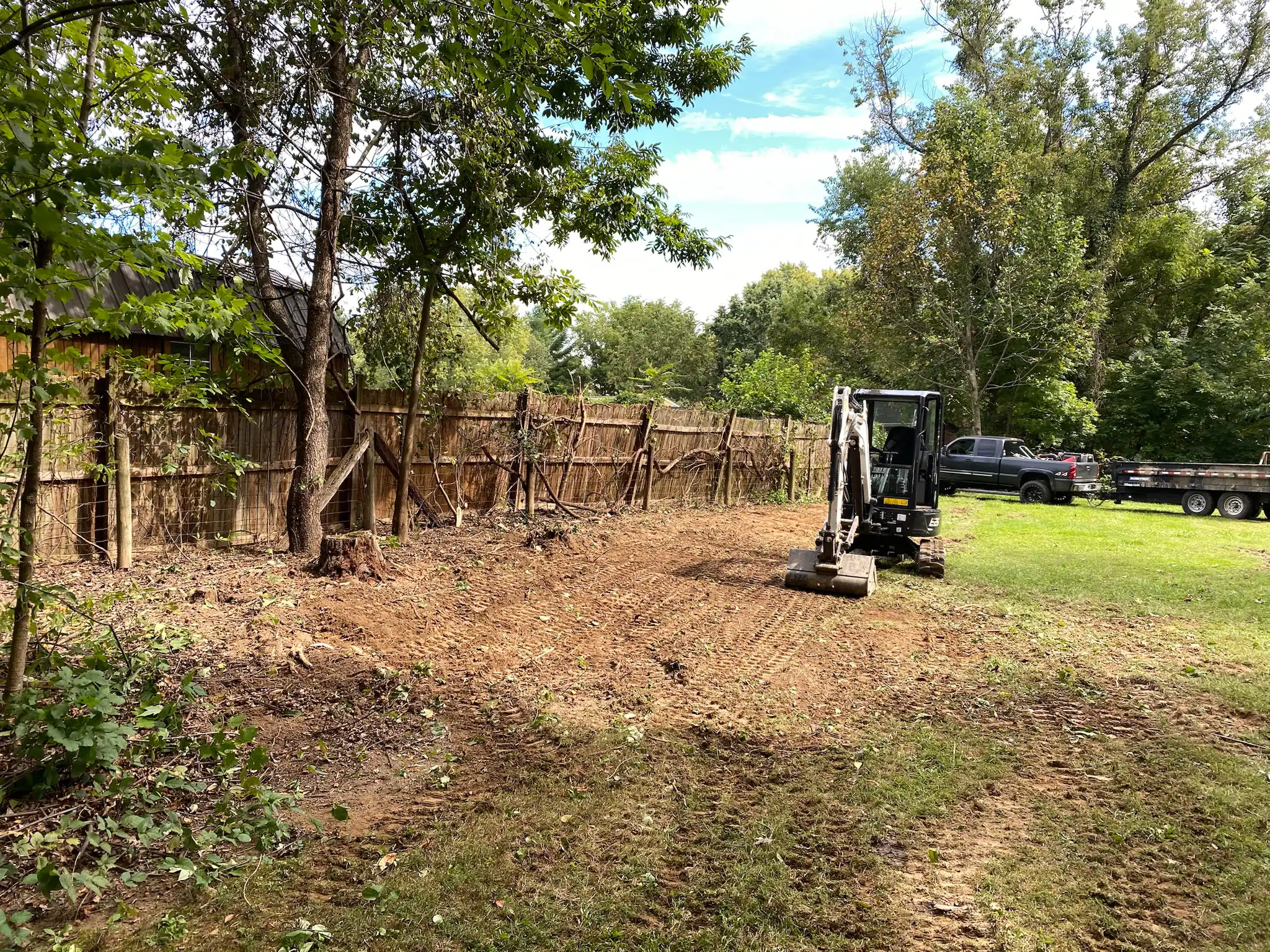
Selective tree removal, brush clearing, lot clearing, stump grinding, invasive species management, and small structure demolition across Roanoke and Roanoke County / City of Roanoke.
The Roanoke Valley sits at the transition between the Blue Ridge Mountains and the Great Valley, which means the land is densely wooded by default. Oaks, maples, tulip poplars, and hickories dominate the mature canopy, with an understory of dogwoods, redbuds, and — on neglected properties — aggressive invasives like kudzu, autumn olive, and multiflora rose. Clearing a lot here is never just about knocking trees down. It's about deciding what stays, what goes, and how the exposed ground gets stabilized before the next heavy rain washes the red clay downhill.
In Hollins and Bonsack, where the suburban fringe pushes into rural wooded land, most clearing work is for new home construction on lots that have been timbered or left wild for decades. The understory is thick, the terrain rolls, and access can require building a temporary path just to get equipment to the work zone. In Peters Creek, the more common job is reclaiming overgrown residential properties — lots where brush and invasives have taken over a yard, outbuildings, or fence lines. These properties often have hidden debris, old fencing, and root systems that have grown into and around structures.
What makes clearing in this area different from flatter regions is the slope and the soil. Expose a hillside of Cecil clay to rainfall and it erodes fast — Roanoke gets 42 inches of rain annually, with the heaviest months from March through May. Every clearing plan we put together includes erosion control: what gets stabilized, when, and how. We don't clear a slope on Friday and leave bare clay exposed over a rainy weekend.
The full range of land clearing and demolition work we handle across Roanoke and the surrounding area.
Targeted removal of specific trees for building envelopes, view corridors toward the Blue Ridge, or hazard mitigation — while preserving the canopy and root systems that stabilize Roanoke's hillside lots and define the property's character.
Mechanical clearing of dense understory, kudzu, autumn olive, multiflora rose, and other invasive species that have overtaken neglected Roanoke properties. Full grubbing of root crowns to prevent regrowth, not just surface mowing.
Complete clearing of wooded lots for new construction — tree felling, stump grubbing, debris removal, and rough grading of the cleared area. Common on Hollins and Bonsack lots transitioning from rural timber to residential building sites.
Tear-down and removal of sheds, barns, old foundations, decks, concrete slabs, and other structures. Includes debris sorting, hauling to licensed disposal facilities, and site restoration of the cleared footprint.
Recent land clearing and demolition work from across the Roanoke area.
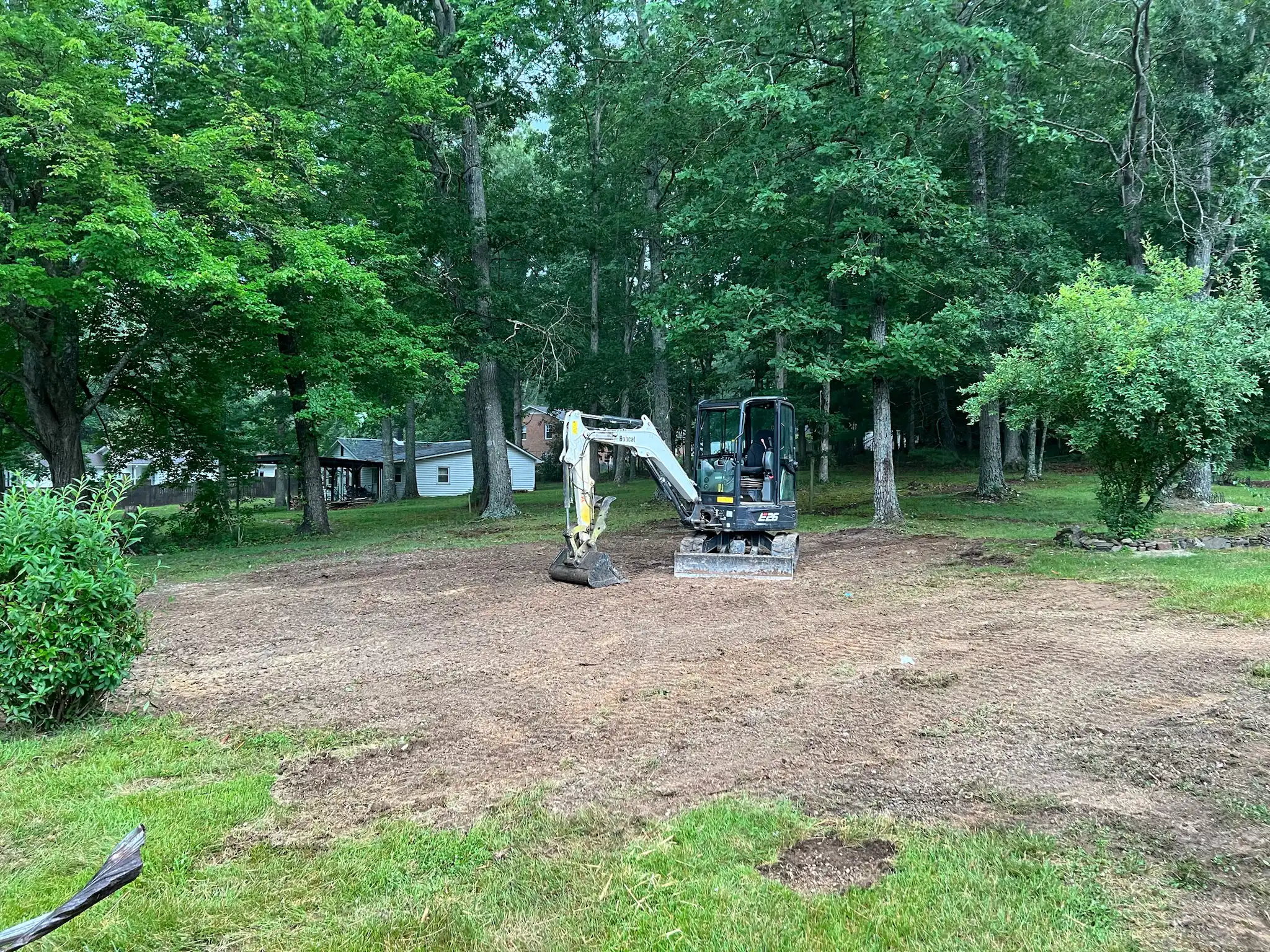
Hollins, VA
Peters Creek, VA
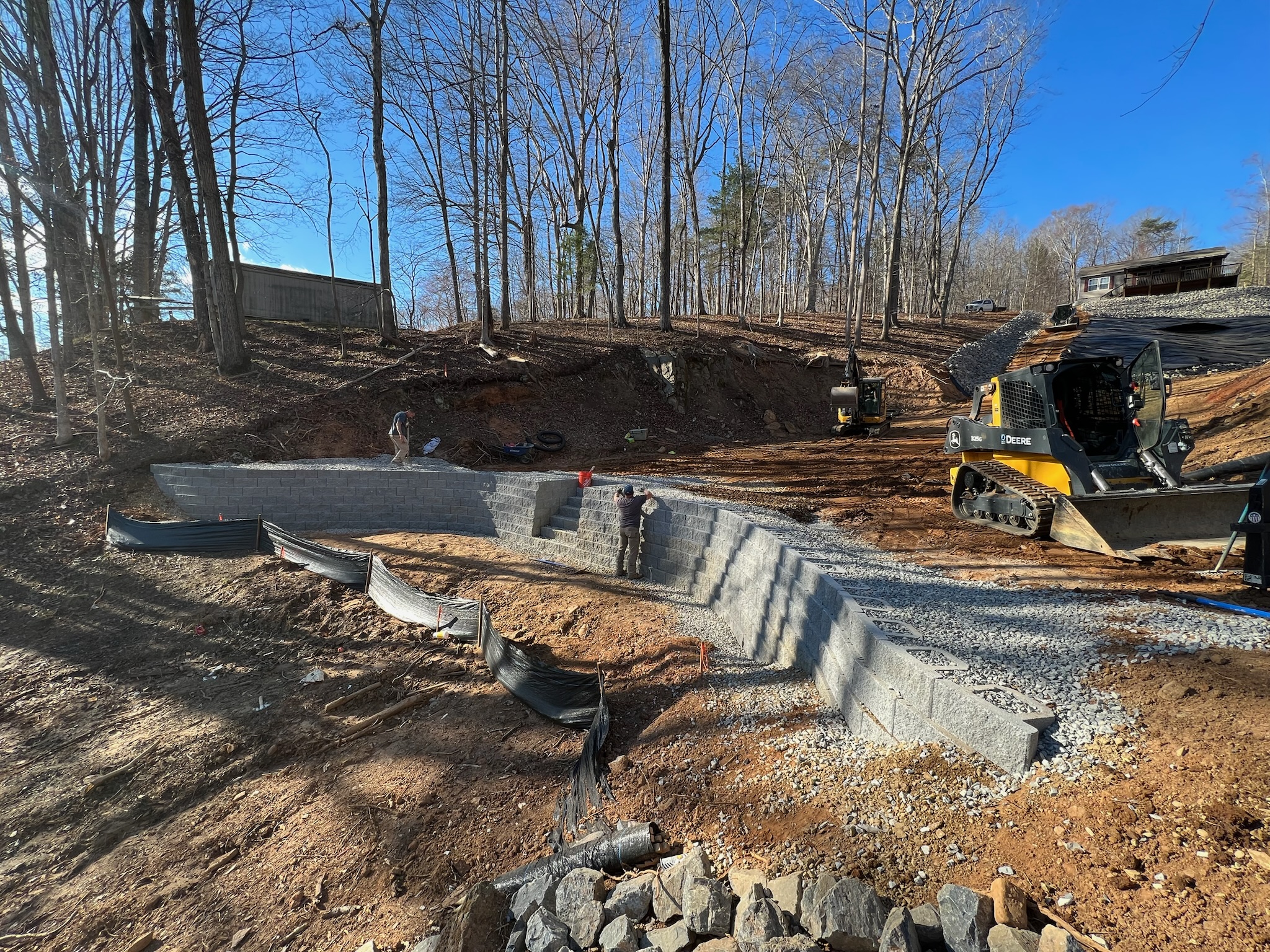
Bonsack, VA
Tell us what needs to go — trees, brush, structures, or all of the above. Describe the lot size, access situation, and what you're planning after the site is cleared. We'll walk it, mark what stays and what goes, and quote accordingly.
Land clearing often leads into these follow-up services.
Foundation digs, building pad prep, and utility trenching that follow land clearing on new construction sites.
Rough grading and terrain shaping to establish proper drainage after clearing exposes the underlying clay surface.
Slope stabilization, erosion blankets, and sediment control to protect cleared ground from Roanoke's heavy spring rainfall.
Yes — and selective clearing is what we recommend for most wooded lots in the Roanoke area. In Hollins and Bonsack, where many new-build lots are carved out of mature hardwood forest, taking everything down exposes the clay soil to erosion, destroys the character of the property, and eliminates the natural canopy that attracted the buyer in the first place. We flag the trees to keep, clear the understory and undesirable species, and remove only what's necessary for the building envelope, septic field, and access. The result is a buildable lot that still looks like it belongs in the Blue Ridge.
Kudzu, autumn olive, and multiflora rose are the three invasives we encounter most on Roanoke-area properties. Kudzu can grow a foot per day in summer and sends root crowns several feet deep into the clay. Mechanical removal — cutting and grubbing the root mass — is the most effective approach for clearing-scale work. For autumn olive, which has colonized abandoned lots and fence lines across Peters Creek and the Hollins corridor, we cut, grub the stumps, and remove the root balls to prevent regrowth. Simply mowing these species flat does nothing — they come back within weeks.
It depends on jurisdiction and scope. The City of Roanoke has tree preservation ordinances that may require a permit for removing trees over a certain diameter, particularly in overlay districts. Roanoke County is generally less restrictive for residential properties but still requires erosion and sediment control plans for clearing over 2,500 square feet. If the lot is in a floodplain or has a stream buffer, additional regulations apply. We'll identify what's required during the site walk and handle the paperwork.
View clearing is one of the most common requests we get from property owners in the hills above Roanoke — people buy for the view and then realize the trees block it. The key is selective removal, not clear-cutting. We identify which trees are blocking the sightline and remove only those, leaving the root systems of surrounding trees intact to hold the slope. On steep sites, we'll often limb up trees rather than remove them entirely, preserving the root structure while opening the view. If any slope is exposed, we stabilize it immediately with erosion blankets or seed before the next rain.
All cleared material leaves the site. Merchantable timber gets separated and hauled to a mill. Brush and non-merchantable wood gets chipped on-site or hauled to a permitted green waste facility. Stumps are either ground in place or grubbed and hauled depending on the next phase of work — if the site is being graded or excavated, we grub stumps completely so there's nothing left underground to settle and create sinkholes later. Concrete, metal, and other demo debris goes to the appropriate licensed disposal facility.