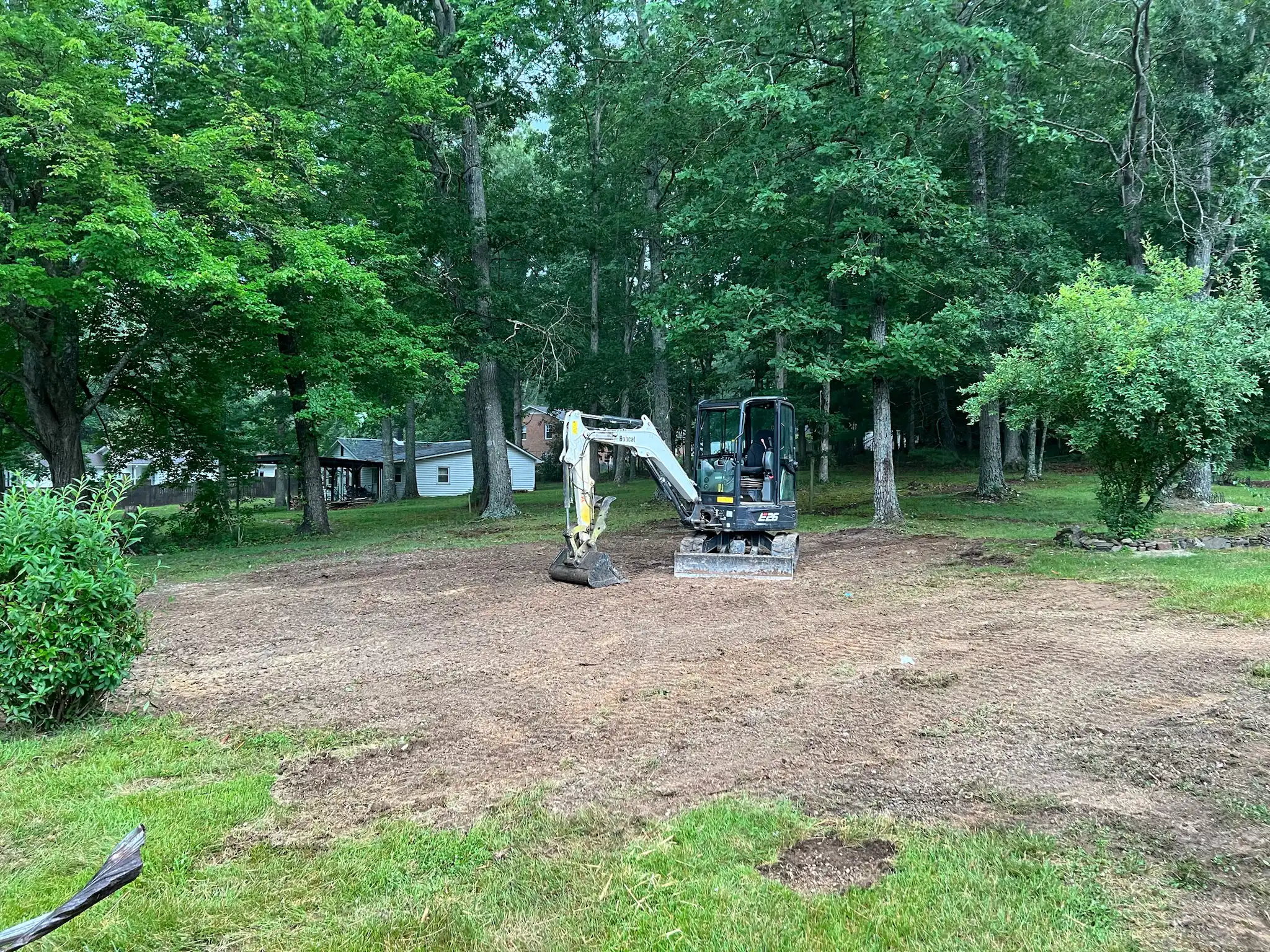
Foundation excavation, building pad prep, utility trenching, pool digs, and bulk earth removal for residential and commercial sites across Roanoke and Roanoke County / City of Roanoke.
Every excavation job in the Roanoke Valley starts with the same reality: Cecil and Madison red clay sitting on top of fractured shale, sandstone, or — in parts of the valley floor — karst limestone. The clay layer ranges from a few feet to well over ten feet deep depending on where you are, and what's underneath it determines how the dig goes. On the valley floor near Garden City or Williamson Road, you're dealing with deep clay and a high water table. On the hillsides of South Roanoke and Crystal Spring, you can hit shale shelves within two to three feet of the surface.
That variability is what makes Roanoke excavation different from flat-terrain work. A building pad on a Crystal Spring hillside lot might require hydraulic breaking through six feet of layered shale to reach the design elevation, while a foundation dig in Old Southwest means working around century-old utilities on a lot barely wide enough for the excavator to swing. The approach changes on every site, but the constant is understanding how this specific geology and these specific neighborhood conditions will affect the dig before the bucket hits the ground.
We run excavation projects across the City of Roanoke and Roanoke County, from tight infill lots in historic neighborhoods to open hillside sites where access and rock are the primary challenges. Every job gets a site walk and a dig plan before we mobilize equipment — because in this terrain, surprises underground are expensive.
The full range of excavation and site work we handle across Roanoke and the surrounding area.
Precise foundation digs for new construction, additions, and garage builds. We excavate to engineered depth, accounting for Roanoke's 18-inch frost line and the clay's active zone that expands and contracts with seasonal moisture changes.
Full building pad excavation and subgrade preparation for residential and commercial structures. Includes stripping topsoil, cutting to grade, proof-rolling the subgrade, and placing structural fill where native clay can't support the load.
Trenching for water, sewer, electric, gas, and stormwater lines. On older Roanoke lots where existing utilities run in undocumented paths, we hand-dig verification trenches before machine excavation to prevent service strikes.
Hydraulic breaker work for shale, sandstone, and fractured rock removal on hillside lots. Common on South Roanoke and Crystal Spring properties where bedrock sits close to the surface and standard bucket excavation can't reach design grade.
Recent site work from across the Roanoke area.
Old Southwest, VA
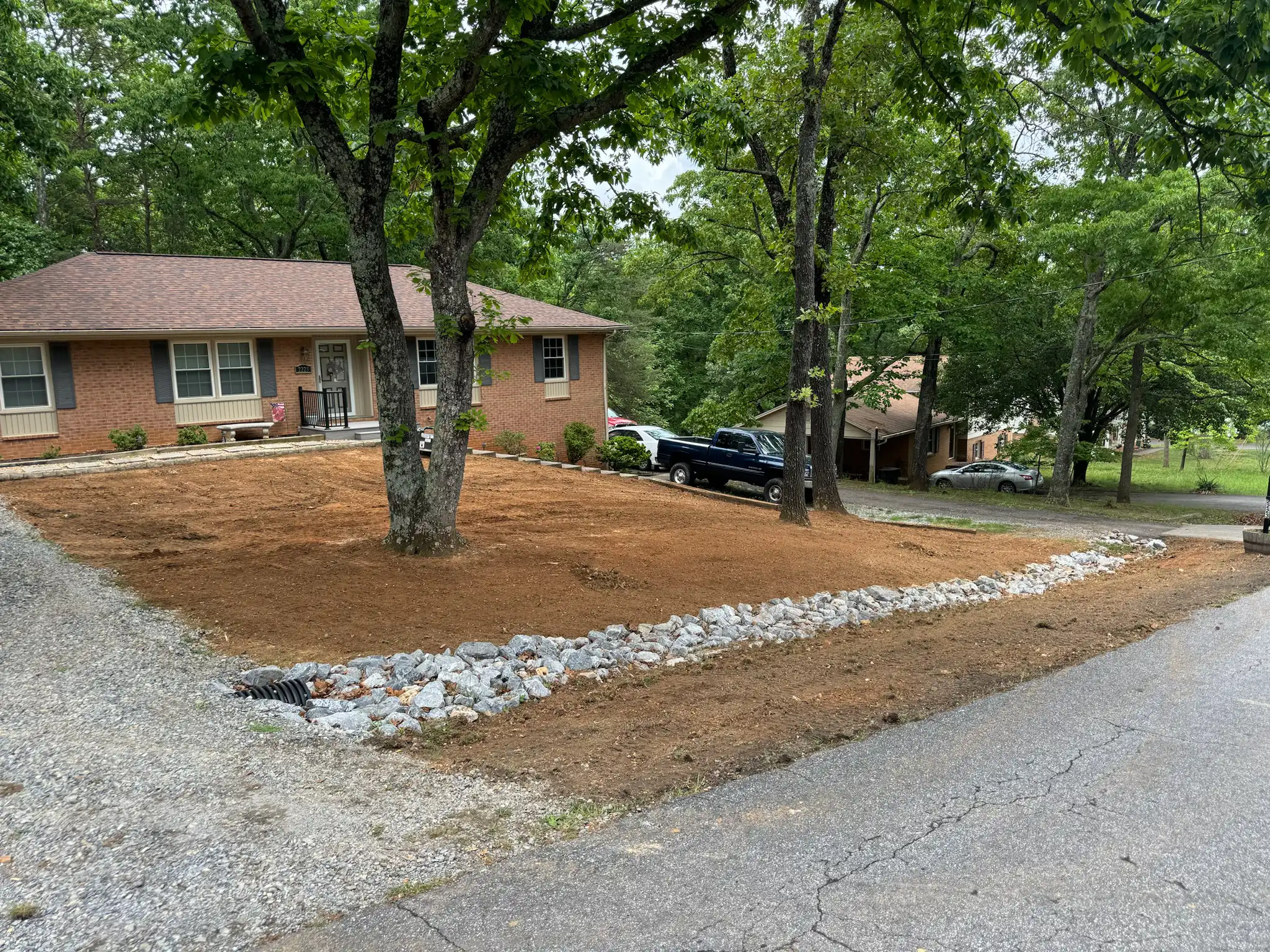
South Roanoke, VA
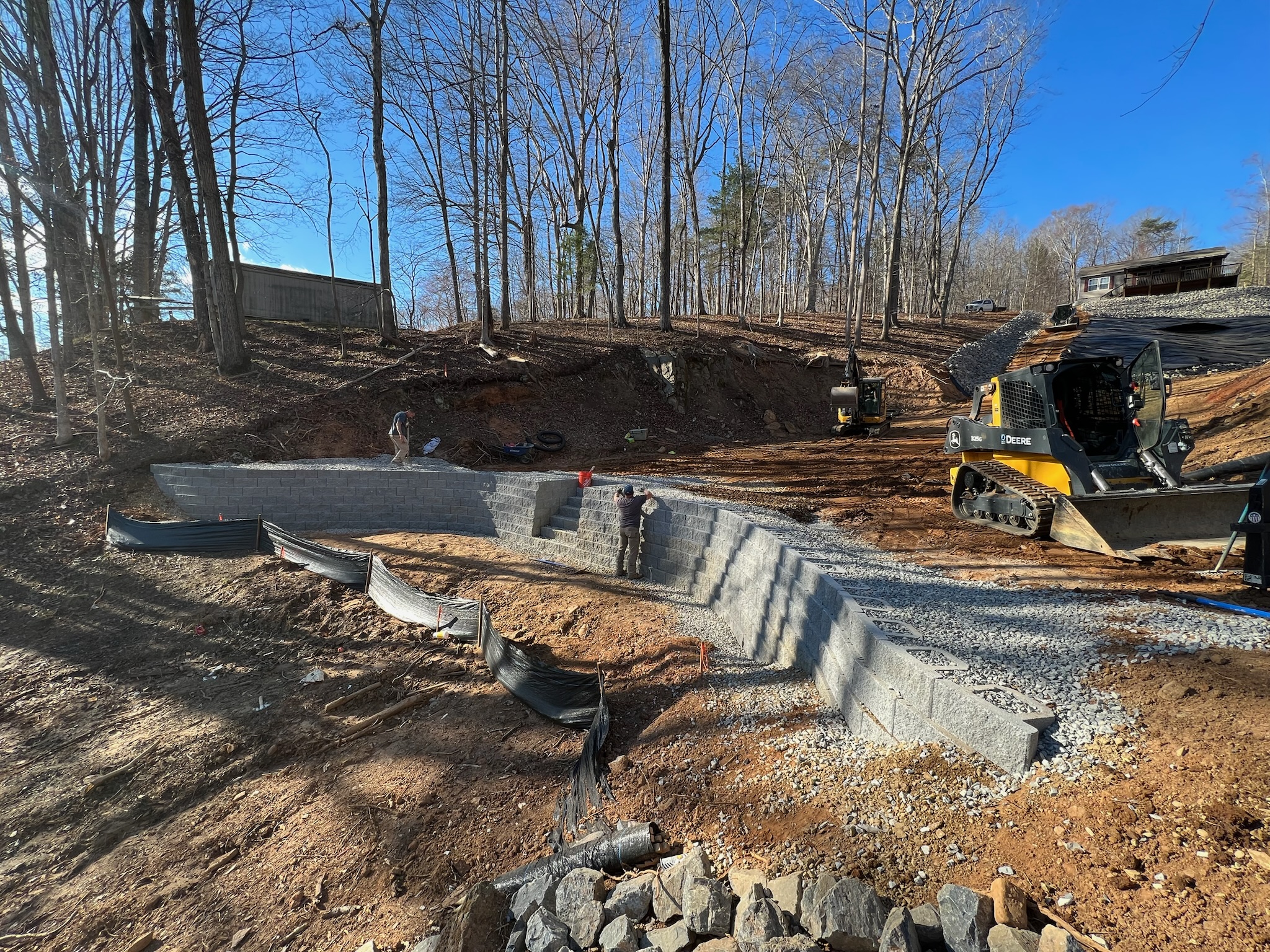
Crystal Spring, VA
Tell us about the site, what you're building, and any known conditions — rock, water, tight access, existing utilities. We'll walk the property, assess the dig conditions, and come back with a fixed-price scope.
Excavation projects often include or lead into these related services.
Rough and finish grading to establish proper drainage slopes and level building surfaces after excavation is complete.
Tree removal, brush clearing, and structure demolition to prepare sites before excavation begins.
Footing drains, waterproofing excavation, and drain tile systems installed during or after foundation work.
Much of Roanoke sits on Cecil and Madison red clay series soil over fractured shale and sandstone bedrock. On hillside lots in areas like South Roanoke and Crystal Spring, you often hit rock within 2-4 feet of grade. That means standard bucket excavation won't cut it — we frequently need hydraulic breakers to fracture shale shelves before removal. The clay itself is problematic too: it's low permeability, so water runs across the surface rather than draining through it, creating erosion risk on any exposed cut face.
In neighborhoods like Old Southwest and South Roanoke, many lots have 60-100 year old hardwoods with root systems that extend 30+ feet from the trunk. We map root zones before digging and use a combination of hand excavation near critical root zones and machine work in clear areas. If a root system conflicts with the dig plan, we work with the homeowner and sometimes a certified arborist to determine whether root pruning is viable or the dig line needs to shift.
It depends on scope and location. The City of Roanoke requires grading permits for earthwork that disturbs more than 2,500 square feet or changes drainage patterns. Roanoke County has similar thresholds. Foundation excavation tied to a building permit is typically covered under that permit. Utility trenching in the right-of-way requires a separate encroachment permit. We handle the permit coordination so you don't have to track down the right office.
Roanoke's frost line is 18 inches, so footings need to be at least that deep. In practice, most residential foundations here go 24-36 inches below finished grade to get below the frost line and into stable bearing soil beneath the clay's active zone — the top layer that expands and contracts with moisture. On hillside lots, the uphill side of a foundation may need to go significantly deeper to reach undisturbed material.
Older Roanoke neighborhoods — especially Old Southwest, where lots are sometimes only 40-50 feet wide — have water, sewer, gas, electric, and sometimes abandoned lines running in unpredictable paths. We call VA811 before every job, but on pre-1960s lots the locate marks aren't always accurate. We hand-dig test trenches in congested areas to physically verify utility positions before bringing in the excavator. It takes more time, but it prevents the kind of mistakes that shut down a job for days.